Introduction
In the food packaging industry, a film is only as good as the material it’s made from. The wrong compound leads to poor cling, premature tearing, inconsistent thickness, regulatory failures, and unhappy customers. Film producers who rely on substandard raw materials face production line stoppages, rejected shipments, and damaged brand reputations.
The solution starts upstream. Soft PVC granules for food wrap are the precise, pre-compounded raw material engineered to deliver consistent film performance—crystal clarity, strong self-adhesion, thermal stability, and full food-contact compliance. When you choose high-quality Soft PVC granules for food wrap, you reduce variability and ensure batch-to-batch uniformity. This article explains why leading manufacturers choose Soft PVC granules for food wrap, how these compounds outperform alternatives like LDPE, and how to select the right Soft PVC granules for food wrap for your production needs.
What Are Soft PVC Granules for Food Wrap?
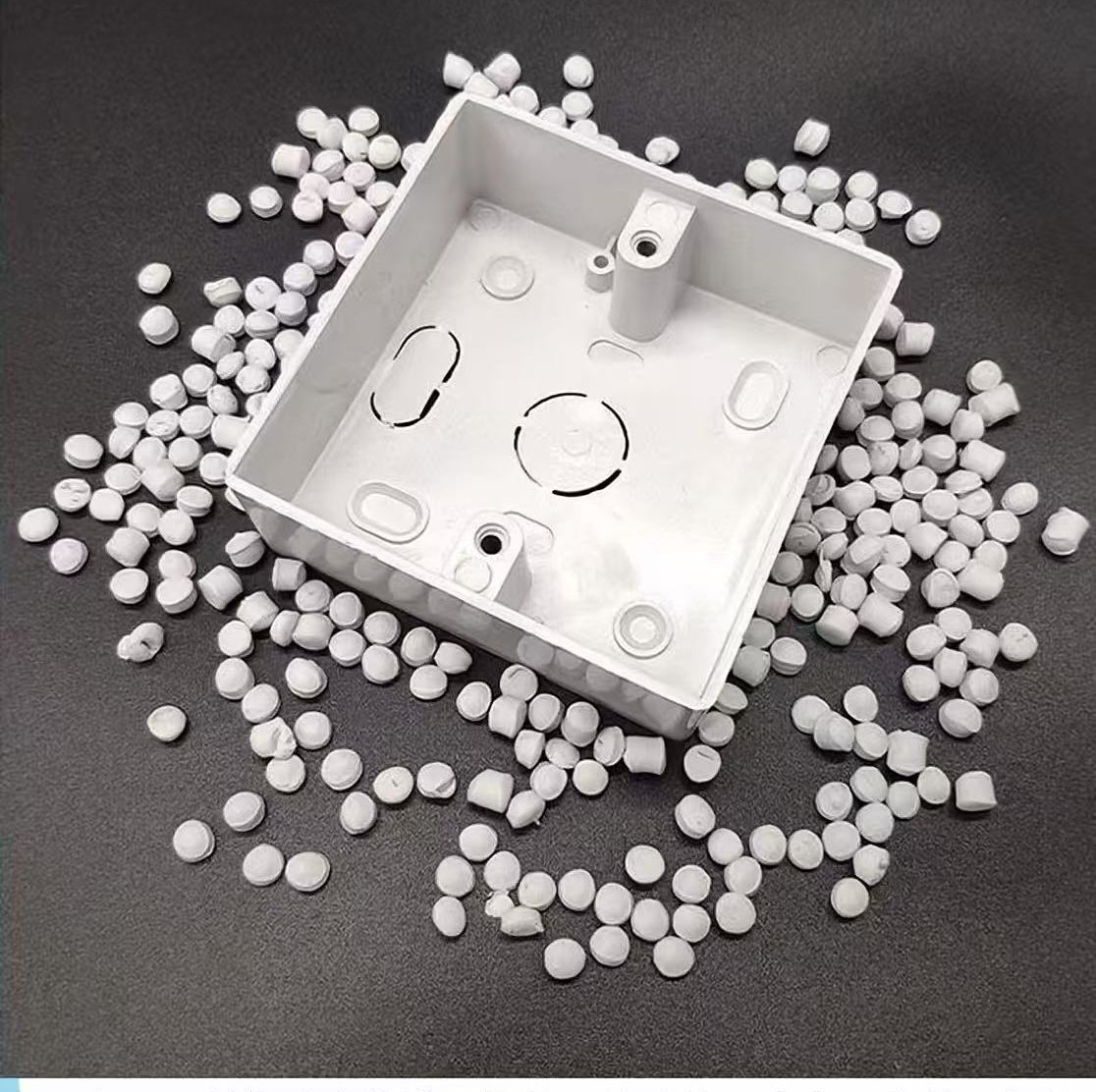
Soft PVC granules for food wrap are pre-compounded polyvinyl chloride pellets specifically formulated for the extrusion of flexible food packaging films, particularly cling wrap and stretch films. Unlike rigid PVC used in pipes or profiles, Soft PVC granules for food wrap incorporate specialized plasticizers, stabilizers, and processing aids that impart flexibility, clarity, and self-adhesion.
These granules are produced by blending PVC resin with carefully selected additives in precise proportions, then pelletizing the mixture into uniform, free-flowing pellets. The resulting food-grade PVC granules for packaging arrive at the film extrusion line ready to process—eliminating the need for in-house compounding, reducing material variability, and ensuring consistency. Many film converters now rely exclusively on Soft PVC granules for food wrap to maintain high output and low scrap rates.
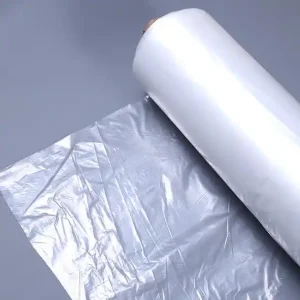
Why Choose Soft PVC Granules? Key Advantages
Soft PVC granules for food wrap are not simply one option among many—they offer a combination of properties that no other single material can match for commercial cling film applications. Below are the key reasons to specify Soft PVC granules for food wrap in your extrusion line.
Uncompromised Food Safety and Regulatory Compliance
The number one priority for any food packaging material is safety. Soft PVC granules for food wrap manufactured to food-grade standards are formulated with compliant plasticizers and stabilizers, free from heavy metals such as lead and cadmium, and designed to meet stringent migration limits. Using certified Soft PVC granules for food wrap gives film producers the documentation needed to access global markets.
Regulatory compliance requires adherence to frameworks such as the U.S. FDA (21 CFR 170–199 for food additives) and the European Union’s Regulation (EC) No 1935/2004, supplemented by (EU) No 10/2011 for plastics. The EU’s plastics regulation was updated in March 2025 via Commission Regulation (EU) 2025/351, with existing compliant products allowed to remain on the market until September 2026. Reputable manufacturers design their PVC granules for food packaging film to comply with both FDA and EU standards, and Soft PVC granules for food wrap from trusted sources carry full compliance documentation.
Superior Optical Clarity
Food marketing depends on presentation. When consumers shop for fresh meat, cheese, or produce, they want to see the product clearly—not a hazy, fogged, or discolored film. Soft PVC granules for cling film are engineered to produce films with outstanding transparency, low haze, and high gloss. This clarity is a direct result of using high-quality Soft PVC granules for food wrap with optimized additive systems.
Supermarket trials consistently show that products wrapped in high-clarity PVC film sell faster than those in less transparent alternatives. The crystal-clear appearance of flexible PVC for food wrap film allows the natural colors and textures of food to be fully visible, building consumer confidence and enhancing shelf appeal. For this reason, leading retailers mandate the use of Soft PVC granules for food wrap for their private-label cling films.
Excellent Cling and Stretch Performance
The defining characteristic of cling film is its ability to adhere tightly to itself and to food containers without tearing. Soft PVC granules for food wrap deliver exactly this property through carefully balanced plasticizer systems. Film producers who switch to premium Soft PVC granules for food wrap often report immediate improvements in cling strength and stretch uniformity.
PVC cling film is traditionally favored for its excellent cling strength and clarity, and it offers good oxygen barrier properties, making it suitable for wrapping raw meats and cheese. The soft yet strong cling ensures airtight seals without tearing, outperforming traditional polyethylene wraps in many applications. Additionally, PVC film can be stretched over 150% without losing integrity, conforming tightly to irregularly shaped foods and containers of various sizes. All these performance advantages trace back to the quality of the Soft PVC granules for food wrap used at the start of the process.
Thermal Stability for Reliable Extrusion
Film extrusion is a demanding high-temperature process. Poor thermal stability leads to degradation, gel formation, color changes, and line stoppages—all of which increase costs and reduce yields. High-quality Soft PVC granules for food wrap contain optimized heat stabilizer systems that prevent decomposition during processing, ensuring consistent melt flow, minimal gel formation, and extended production runs without downtime. Choosing the right Soft PVC granules for food wrap is therefore a direct contributor to extrusion efficiency.
Balanced Barrier Properties
Different foods require different packaging environments. Soft PVC cling film effectively prevents the penetration of oxygen and moisture, slowing down the oxidation and dehydration processes of food and helping to extend shelf life. The oxygen transmission rate of soft PVC ranges from 300 to 1,100 ml/m²·24hr·atm, which sits between the higher permeability of LDPE (185–500) and the much lower permeability of rigid PVC (5–20). This moderate permeability allows PVC film to provide effective protection while permitting the limited gas exchange that helps keep certain fresh foods—such as produce—in optimal condition. Film manufacturers who use Soft PVC granules for food wrap can fine-tune barrier properties through formulation adjustments.
From Granules to Film: The Manufacturing Process
Understanding how soft PVC granules for food wrap are converted into finished film helps buyers appreciate the importance of raw material quality. Every step relies on the consistency of Soft PVC granules for food wrap.
Step 1 – Compounding: PVC resin is blended with plasticizers (such as DEHP-free alternatives like DOTP or DINCH), heat stabilizers, lubricants, and processing aids in high-intensity mixers.
Step 2 – Pelletizing: The molten mixture is extruded through a die, cooled, and cut into uniform granules. The resulting food-grade PVC granules for packaging are screened for size consistency and packaged for shipment. Premium Soft PVC granules for food wrap are also tested for additive dispersion and thermal stability.
Step 3 – Film Extrusion: Film manufacturers feed the granules into a single-screw or twin-screw extruder with a 30:1 L/D ratio. The material is melted, passed through a flat die, and cast onto a chilled roller to form a thin, uniform film. Using consistent Soft PVC granules for food wrap minimizes thickness variation and surface defects.
Step 4 – Slitting and Winding: The finished film is slit to width, wound onto cores, and packaged for distribution.
Market Outlook and Growth Drivers
The market for soft PVC granules for food wrap is expanding steadily, driven by rising demand for convenient, packaged food and the superior performance of PVC cling films. Industry analysts project continued growth for Soft PVC granules for food wrap as food safety standards tighten worldwide.
The global transparent PVC granules market is poised for substantial growth, projected to reach approximately USD 9,500 million by 2025, with a compound annual growth rate of around 6.8% through 2033, fueled primarily by demand from the packaging sector. Within this segment, Soft PVC granules for food wrap represent a significant and growing share.
Within the PVC cling films segment specifically, the global market was valued at USD 899.47 million in 2025 and is projected to grow to USD 1,296.39 million by 2034, exhibiting a CAGR of 4.15%. Regionally, North America holds 34% of the market, followed by Asia-Pacific at 29% and Europe at 27%. China accounts for 10% of the Asia-Pacific market, while Germany and the United Kingdom hold 9% and 8% of Europe’s market, respectively.
The food-grade PVC stretch film market is growing even faster, with projections from USD 1,219 million in 2024 to USD 1,786 million by 2031 at a CAGR of 5.6%. Emerging trends include the development of thinner yet high-strength films that reduce material usage, formulations optimized for specific food categories such as meat and fresh produce, and increased demand for automation-friendly machine-grade films. All these trends increase the need for consistent, high-quality Soft PVC granules for food wrap.
Key Applications and End-Use Industries
Soft PVC granules for food wrap are the raw material of choice for a wide range of food packaging applications. Below are the primary sectors that rely on Soft PVC granules for food wrap for their daily operations.
-
Meat, Poultry, and Seafood Packaging: The high clarity and strong cling of PVC film allow butchers and supermarket deli counters to wrap fresh meat products attractively while maintaining a tight seal that locks in moisture and prevents spoilage. The moderate oxygen permeability helps keep red meat looking fresh and appealing. These films are almost exclusively produced from Soft PVC granules for food wrap.
-
Fresh Produce: Fruits and vegetables benefit from the balanced barrier properties of PVC cling film, which retains moisture while allowing limited gas exchange to slow ripening. Producers of produce film specify Soft PVC granules for food wrap to achieve the right breathability/clarity balance.
-
Ready-to-Eat Meals and Deli Items: Commercial kitchens and foodservice operators rely on PVC stretch film to cover prepared dishes, sandwiches, and salads, preserving freshness and preventing contamination. Many of these films are made from Soft PVC granules for food wrap that offer excellent puncture resistance.
-
Dairy Products: Cheese blocks, butter, and other dairy items are commonly wrapped in PVC film to prevent drying and odor absorption. The tackiness provided by Soft PVC granules for food wrap ensures a tight seal around irregular dairy shapes.
-
Supermarket and Retail Operations: Grocery stores use jumbo rolls of PVC cling film for in-store wrapping of bulk items, bakery products, and fresh cuts. The consistent performance of Soft PVC granules for food wrap enables high-speed automatic wrapping machines to run without interruption.
Soft PVC Granules vs. Alternative Materials
Choosing the right raw material for food wrap production requires understanding the trade-offs between soft PVC granules for food wrap and alternatives like LDPE. The table below summarizes the key differences.
| Property | Soft PVC | LDPE (Low-Density Polyethylene) |
|---|---|---|
| Cling Strength | High – excellent self-adhesion | Medium to low – requires additional tackifiers |
| Optical Clarity | Excellent – crystal clear | Moderate – lower transparency |
| Oxygen Barrier | Moderate (300–1,100 OTR) | Lower (185–500 OTR) – more permeable |
| Tensile Strength | High (≥10 MPa, some grades ≥29 MPa) | Moderate |
| Stretchability | Excellent (150%+) | Good |
| Microwave Safety | Limited (not recommended unless specifically formulated) | Yes (if labeled microwave-safe) |
| Recyclability | Challenging – not widely accepted in municipal programs | Easier – widely recycled (#4 plastic) |
| Plasticizer Content | Contains plasticizers (now DEHP-free formulations available) | Plasticizer-free |
| Cost | Medium | Low to medium |
| Best For | Commercial food wrapping, deli counters, meat and cheese packaging | Home use, general-purpose wrapping, microwave-safe applications |
PVC cling film offers good oxygen barrier properties and superior cling, making it suitable for short-term refrigerated storage of meats and cheeses. LDPE, while safer for microwave use and more easily recycled, has weaker cling and lower clarity, which can be limiting for retail display applications. For food manufacturers and retailers prioritizing presentation and sealing performance, flexible PVC for food wrap film remains the preferred choice, and that performance begins with Soft PVC granules for food wrap.
Critical Quality Factors When Selecting Soft PVC Granules
Film manufacturers should evaluate soft PVC granules for food wrap suppliers on the following criteria. Choosing the right Soft PVC granules for a food wrap supplier is a strategic decision.
-
Regulatory Documentation: Request Certificates of Analysis (COA) and Declarations of Conformity (DoC) confirming FDA and EU compliance, including migration test results. Reputable Soft PVC granules for food wrap suppliers provide these documents with every shipment.
-
Plasticizer Type: Increasingly, buyers specify DEHP-free formulations using alternatives such as DOTP, DINCH, or TOTM, which offer excellent performance without the regulatory concerns associated with restricted phthalates. Leading Soft PVC granules for food wrap are now DEHP-free by default.
-
Thermal Stability: High-quality granules maintain stability at processing temperatures up to 200°C without yellowing or gel formation. This is a key specification for any Soft PVC granules for food wrap intended for high-speed extrusion.
-
Consistency: Uniform particle size and additive dispersion ensure stable extrusion, minimal waste, and consistent film properties roll after roll. This consistency is the hallmark of premium Soft PVC granules for food wrap.
-
Purity: Food-grade granules must be free from contaminants, heavy metals, and restricted substances, verified through independent laboratory testing. Always request purity data for your Soft PVC granules for food wrap supply.
FAQ
1. Are soft PVC granules safe for direct food contact?
Yes, food-grade formulations comply with FDA (21 CFR) and EU (EC 1935/2004 and EU 10/2011) regulations, with migration limits tested to ensure no harmful substances transfer to food. Always source Soft PVC granules for food wrap from certified suppliers.
2. What is the difference between soft PVC and LDPE food wrap?
PVC offers superior cling, clarity, and a moderate oxygen barrier; LDPE is more flexible, microwave-safe, and easier to recycle, but has weaker cling and lower transparency. For commercial applications, Soft PVC granules for food wrap are the standard.
3. Are phthalates still used in soft PVC food wrap granules?
Leading manufacturers now offer DEHP-free formulations using safer plasticizers such as DOTP and DINCH. Modern Soft PVC granules for food wrap are formulated to meet global phthalate restrictions.
4. What thickness range can be produced from these granules?
Food-grade PVC cling film is typically extruded to thicknesses of 8 to 15 microns, with some applications up to 20 microns, depending on the end use. Using high-quality Soft PVC granules for food wrap enables thinner gauges without tearing.
5. How should soft PVC granules be stored before use?
Store in a cool, dry environment away from direct sunlight and moisture. Properly stored, Soft PVC granules for food wrap remain stable for up to 12 months.
Conclusion
The quality of finished food wrap film is determined before extrusion ever begins. Soft PVC granules for food wrap that are properly formulated, rigorously tested, and fully certified provide the foundation for films that perform reliably, comply with global regulations, and satisfy the most demanding customers.
From crystal clarity and strong cling to thermal stability and processing efficiency, premium food-grade PVC granules for packaging deliver the properties that film manufacturers need to compete in today’s quality-driven marketplace. As consumer demand for fresh, visually appealing packaged food continues to rise, and as global regulations tighten around food-contact materials, the choice of raw material becomes more critical than ever. For film producers, that choice increasingly points to Soft PVC granules for food wrap as the most reliable, high-performance solution.
Ready to source high-quality soft PVC granules for your food wrap production? Please feel free to contact us if you have any questions.