Introduction
Toy recalls, failed compliance tests, and unstable molding often begin with one mistake: choosing the wrong raw material. Toy manufacturers need materials that are both safe and easy to process. High-quality PVC granules for toy components help brands meet global safety standards such as EN71 and ASTM F963 while improving molding consistency, surface finish, and long-term durability—but only when the correct plasticizer system and hardness grade are selected.
Over the past several years, supplying toy-grade PVC compounds to factories across Asia and Europe, we have seen clearly which formulations perform well in mass production and which ones lead to delays, rejects, or expensive recalls. This article combines those real-world observations with practical sourcing advice to help manufacturers avoid common mistakes and choose the right PVC granules for toy components for different toy applications.
For example, we once saw a batch of soft PVC teethers fail phthalate testing by just 0.05%, forcing a 50,000-piece production run to stop before shipment. In another case, a customer replaced a low-cost rigid grade with more durable PVC granules for toy components and reduced warranty return rates by 60% within two product cycles. These results were not accidental. They came down to three key factors: regulatory compliance, stable injection molding performance, and proven real-world durability. Let us look at each of them in detail.
What “Safe” Really Means in 2026: Beyond Phthalate-Free
A common question we get is whether our PVC is phthalate-free. That is not exactly the right question. The better question is: which plasticizer do you use, and is it approved for your target markets?
In our experience, many toy brands are still confused about REACH Annex XVII requirements. The regulation does not ban all phthalates—it bans DEHP, DBP, BBP, DIBP, DINP, DIDP, and DNOP at concentrations above 0.1% by weight of the plasticized material. Other plasticizers may be technically legal but not necessarily safe for children under three. For example, some low-cost alternatives like DOTP (dioctyl terephthalate) have less toxicological data for mouth-contact toys.
The plasticizer we recommend and use most often for EU and US toy orders is DINCH (BASF’s Hexamoll®). It has been tested for reproductive toxicity, migration, and endocrine disruption more thoroughly than almost any other non-phthalate plasticizer on the market. DINCH passes EN71, CPSIA, and even FDA food contact requirements. When you select PVC granules for toy components with DINCH, you significantly reduce compliance risk.
Real-world note: One customer making squeeze animal toys for infants originally used a generic “non-phthalate” compound. Random compliance testing detected traces of a banned phthalate from cross-contamination during blending. They switched to our pre-compounded DINCH-based safe PVC granules for toy components, and no more surprises. Avoid custom mixing unless your supplier can guarantee full segregation and batch testing.
Regulatory Snapshot for Busy Manufacturers
If you export to multiple regions, you ideally want one material that satisfies all major standards. Based on our compliance files, here is what you need:
| Market | Key Standard | Phthalate Limit | Heavy Metal Limit (Migration) |
|---|---|---|---|
| EU | EN71-3 + REACH | ≤0.1% each for 7 phthalates | Antimony, arsenic, barium, cadmium, chromium, lead, mercury, selenium |
| USA | ASTM F963 + CPSIA | ≤0.1% for DEHP, DBP, BBP, DINP, DIDP, DnOP | Lead ≤90 ppm (coating), ≤100 ppm (substrate) |
| China | GB 6675 | Similar to EN71 | 8 heavy metals per ISO 8124 |
We see many small manufacturers fail not on the material itself but on documentation. They buy granules from a trader who cannot provide batch-specific test reports. Our advice: always request third-party test reports (SGS, TÜV, or Intertek) directly from the compounder, not just from the resin supplier. Reliable PVC granules for toy components come with full traceability.
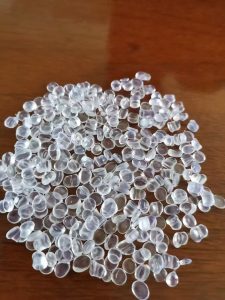
Durable PVC Granules for Toy Components: What Breaks and Why
From our production floor and customer returns, about 70% of toy part failures come not from bad design but from material brittleness or plasticizer migration. Here are two real cases.
Case 1 – Action figure arm joint. A manufacturer used a rigid PVC grade with insufficient impact modifier. After 300 flex cycles, the arm snapped at the socket. We switched them to durable PVC granules for toy components with added acrylic impact modifier and CPE (chlorinated polyethylene). Cycle life went from 300 to over 8,000 cycles. Material cost increased by about 12%, but warranty claims dropped by 85%.
Case 2 – Building block connector. A customer complained that the connectors became loose after three months on store shelves. The cause was plasticizer migration from a neighboring soft component (a rubber wheel) that made direct contact with the connector. We reformulated the connector using a lower-migration plasticizer (DINCH again) and added a surface treatment. The problem was solved without changing the design. Choosing the right PVC granules for toy components from the start would have avoided the issue entirely.
How to Select the Right Hardness Without Over-Engineering
We often see customers ask for “as soft as possible” without considering rebound and shape retention. For a squeeze toy that needs to return to its original shape quickly, a Shore A of 50–60 works well. For a teether that will be chewed constantly, we suggest Shore A 65–75; anything softer than 50 tends to tear. For poseable doll limbs, a Shore A 70–85 with an aluminum wire insert is typical.
From our internal compounding log, here is a quick selection guide for flexible PVC granules for toy components:
| Target Application | Recommended Shore A | Common Failure: If Wrong |
|---|---|---|
| Teether/chew toy | 65–75 | Tearing if too soft |
| Squeeze animal (fast rebound) | 50–60 | Permanent denting if too soft |
| Doll limb (poseable) | 70–85 with wire | Insufficient friction if too hard |
| Action figure joint | 60–75 (or rigid for skeleton) | Brittle fracture if unmodified |
For rigid parts like building block bases or internal chassis, use Shore D 50–70 formulations. These durable PVC granules for toy components also require good impact modifiers to avoid cracking during assembly.
PVC Granules for Toy Components Injection Molding: Process Tips from the Floor
The choice of material directly affects molding efficiency, defect rates, and final part quality. Based on hundreds of molding trials, we have seen that many processing issues blamed on the material actually come from incorrect machine settings.
We often see molding defects caused by unstable barrel temperature rather than material quality itself. PVC is sensitive to heat. If the melt temperature exceeds 200°C for soft PVC or 210°C for rigid PVC, degradation begins. You will notice burnt streaks, yellowing, and even corrosive gas that attacks the mold. Quality PVC granules for toy components injection molding include optimized heat stabilizers, but they still require proper temperature control.
Recommended Parameters (Based on Actual Production)
| Parameter | Soft PVC (Shore A 40–80) | Rigid PVC (Shore D 50–70) |
|---|---|---|
| Melt temperature | 165–190°C | 185–205°C |
| Mold temperature | 30–60°C | 40–70°C |
| Injection pressure | Up to 1200 bar | Up to 1500 bar |
| Holding pressure | Up to 800 bar | Up to 1000 bar |
In our experience, keeping the melt temperature on the lower side of the range reduces degradation risk while still allowing good flow. Also, ensure the screw design is PVC-compatible (no sharp edges, appropriate compression ratio). If you are using a general-purpose screw, you may see inconsistent plasticization and splay marks on the part surface.
Colored PVC Granules for Toy Components: Consistency Without Paint
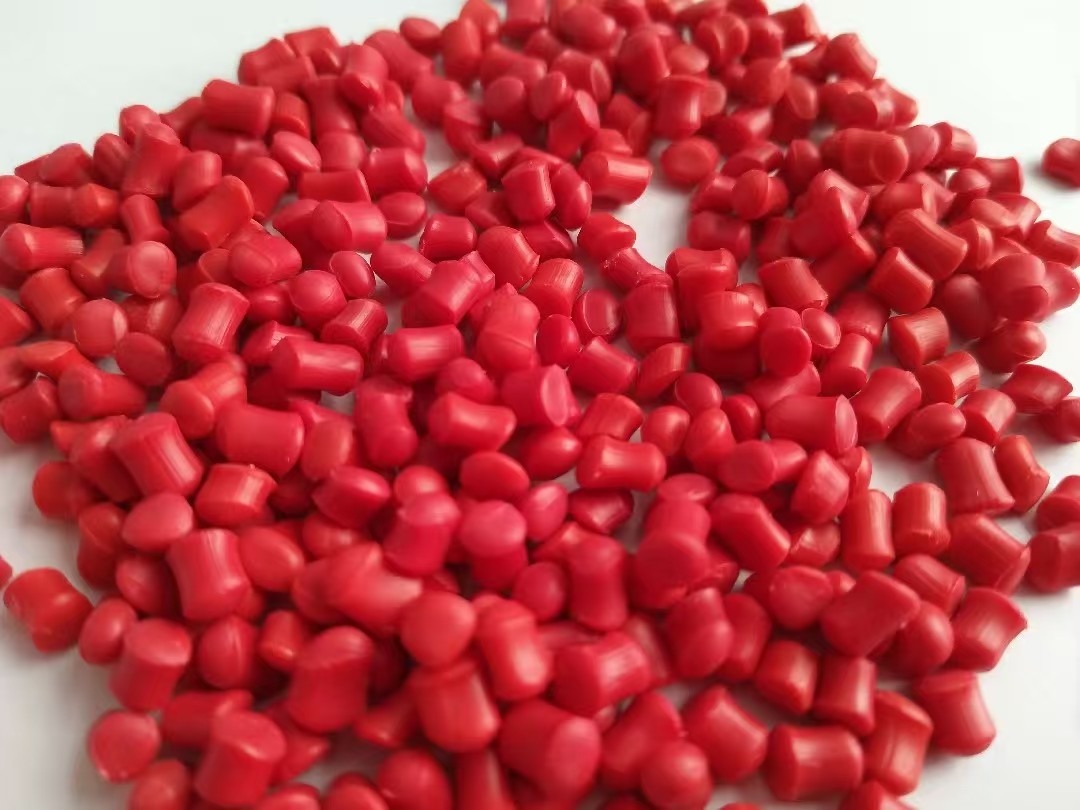
Toy products live or die on visual appeal. Colored PVC granules for toy components offer excellent colorability, supporting vibrant, consistent pigmentation that remains fade-resistant over time. But there is a practical advantage that many buyers overlook: pre-colored granules eliminate the need for post-molding painting.
Why this matters: Paint adds cost, complexity, and—crucially—additional heavy metal or phthalate risks. One of our clients switched from painting ABS parts to using colored PVC granules for toy components for their figurine line. They eliminated a separate painting line, reduced compliance testing costs, and completely removed paint chipping complaints from customers.
Custom Brand Colors and Batch Consistency
Professional compounders can match virtually any Pantone or RAL color through precise pigment dispersion. For high-volume toy lines requiring unique brand colors, custom-colored compounds ensure every injection-molded part matches exactly—from the first cavity to the millionth. We keep color chip samples from every batch and can supply a color tolerance report (delta E ≤ 1.0 is typical).
A common question: Do colored granules cost more than natural ones? Typically, yes, due to pigment dispersion and quality control requirements. However, the incremental cost is often offset by eliminating separate painting operations and their associated compliance testing. For many toy makers, the total landed cost is actually lower with pre-colored PVC granules for toy components.

Flexible PVC Granules for Toy Components: Softness with Integrity
Soft toys, teethers, and inflatables all require flexible PVC granules for toy components that retain their flexibility over time without exuding plasticizer to the surface (a phenomenon called “blooming”).
The best-performing flexible grades use DINCH or similar high-molecular-weight plasticizers. These plasticizers are more resistant to migration and extraction by saliva or sweat. In our tests, DINCH-based flexible PVC granules for toy components show less than 1% weight loss after 7 days at 70°C, while traditional phthalate-based flexible compounds can lose 3–5% under the same conditions. Lower migration means longer product life and better safety.
Real Use Case: Inflatable Toys
For inflatable toys, the material must be both soft and airtight. We manufacture a specialized flexible PVC compound with a slightly higher molecular weight and a tailored stabilizer package to improve weld strength. One customer producing inflatable ride-on toys reduced their seam failure rate by 40% after switching to our formulation. They had previously used a general-purpose flexible PVC that worked for sheets but not for high-frequency welding.
Comparison: How PVC Granules Stack Up Against Other Toy Materials
Many toy manufacturers ask whether they should switch to TPE, ABS, or polypropylene. The answer depends on your application. Here is a concise comparison based on actual project data:
| Criteria | PVC Granules (Toy Grade) | ABS | TPE/TPR | Polypropylene (PP) |
|---|---|---|---|---|
| Cost per kg | Moderate | Moderate–High | High | Low |
| Flexibility range | Wide (Shore A 30–Shore D 70) | Narrow (rigid only) | Medium–wide | Narrow (rigid) |
| Molding ease | Good (with proper stabilizers) | Excellent | Excellent | Excellent |
| Colorability | Excellent | Good | Good | Good |
| Regulatory path for toys | Mature (EN71, ASTM, REACH) | Mature | Varies | Mature |
| Soft-touch capability | Yes (plasticized) | No | Yes | Limited |
| Recyclability | Growing infrastructure | Moderate | Limited | Established |
Our take: For cost-effective applications requiring both rigid and soft versions within the same material family, PVC granules for toy components remain unmatched. TPE/TPR is superior for medical-grade softness with extremely low migration, but at significantly higher cost. ABS and PP are excellent for rigid parts, but cannot deliver the soft-touch or highly flexible properties that many toy designs require.
Common Pitfalls We Have Seen (And How to Avoid Them)
Let me share three frequent mistakes from real orders:
-
Mixing different PVC grades in the same hopper. One manufacturer tried to use leftover rigid PVC granules with soft PVC granules to save cost. The result: inconsistent hardness, poor weld lines, and rejected batches. Always keep your PVC granules for toy components separated by grade.
-
Skipping drying even for PVC. While PVC is less hygroscopic than nylon, surface moisture can still cause splay marks on glossy parts. We recommend drying at 60–70°C for 1–2 hours if the humidity is above 50%.
-
Assuming all “non-phthalate” compounds are equally safe. We tested several low-cost non-phthalate compounds and found high levels of DEHP from cross-contamination. Always ask for the specific plasticizer name and request a phthalates test report (EN71-10/11 or equivalent). This is especially critical when sourcing PVC granules for toy components for sensitive applications.
Market Considerations and Sourcing Tips
The global doll, toy, and game market grew from approximately US$138 billion in 2025 to an estimated US$149 billion in 2026, reflecting continued consumer demand and steady industry expansion. Meanwhile, the inflatable toys segment alone is projected to reach US$3.33 billion by 2031. This ongoing growth is increasing demand for consistent, compliant, and high-performance materials across global toy supply chains.
For manufacturers looking to source safe PVC granules for toy components, we recommend the following checklist:
-
Ask for the specific plasticizer type (preferably DINCH for sensitive applications)
-
Request batch-specific SGS or TÜV reports for EN71-3 and phthalates
-
Run a small trial batch before full production to verify mold filling and surface finish
-
Check the supplier‘s production lot traceability system
Need help selecting the right hardness or compliance grade for your next toy project? Our technical team can recommend suitable PVC granules for toy components based on your target markets and molding equipment.
FAQ
Q1: Are PVC granules for toy components safe for children under three years old?
Yes, when formulated with approved non-phthalate plasticizers like DINCH. Always check EN71 and CPSIA compliance reports for the specific batch.
Q2: How can I verify a supplier‘s safety claims quickly?
Request a third-party test report (SGS, TÜV, Intertek) showing phthalates (≤0.1% each) and heavy metal migration per EN71-3. No report, no purchase.
Q3: Can PVC granules be recycled after a toy reaches end-of-life?
Yes. European projects like PRecycling and REPLAY are building dedicated collection and recycling networks for end-of-life toys. Work with certified recyclers.
Q4: What is the shelf life of stored PVC granules?
Properly stored in cool, dry conditions (below 30°C, no direct sunlight), quality PVC granules for toy components remain stable for 12–24 months.
Q5: Do colored PVC granules for toy components cost more than natural ones?
Typically, yes, due to pigment dispersion and quality control. However, the added cost is often offset by eliminating separate painting and compliance testing.
Conclusion
From EN71 and ASTM F963 compliance to injection molding performance and vibrant color consistency, high-quality PVC granules for toy components provide the foundation for toys that are safe, durable, and visually appealing. The regulatory environment continues to tighten, consumer expectations continue to rise, and the right material partner makes a measurable difference in your failure rates and compliance costs.
Whether you need flexible PVC granules for toy components for soft teethers, colored PVC granules for toy components for vibrant figurines, or custom formulations for specialized applications, working with a certified supplier ensures your products meet global safety benchmarks without compromising production targets.
Ready to test our toy-grade PVC compounds? Contact us with your target Shore hardness, color requirements, and destination markets. We will provide material samples, compliance documentation, and processing recommendations tailored to your injection molding setup.