
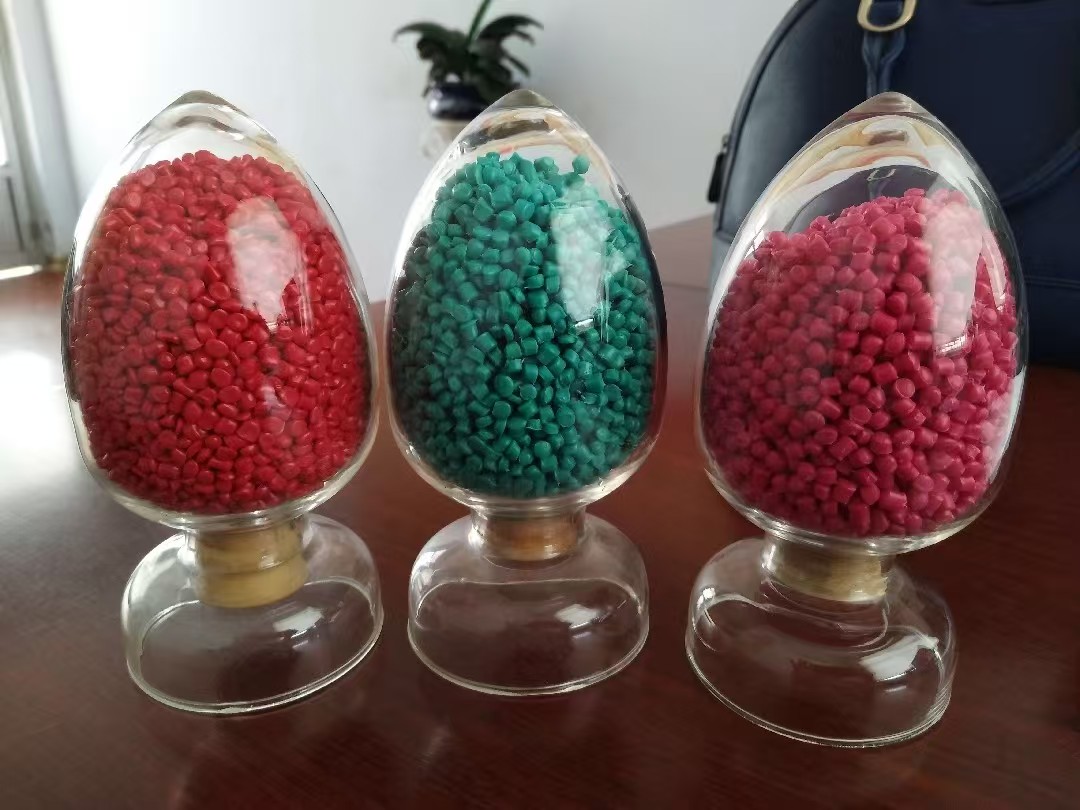
Choosing PVC granules for decorative tapes involves more than comparing prices or checking whether the compound meets basic color requirements. The right PVC compound must deliver consistent processing performance, stable color reproduction, and reliable film properties after adhesive coating. For manufacturers and B2B buyers, material selection should account for formulation safety, processing compatibility, film quality, and batch consistency. This guide examines the key technical and commercial factors to consider when sourcing PVC granules for decorative tape production.
Why the Application Determines the PVC Compound Requirements
Decorative tape films require consistent surface appearance, flexibility, and dimensional stability. Since the film remains visible in the finished product, color consistency and surface quality are essential. It must also conform to curved or irregular substrates and withstand thin-gauge converting without frequent web breaks. These requirements differ from those of cable jacketing or rigid PVC panels, where appearance and flexibility may have different priorities.
Key performance requirements include:
- Surface appearance: Consistent color, clarity, and surface finish.
- Flexibility: Sufficient conformability for curved and irregular surfaces.
- Converting performance: Adequate film strength for coating, slitting, and unwinding.
- Storage stability: Resistance to excessive curling, shrinkage, and blocking.
When sourcing PVC granules for decorative tapes, buyers should match the compound properties to the intended film structure and application. Flexible PVC formulations are commonly used, but the required hardness and flexibility depend on the product design. The resin K value is also an important consideration because it affects melt viscosity, fusion behavior, and mechanical properties. A K value of around 60–70 may be a reference range for some flexible PVC film formulations, although the suitable grade depends on the formulation and processing method.
These properties should be evaluated together rather than individually. Higher K-value resins generally increase melt viscosity and may require adjustments to processing conditions. A softer compound can improve conformability but may also increase the risk of blocking during storage. Buyers should therefore consider film thickness, processing equipment, adhesive compatibility, and end-use conditions when selecting a suitable PVC compound.
Formulation Safety: What “Plasticizer-Free” Actually Means for a Decorative Film
Material safety is no longer just a compliance checkbox in decorative tape sourcing. Tapes used in homes, schools, offices, and retail environments may face requirements concerning phthalate plasticizers and heavy-metal compounds. PVC formulations without intentionally added restricted phthalates and with suitable heavy-metal-free stabilizers can help manufacturers address relevant RoHS or REACH requirements in their target markets. However, compliance depends on the finished product, applicable substance restrictions, and supporting test documentation.
How Plasticizer Migration Affects Adhesive Performance
Plasticizer selection affects both regulatory compliance and adhesive performance. In decorative tape constructions, the PVC film is in contact with a pressure-sensitive adhesive layer. Conventional plasticizers are physically blended into PVC rather than chemically bonded to the polymer, so some may migrate over time, particularly under elevated temperatures. Depending on the plasticizer, adhesive formulation, and storage conditions, migration can change adhesive properties, potentially reducing cohesive strength or bonding performance. This may contribute to problems such as ghosting, adhesive residue, or premature edge lifting.
Phthalate-free, plasticizer-free, and low-migration formulations are not interchangeable terms. A phthalate-free compound may still contain other plasticizers, while a genuinely plasticizer-free formulation must achieve the required flexibility through its resin selection and other formulation components. These choices also affect processing behavior. Therefore, PVC granules for decorative tapes should be evaluated as a complete formulation, including resin, stabilizer, lubricant, and any impact modifier, rather than by resin specifications alone.
Stabilizer Systems and Color Hold
The stabilizer package helps the compound withstand processing heat and limits thermal degradation and discoloration. Calcium-zinc (Ca/Zn) systems are one common heavy-metal-free option, although the appropriate stabilizer depends on the formulation and processing conditions. During sourcing, request heat-stability data relevant to your production process rather than relying solely on generic laboratory results. Color retention during calendering or extrusion affects shade consistency between batches and the need for downstream pigment adjustment.
The table below summarizes key formulation and specification factors for PVC granules for decorative tapes and their potential effects on finished-film performance.
Table 1: Formulation and specification factors versus finished-film implications
| Sourcing Factor | Typical Range or Option | What It Influences in the Finished Tape Film | What to Clarify with the Supplier |
|---|---|---|---|
| Resin K value | Around 60–70 for some flexible film formulations | Melt viscosity, processing window, tensile and tear balance | Target K value and tolerance; suitability for calendering or extrusion |
| Plasticizer system | Phthalate-free, plasticizer-free, or low-migration formulation | Adhesive compatibility, migration risk, flexibility retention | Plasticizer type and content; migration data and adhesive compatibility |
| Stabilizer system | Heavy-metal-free options, such as Ca/Zn-based systems | Processing heat stability, color retention, compliance profile | Stabilizer chemistry, heat-stability data, relevant RoHS/REACH documentation |
| Clarity and haze | Low-haze or transparent base | Color appearance, transparency, shade consistency | Haze target, base color, pigment compatibility |
| Density | Around 1.30–1.35 g/cm³ for some formulations | Yield per kilogram, film weight, handling | Nominal density and tolerance; effect of filler content on opacity |
| Tensile strength | 12–15 MPa as a possible formulation target | Web strength during coating, slitting, and application | Test method, specimen conditioning, typical or minimum value |
| Elongation at break | Around 200–350% as a possible formulation target | Conformability and stretch behavior during application | Whether testing uses finished film or a molded specimen |
Matching PVC Granules for Decorative Tapes to Calendering or Extrusion
Decorative PVC film is commonly produced by calendering, while extrusion is also used for certain product constructions and production requirements. Each process places different demands on the compound, so a grade suitable for one route may not perform equally well on another. When sourcing PVC granules for decorative tapes, the intended processing method should be part of the material specification rather than treated as a downstream consideration.
Calendering: Surface Quality and Gauge Control
Calendering passes the PVC compound through a series of counter-rotating rolls to form a continuous film. The process is well suited to thin decorative films because it offers precise thickness control and good surface quality. Since appearance is a key requirement for decorative tapes, calendering can provide an advantage in applications requiring uniform surfaces and consistent gauge. The compound must also deliver stable fusion behavior and suitable melt elasticity to maintain sheet integrity as it passes through the rolls and leaves the final calender.
Extrusion: Shear History and Residence Time
Extrusion subjects the compound to screw-driven shear and a different residence-time and temperature profile. It offers flexibility for certain product constructions and production volumes, particularly where a calendering line is not suitable. The sourcing implication is that an extrusion-grade compound may require a different balance of melt flow, fusion behavior, and thermal stability from a calendering grade. A supplier familiar with both processes can recommend suitable PVC granules for decorative tapes based on the required processing characteristics and lubricant package, rather than relying on a generic film-grade description.
This distinction is important when comparing supplier specifications. Tensile strength and elongation indicate aspects of the material’s mechanical performance, but they cannot establish whether the compound will process consistently on a specific line or maintain the required film gauge. A trial on the intended equipment provides more useful evidence. Buyers should record surface finish, gauge variation, scrap rate, and the stable processing window instead of relying on data sheets alone.
The Performance Balance: Flexibility, Clarity, and Dimensional Stability
Decorative tape problems can often be linked to an imbalance between compound properties and production requirements. Three performance areas deserve particular attention when evaluating PVC granules for decorative tapes:
- Optical quality — clarity, haze, and color consistency
- Mechanical durability — tensile strength, elongation, and tear resistance
- Dimensional stability — curl, shrinkage, and lay-flat behavior
Optical Quality and Pigment Response
For PVC granules for decorative tapes, optical quality depends on the base resin and the compatibility of the formulation components. Transparent PVC compounds should provide a clear, low-haze foundation for pigments and masterbatches to develop consistent colors. Variations in resin quality or additive compatibility can affect transparency and create a cloudy appearance that additional pigment cannot necessarily correct. In decorative applications, clarity directly influences the appearance of transparent films, while the base color and pigment dispersion affect the final shade of colored films.
Mechanical Durability Under Converting Stress
Mechanical durability depends on balancing several properties. Tensile strength helps the film withstand coating, slitting, and unwinding, while elongation at break indicates its ability to stretch during application without tearing. Tear resistance helps prevent small cuts or edge damage from spreading during converting and use. A compound with high strength but insufficient flexibility may process well yet crack when applied to curved surfaces. Conversely, excessive extensibility combined with low tensile strength may cause deformation under web tension. Buyers should therefore evaluate the combined mechanical properties against the tape’s converting and application requirements.
Dimensional Stability and Curl Control
Dimensional stability is another important factor in decorative tape quality. Film that curls, shrinks, or deforms after winding can cause poor lay-flat, edge misalignment, and application defects. Residual processing stress, cooling conditions, and uneven winding tension can all contribute to these problems, particularly in thicker films. Consistent fusion and melt flow help maintain uniform film thickness, while appropriate processing and winding conditions are also necessary to control residual stress. Buyers should therefore evaluate dimensional stability as part of overall processing performance rather than treating it as an independent material property.
What Separates a Reliable Supplier of PVC Granules for Decorative Tapes from a Quoted Price
Commercial evaluation of PVC granules for decorative tapes often starts—and sometimes ends—with the price per ton. However, price alone provides an incomplete basis for comparison. Compounds with similar quotations may differ in batch consistency, additive composition, documentation, and technical support when processing problems arise. These differences often become apparent only after production begins, when material replacement and line adjustments can be costly.
Documentation and Batch Traceability
A reliable evaluation starts with the intended application. Specify the target film thickness, production process, adhesive system, and end-use conditions in your inquiry. Ask the supplier to recommend a suitable grade based on these requirements rather than simply selecting a standard catalog product. Request grade-specific data for relevant properties, including K-value tolerance, plasticizer system, migration behavior, heat stability, haze, and mechanical performance under defined test conditions. A batch-specific certificate of analysis (COA) provides more useful verification than a general product brochure.
Batch traceability is equally important. Consistent color between production runs depends on stable raw materials, controlled pigment dispersion, and repeatable processing conditions. If a supplier cannot trace delivered material to its production batch and relevant raw material records, investigating color variations or processing problems becomes more difficult.
Trial Support and Change Notification
Suppliers that provide batch identification, retain production samples, and communicate formulation changes in advance can help reduce unexpected production risks. Trial support is also important. Material samples should be evaluated on the intended production line, with technical follow-up to review processing results and identify necessary adjustments. Unannounced changes to formulations or raw materials may affect previously approved performance and require additional qualification.
A practical supplier evaluation sequence for PVC granules for decorative tapes:
- Specify application and processing requirements in the inquiry.
- Request grade-specific technical data and supporting documents.
- Review batch consistency and traceability procedures.
- Conduct a production trial and record processing results.
- Confirm change notification and documentation practices.
Table 2: Practical supplier and incoming-material evaluation checklist for PVC granules for decorative tapes
| Evaluation Area | What to Ask For | Red Flag if Absent or Evasive | Why It Matters for Decorative Tape Film |
|---|---|---|---|
| Grade-specific data | Data sheet covering K value, density, tensile strength, elongation, and haze | Only a generic “film grade” description | Helps determine whether the compound suits thin decorative film production |
| Plasticizer and stabilizer disclosure | Plasticizer type, stabilizer chemistry, and available migration data | No meaningful information beyond “proprietary formulation” | These components affect adhesive compatibility and compliance considerations |
| Batch consistency records | Batch-specific COA, retained samples, and production traceability | No batch records or sample retention procedures | Helps identify the source of color or processing variations |
| Trial support | Production samples and technical follow-up during line trials | Samples provided without processing guidance | Laboratory data alone cannot confirm performance on your calender or extruder |
| Change notification | Advance written notice of formulation or raw material changes | Changes communicated only after production problems occur | Unapproved changes may affect previously qualified material |
| Documentation for target markets | Relevant RoHS/REACH declarations and heavy-metal test documentation, where applicable | Missing or non-grade-specific documentation | Compliance evidence should correspond to the actual compound supplied |
| Packaging and storage guidance | Sealed packaging, handling instructions, and recommended storage conditions | No clear storage or handling recommendations | Poor storage and contamination can affect material quality and finished-film appearance |
FAQ
Q: Does a higher K value always mean better PVC granules for decorative tapes?
No. Higher K values generally improve mechanical strength and tear resistance but increase melt viscosity, potentially making thin-gauge film processing more difficult. The best K value depends on your extrusion process, target flexibility, and finished tape requirements.
Q: Can a plasticizer-free compound still deliver adequate flexibility?
Yes, depending on the formulation. Non-phthalate or low-migration systems can provide flexibility for decorative films without relying on conventional plasticizers. However, elongation, conformability, and handling performance should be verified through application-specific film testing.
Q: How do I compare PVC granules for decorative tapes from two suppliers quoting the same density and tensile range?
Compare test methods, specification tolerances, additive systems, and batch traceability. Identical headline values do not guarantee equivalent performance. Consistent quality documentation and repeatable test results help distinguish reliable suppliers from those offering broader, less controlled specifications.
Q: What processing defects can indicate problems with PVC granules?
Gel particles, commonly called fish eyes, can result from incomplete PVC fusion under unsuitable processing conditions. These defects are especially visible in transparent or high-gloss decorative films. Check raw material consistency, fusion behavior, and extrusion settings to identify the underlying cause.
Q: Should I approve a supplier based on a lab sample?
No. A lab sample is only an initial screening step. Conduct a production-line trial to evaluate surface finish, thickness uniformity, output rate, scrap, and downstream coating or slitting performance. Final approval should also consider batch consistency and quality documentation.
Conclusion
Choosing PVC granules for decorative tapes requires balancing formulation safety, adhesive compatibility, processing requirements, optical clarity, and mechanical performance. The right compound should match your film thickness, production method, and end-use conditions while maintaining consistent quality across batches. Rather than comparing suppliers by price or individual data sheet values, evaluate grade-specific specifications, processing performance, and technical support. Contact Dingshengtong to discuss your decorative tape requirements, request suitable PVC granule specifications, and identify a formulation that fits your production needs.