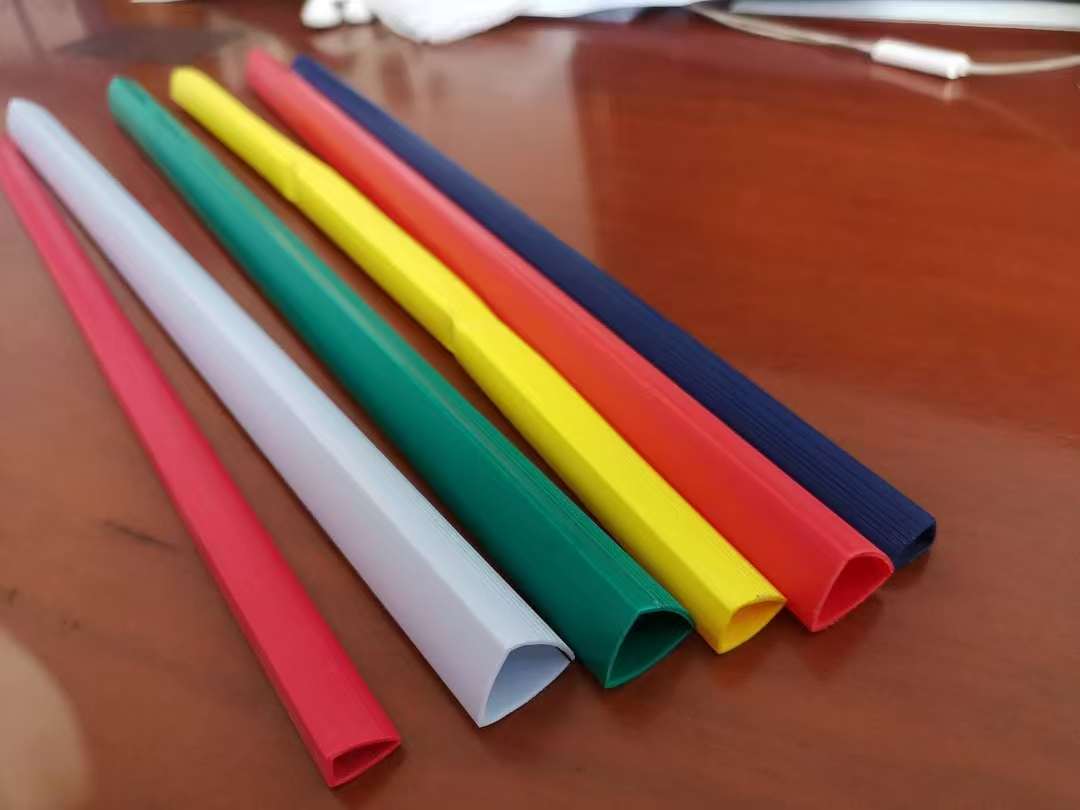
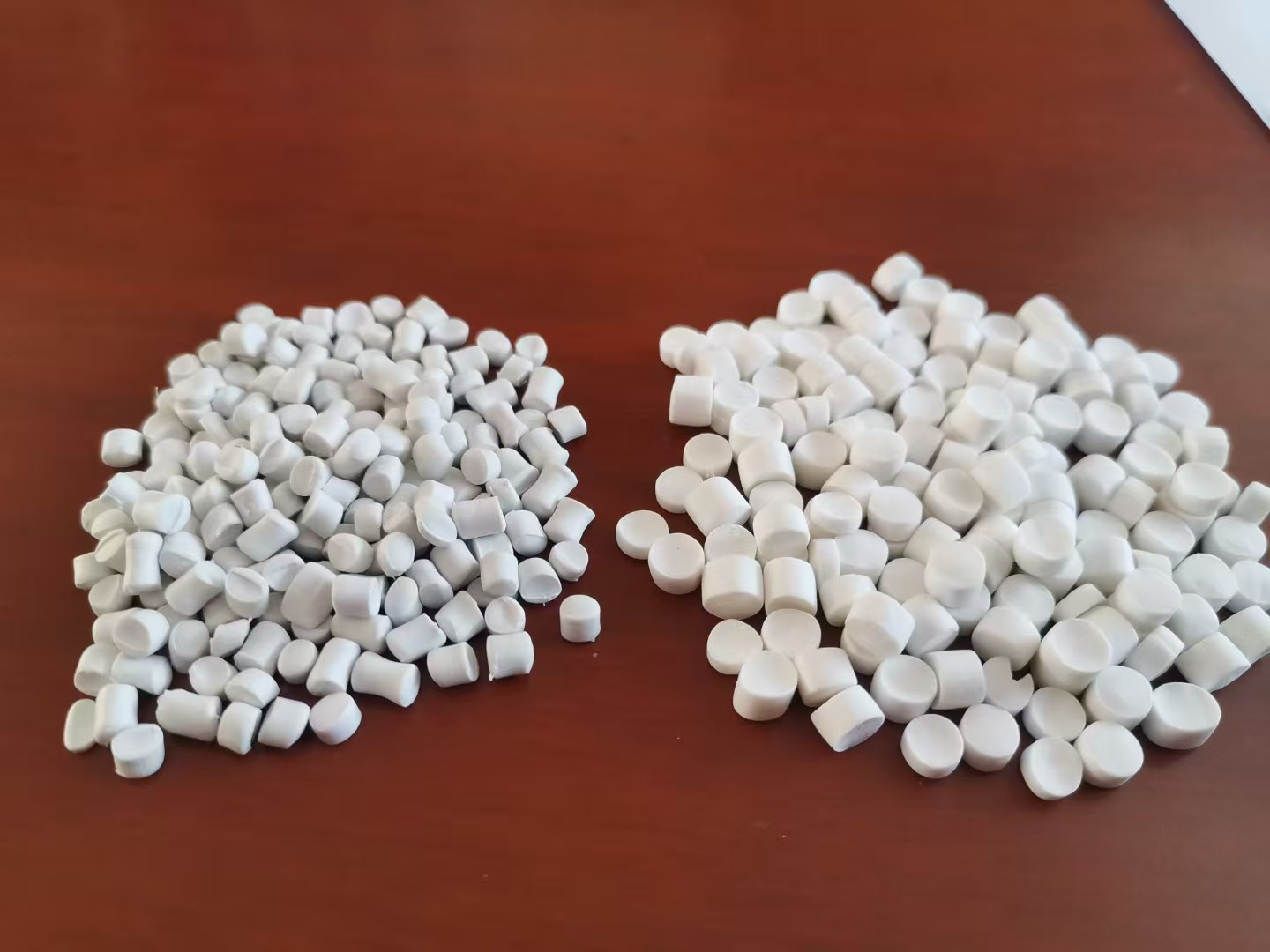
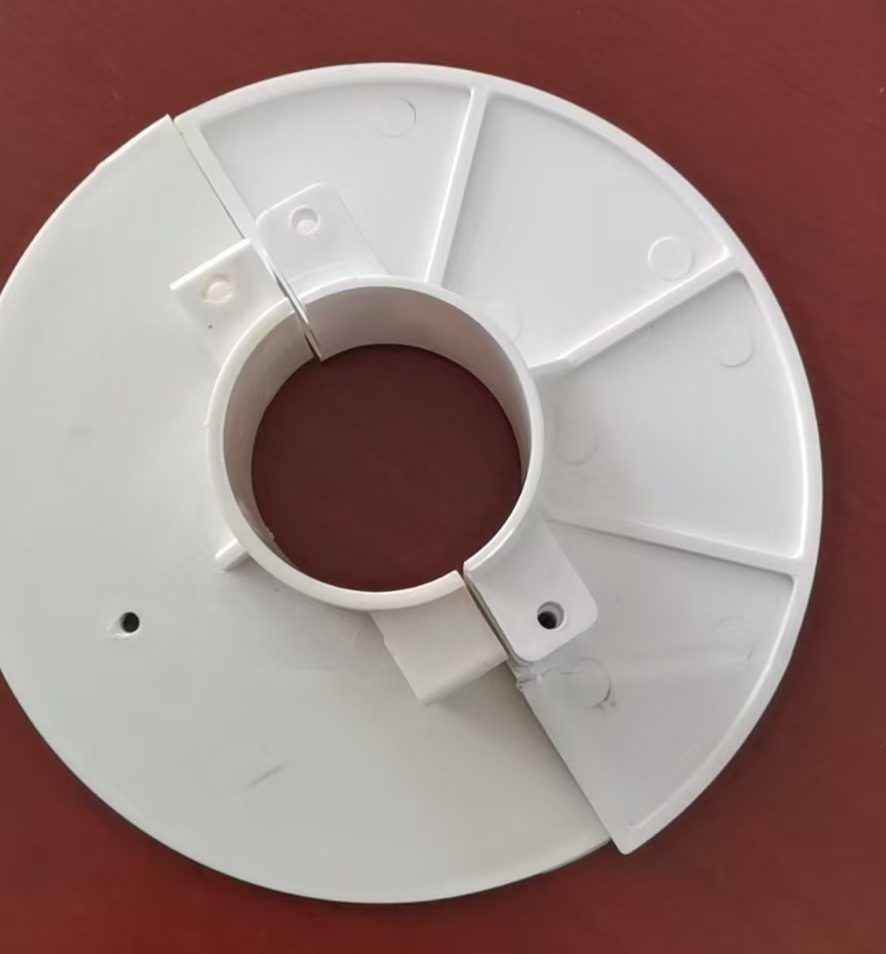
Hạt nhựa PVC and PVC compound are often used interchangeably in the plastics industry because both typically describe a ready-to-process material made by blending PVC resin with additives and converting it into a pellet form. The more important distinction for manufacturers is not granules versus pellets, but PVC resin versus compounded material. This guide explains the terminology, production process, and key selection factors for choosing the right PVC grade for injection molding, extrusion, and custom color applications.
Why Buyers Confuse PVC Granules with PVC Compound
The terms PVC granules, PVC pellets, and PVC compound are often used differently across markets, which can create confusion during material sourcing. In many cases, buyers and suppliers are referring to the same type of pelletized PVC compound, but the terminology may vary depending on region, industry background, and purchasing habits.
For example, a buyer in North America may search for PVC pellets, while a manufacturer in Europe or Asia may use the term PVC granules. Both terms generally describe small solid particles designed for plastic processing equipment. However, the actual material specifications, such as formulation, hardness, plasticizer content, and processing performance, are more important than the product name itself.
Regional Terminology Differences
In North America, PVC pellets are the more commonly used term, while PVC granules are frequently used in Europe and many Asian markets. This difference mainly comes from regional industry terminology rather than a difference in material structure.
When a purchasing manager requests PVC pellets and a PVC compound supplier provides PVC granules, they are often discussing the same pelletized material. For manufacturers, reviewing the supplier’s technical data sheet (TDS) is the best way to confirm material properties and ensure the selected grade meets production requirements.
The Role of PVC Resin in Material Selection
Another term that often confuses is PVC resin. Unlike PVC granules or PVC compound, PVC resin is the basic polymer material produced through polymerization and is typically supplied as a fine white powder. It requires further compounding before it can meet the performance requirements of most manufacturing applications.
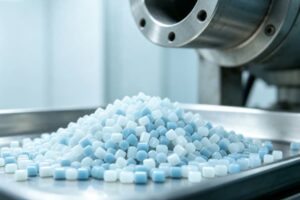
PVC granules are produced by combining PVC resin with additives such as stabilizers, plasticizers, lubricants, fillers, and pigments. Through mixing, melting, and pelletizing processes, the raw resin is converted into a consistent material suitable for applications such as PVC injection molding, extrusion, profiles, pipes, and cable insulation.
The main terms buyers should understand include:
| Term | Meaning |
|---|---|
| [QWEN_MT_ITEM_8]và tích hợp một hệ thống cân bằng cẩn thận các phụ gia tiên tiến. Thiết kế độc đáo này đảm bảo sự kết hợp hiệp đồng giữa các tính năng quan trọng, mang đến sản phẩm cuối cùng không chỉ bền chắc và an toàn mà còn | Raw PVC polymer powder that requires further formulation before processing |
| PVC compound | PVC resin blended with additives to achieve specific processing and performance requirements |
| Hạt nhựa PVC | Pelletized PVC compound commonly supplied for manufacturing processes |
| PVC pellets | Another term for pelletized PVC compound, frequently used in North America |
| Recycled PVC granules | PVC pellets produced from reprocessed PVC materials, with properties depending on the recycling source and formulation |
Understanding these differences helps buyers avoid selecting the wrong material grade. For example, recycled PVC granules and virgin rigid PVC compound may have different mechanical properties, processing behavior, and application suitability. Material selection should always be based on the required performance specifications rather than the terminology used in a quotation.
What PVC Granules Are and How They Are Manufactured
PVC granules are pelletized thermoplastic materials produced through a compounding process. Manufacturing usually starts with PVC resin powder, which is combined with additives such as stabilizers, plasticizers, lubricants, fillers, and pigments to achieve the required processing and performance characteristics. After mixing and pelletizing, the compound becomes a consistent material suitable for applications including PVC injection molding, extrusion, profiles, pipes, and cable insulation.
From PVC Resin Powder to Finished PVC Granules
The production of PVC granules involves multiple controlled steps, and each stage can influence the final material quality, processing stability, and product performance.
- Screening and preparation: PVC resin powder is processed to remove oversized particles or contaminants before mixing. The exact screening method depends on the manufacturer’s equipment and quality requirements.
- Weighing and blending: PVC resin is combined with additives, including stabilizers, plasticizers, lubricants, fillers, and pigments, according to the target formulation.
- Mixing and homogenization: The materials are mixed under controlled conditions to achieve uniform additive distribution throughout the compound.
- Cooling: The mixed material is cooled to improve handling and prevent unwanted fusion before pelletizing.
- Extrusion and pelletizing: The compound is melted, extruded, and cut into uniform PVC pellets or granules suitable for processing equipment.
- Classification and packaging: Finished granules are inspected, packaged, and prepared for shipment according to grade specifications.
Processing conditions vary depending on the formulation, equipment design, and application requirements. For example, rigid PVC compounds and flexible PVC compounds may require different temperature settings due to differences in plasticizer content and performance targets. Manufacturers typically optimize these parameters based on the specific PVC grade and processing method.
Key Physical Properties Buyers Should Check
Not all Hạt nhựa PVC perform the same way. Material properties such as density, particle size, plasticizer content, hardness, and tensile strength can influence feeding performance, melting behavior, processing stability, and final product quality.
The following table shows common properties buyers evaluate when selecting PVC granules. Actual values may vary depending on formulation, application, and supplier specifications.
| Tính Chất | Phạm vi điển hình | Tại sao điều này quan trọng |
|---|---|---|
| Granule size | Commonly produced for standard feeding systems | Affects material flow and processing consistency |
| Bulk density | Grade-dependent | Influences storage, feeding efficiency, and output stability |
| Moisture content | Controlled according to application requirements | Helps reduce processing defects |
| Plasticizer content | Depends on rigid or flexible formulation | Determines flexibility and hardness |
| Tensile strength | Varies by PVC formulation | Indicates mechanical performance |
| Shore hardness | Depends on compound design | Reflects stiffness or softness |
For manufacturers purchasing Hạt nhựa PVC, a technical data sheet (TDS) is one of the most important references. It provides verified information about material properties, processing recommendations, and application suitability. Comparing specifications rather than relying only on product names helps buyers select the right PVC compound supplier and avoid performance issues during production.
PVC Granules vs. PVC Compound: Key Differences at a Glance
The comparison between PVC granules and PVC compound can be confusing because PVC granules are actually one physical form of PVC compound. For manufacturers and buyers, the more meaningful distinction is usually between pelletized PVC compound and powder-form compound, as their physical form can affect material handling, feeding efficiency, and processing performance.
Pelletized PVC compound has already gone through mixing and homogenization before being formed into granules or pellets. Powder-form compound, on the other hand, is typically supplied as a dry blend that requires further processing conditions. These differences can influence how the material flows through equipment, melts during processing, and performs in applications such as PVC injection molding and extrusion.
When the Distinction Matters
Although the terms are often used interchangeably, the difference in material form and formulation becomes important in several purchasing situations.
- Recycled material sourcing: Recycled PVC granules may have different properties depending on the recycling source, sorting process, and previous additives used. They are often selected for applications where recycled content or cost efficiency is a priority, while more demanding applications may require specific material verification.
- Custom color matching: Colored PVC granules are typically produced through customized formulations using pigments and additives. Buyers requiring specific colors or appearance standards should confirm color matching capability and consistency with the PVC granules supplier.
- Performance-focused applications: Different PVC formulations are designed for different requirements. For example, rigid PVC compounds used for profiles, pipes, and fittings prioritize stiffness and dimensional stability, while flexible PVC compounds for cable insulation or seals require higher flexibility and elongation.
- International procurement: Terms such as PVC granules, PVC pellets, and PVC granulate may describe similar pelletized materials in different markets. However, buyers should always evaluate the formulation, technical data sheet (TDS), and application suitability rather than relying only on terminology.
For manufacturers, the product name alone does not define material performance. Reviewing the supplier’s technical specifications, processing recommendations, and application experience is the best way to select the right PVC compound or PVC granules grade for production needs.
How to Choose the Right PVC Granule Grade for Your Application
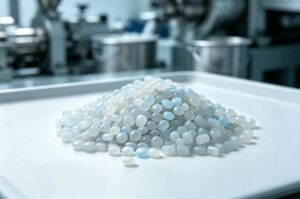
Selecting the right PVC granule grade depends mainly on two factors: the required material performance and the manufacturing process. Buyers should first determine whether the application requires rigid PVC granules or flexible PVC granules, then match the compound formulation and processing characteristics with the intended production method.
Rigid vs. Flexible PVC Granules
Rigid PVC granules are formulated without plasticizers and are designed for applications that require stiffness, dimensional stability, and resistance to environmental conditions. They are commonly used in products such as PVC pipes, profiles, electrical conduits, sheets, and injection-molded fittings.
Flexible PVC granules contain plasticizers that improve softness and flexibility. These materials are often selected for applications where bending, impact resistance, or elasticity are required, including cable insulation, wire coating, seals, flooring, and flexible tubing.
The following table highlights the typical differences between rigid and flexible PVC granules. Actual properties vary depending on formulation, additives, and application requirements.
| Tính Chất | Hạt nhựa PVC cứng | Hạt nhựa PVC dẻo |
|---|---|---|
| Plasticizer content | Usually none | Added according to flexibility requirements |
| Stiffness | High rigidity and dimensional stability | Higher flexibility and softness |
| Hardness range | Typically measured on Shore D scale | Commonly measured on Shore A scale |
| Độ linh hoạt | Thấp | Cao |
| Typical applications | Pipes, profiles, fittings, electrical components | Cable insulation, seals, tubing, flooring |
| Material selection focus | Strength, stability, chemical resistance | Flexibility, elongation, and durability |
Neither rigid nor flexible PVC granules are universally better. The correct choice depends on the final product requirements, processing conditions, and expected service environment.
Matching PVC Granules to Your Processing Method
Choosing the right PVC compound grade also requires understanding the manufacturing process. Different formulations are developed for specific processing methods, including PVC injection molding, extrusion, blow molding, and calendering.
For injection molding applications, manufacturers typically select PVC grades with suitable flow characteristics to fill molds effectively and maintain part quality. For extrusion applications, the compound needs sufficient melt strength to maintain shape and dimensional consistency after leaving the die.
A PVC compound designed for one process may not deliver optimal results in another. Before purchasing, buyers should confirm whether the PVC granules supplier has experience with the intended processing method and can provide appropriate grade recommendations.
A practical selection process includes:
- Define the final product requirements, such as stiffness, flexibility, chemical resistance, appearance, or durability.
- Identify the processing method, including injection molding, extrusion, blow molding, or calendering.
- Review the supplier’s technical data sheet (TDS) for the selected PVC grade.
- Compare key parameters such as hardness, density, mechanical properties, and processing recommendations.
- Conduct a trial production run before placing large-volume orders.
- Confirm required compliance standards, such as RoHS or REACH, based on the target market and application.
Processing Efficiency, Sustainability, and Supplier Verification
The choice between pelletized PVC compound and powder-form compound can influence production efficiency, material handling, and processing stability. Because granules are generally more uniform and easier to handle, they can provide more consistent feeding performance in many manufacturing environments.
How PVC Granule Formulation Affects Production
One advantage of PVC granules is their consistent composition and processing behavior. During compounding, additives such as stabilizers, plasticizers, lubricants, fillers, and pigments are evenly distributed throughout the material. This helps manufacturers achieve more stable processing results, consistent appearance, and uniform product performance.
Compared with powder-form materials, granules typically create less dust during storage and handling. Reduced dust generation can help maintain cleaner production environments and minimize material contamination risks, especially in facilities processing multiple materials.
However, the best material choice depends on the specific application and production setup. Factors such as equipment design, formulation, processing temperature, and product requirements all influence whether PVC granules or powder-form compound is the better option.
What to Look for in a PVC Granule Supplier
When selecting a PVC granules supplier, buyers should evaluate more than the material price. A reliable supplier should be able to provide technical documentation, consistent quality control, and support for application-specific requirements.
Important factors to review include:
- Quality management systems: Certifications such as ISO 9001 can indicate structured quality control processes.
- Regulatory compliance: Documents related to standards such as RoHS and REACH may be required depending on the application and target market.
- Technical data sheet (TDS): Material properties should be supported by tested values, including relevant mechanical and processing characteristics.
- Batch consistency: Consistent formulation and production control help reduce variation between production orders.
- Technical support: Experienced suppliers can assist with material selection, processing recommendations, and troubleshooting.
For manufacturers, choosing the right PVC compound supplier is not only about purchasing pellets or granules. The supplier’s formulation capability, quality control process, and technical experience can directly affect production efficiency and final product performance.
Kết luận
PVC granules and PVC compound are closely related terms, but buyers should focus on the difference between PVC resin, formulated compound, and pelletized materials when selecting products. The right choice depends on factors such as formulation, processing method, and application requirements.
For PVC injection molding, extrusion, profiles, pipes, and cable insulation, always evaluate material specifications rather than product names. Before comparing quotations, review the supplier’s technical data sheet (TDS) and confirm whether the PVC granules supplier can provide the required grade and technical support for your application.