Choosing the right PVC granules for pipes depends on the required stiffness, flexibility, operating conditions, and extrusion process. Rigid PVC compounds suit pipes that need dimensional stability, while flexible PVC compounds are better for bendable tubing and connections. For manufacturers and B2B buyers, understanding these differences helps narrow material options, verify application requirements, and select a suitable PVC granules supplier.
What Is the Difference Between Rigid and Flexible PVC Granules?
PVC granules are pelletized polyvinyl chloride-based materials used in manufacturing processes such as pipe extrusion. Depending on the formulation, they may contain heat stabilizers, lubricants, processing aids, impact modifiers, plasticizers, pigments, and other additives designed to achieve specific processing and performance characteristics.
The primary difference between rigid and flexible PVC granules is their formulation. Rigid PVC compounds generally contain little or no plasticizer, allowing the material to retain stiffness. Flexible PVC compounds contain plasticizers that increase flexibility and make the finished product easier to bend.
Rigid PVC compounds
Rigid PVC, commonly identified as unplasticized PVC (uPVC or PVC-U), is designed to maintain its shape under specified service conditions. It is widely used in water supply pipes, drainage systems, electrical conduit, and other applications that require relatively stiff pipe structures.
Typical characteristics include:
- High stiffness compared with plasticized PVC formulations.
- Good dimensional stability when appropriately formulated and processed.
- Resistance to many water-based environments and chemicals, depending on exposure conditions.
- Suitability for manufacturing pipes with defined dimensions and relatively firm walls.
- Compatibility with established rigid PVC pipe extrusion processes.
For manufacturers sourcing rigid PVC granules, the intended pipe category is an important purchasing consideration. A compound formulated for general rigid products should not automatically be assumed suitable for pressure pipes or other applications with specific mechanical and regulatory requirements.
Flexible PVC compounds
Flexible PVC contains plasticizers that reduce stiffness and improve the material’s ability to bend. Depending on the formulation, flexible PVC granules can be used to manufacture tubing, selected hoses, protective sleeves, and other products that need to accommodate movement.
Common characteristics include:
- Greater flexibility than comparable unplasticized PVC formulations.
- A range of hardness levels to meet different product requirements.
- Potential suitability for tubing that needs to follow curved routes or accommodate movement.
- Formulation-dependent resistance to chemicals, aging, and environmental exposure.
- Different pressure, deformation, and dimensional behavior from rigid PVC.
Flexible PVC should not be treated simply as rigid PVC with a lower hardness value. Plasticizer type and content can affect mechanical properties, thermal behavior, and compatibility with the transported medium.
When evaluating flexible PVC granules, buyers should specify the intended tubing application, target hardness, required bend radius, operating temperature, and any relevant fluid-contact requirements.
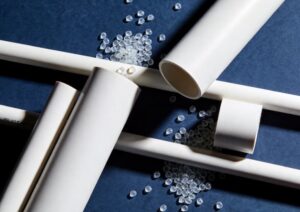
Rigid vs. flexible PVC: a practical comparison
| Selection factor | Rigid PVC granules | Flexible PVC granules |
|---|---|---|
| Typical formulation | Little or no plasticizer | Contains plasticizer |
| Main design priority | Stiffness and dimensional stability | Flexibility and compliance |
| Common applications | Water pipes, drainage pipes, electrical conduit | Flexible tubing, selected hoses and connections |
| Shape retention | Generally higher | Depends on hardness and construction |
| Pressure applications | Require verification against the relevant pipe specification | Require application-specific tubing or hose verification |
| Processing considerations | Fusion, thermal stability, sizing and cooling | Plasticizer compatibility, flow behavior and dimensional control |
| Main purchasing concern | Pipe-grade suitability and mechanical requirements | Flexibility, chemical compatibility and service conditions |
Which PVC Granules Are Suitable for Different Pipe Applications?
The most reliable way to select a PVC compound is to start with the pipe’s function. Manufacturers should define the operating environment and performance requirements before comparing grades, hardness values, or supplier quotations.
Water supply and pressure pipes
Rigid PVC compounds are commonly used for water supply and pressure-pipe systems because they can provide the stiffness and dimensional stability required by appropriately designed pipes.
However, not every rigid PVC compound is suitable for pressure service. The grade must meet the requirements of the intended pipe design, including dimensions, pressure classification, operating temperature, and applicable standards.
Before purchasing PVC granules for pressure-pipe extrusion, manufacturers should evaluate:
- Long-term hydrostatic performance under specified service conditions.
- Resistance to impact and handling damage.
- Consistency of outside diameter and wall thickness.
- Compatibility with the intended joining method.
- Applicable requirements for potable-water contact, where relevant.
Flexible PVC may be suitable for certain low-pressure water-transfer tubing or connection applications. However, flexibility alone does not establish pressure suitability. Working pressure, temperature, wall thickness, material properties, and product construction must all be considered.
Drainage and wastewater pipes
Rigid PVC granules are frequently considered for gravity drainage, wastewater conveyance, and related piping systems. These applications often require dimensional stability, adequate ring stiffness, and resistance to the substances encountered during service.
For buried drainage pipes, material selection must be considered alongside pipe geometry, wall construction, soil conditions, bedding, and installation quality. The performance of the complete system cannot be determined by the compound alone.
Chemical compatibility is another important factor. Wastewater composition, chemical concentration, temperature, and exposure duration can affect material performance. PVC may resist many common chemicals, but suitability must be assessed against the actual service conditions.
When sourcing PVC compounds for drainage applications, manufacturers should communicate whether the product is intended for gravity flow, buried installation, above-ground drainage, or a specialized industrial environment. This information helps suppliers distinguish between grades with different performance priorities.
Electrical conduit and protective tubing
Rigid PVC compounds are widely used for electrical conduit and cable-protection products because they can maintain a defined pathway for cables. The required performance depends on the installation environment, mechanical loading, temperature, and relevant electrical or building standards.
Key selection factors include:
- Resistance to deformation during installation and service.
- Impact behavior at expected operating temperatures.
- Dimensional tolerances and internal clearance.
- Compatibility with fittings and joining methods.
- Applicable fire-performance and electrical-system requirements.
Flexible PVC granules may be suitable for protective tubing or cable-management products that need to follow curved routes or accommodate movement. However, a flexible compound should not be assumed suitable for every electrical installation.
Flexible hoses and fluid-transfer tubing
Flexible PVC granules are generally a more relevant starting point for tubing that needs to bend around equipment, connect moving components, or fit into confined spaces.
The required formulation depends on the transported medium and the conditions under which the tubing will operate. Water, oils, cleaning solutions, and other fluids can interact differently with PVC formulations and their additives.
Important considerations include:
- Required bend radius and resistance to kinking.
- Working pressure and vacuum conditions, where applicable.
- Chemical compatibility and possible plasticizer extraction.
- Temperature fluctuations and repeated bending.
- Resistance to abrasion, aging, and environmental exposure.
Not all flexible PVC tubing is suitable for fuel, oil, drinking water, medical applications, or high-pressure service. These uses may require specific formulations, product testing, or regulatory documentation.
For manufacturers developing a new hose or tubing product, discussing the intended application with a PVC compound manufacturer before ordering bulk material can help narrow the selection. The final compound should still be validated through production trials and appropriate product-level testing.
Agricultural, industrial, and specialty piping
Agricultural and industrial systems can involve outdoor exposure, fertilizers, cleaning chemicals, temperature changes, vibration, and repeated movement. The appropriate PVC compound depends on which of these conditions are relevant to the application.
Rigid PVC may be suitable where pipes must maintain their geometry. Flexible PVC may be more appropriate for selected connections or tubing that needs to accommodate movement.
For outdoor installations, assess ultraviolet exposure, thermal cycling, and weathering requirements. For chemical transfer, evaluate compatibility with the actual fluid. For moving connections, consider repeated flexing and the possibility of fatigue or deformation.
Which Performance Properties Should Buyers Compare?
Once the application has been defined, the next step is to compare the properties that directly affect service performance. PVC granules should be evaluated as a formulated material intended to produce a specific finished product, rather than as a generic raw material.
Stiffness, hardness, and flexibility
Stiffness describes how strongly a material resists deformation under load. Hardness measures resistance to indentation using a specified test method. Flexibility describes how readily a product bends under defined conditions.
Evaluate rigid PVC by its specified stiffness and strength requirements, and flexible PVC by hardness, bend radius, kink resistance, and tensile properties.
When comparing supplier specifications, make sure the test methods and conditions are consistent. Hardness values obtained using different methods may not be directly comparable.
Pressure, wall thickness, and temperature
Pressure performance depends on the compound’s properties, pipe dimensions, wall thickness, operating temperature, manufacturing consistency, and expected service life.
Temperature can change PVC’s mechanical behavior. Elevated temperatures may reduce the allowable working pressure or increase deformation, depending on the formulation and pipe design. Low temperatures may affect impact resistance and handling behavior.
Before selecting PVC granules for pressure-related applications, establish:
- Normal and maximum operating pressure.
- Operating and ambient temperature ranges.
- Required pipe dimensions and wall thickness.
- Expected pressure cycles and service life.
- Applicable pressure classifications and test requirements.
A supplier’s general statement that a compound is suitable for pipes does not establish pressure performance. Buyers should request the relevant technical information and verify that it applies to the intended finished product.
Chemical resistance and plasticizer compatibility
PVC formulations can respond differently to oils, solvents, acids, alkalis, cleaning agents, and other fluids. Compatibility depends on the chemical, concentration, temperature, contact time, and compound formulation.
Flexible PVC requires additional attention to plasticizer compatibility. Certain fluids or environmental conditions may promote plasticizer extraction or migration, potentially changing the tubing’s flexibility and mechanical properties over time.
For critical applications, request relevant compatibility information or conduct tests under representative service conditions. Where the product will contact drinking water, food, or other regulated media, confirm the applicable requirements for the finished product and its formulation.
Impact resistance, aging, and dimensional stability
Pipes must withstand manufacturing, transportation, installation, and service loads. The balance between stiffness and impact performance depends on the formulation, temperature, pipe structure, and intended application.
Rigid PVC compounds may incorporate impact modifiers to improve performance under specified conditions. Flexible PVC can accommodate bending, but repeated movement, abrasion, heat, and environmental exposure may still cause deterioration.
Dimensional stability is important for both rigid and flexible products. Variations in outside diameter, wall thickness, ovality, or shrinkage can affect assembly and sealing.
How Do PVC Formulation and Pipe Extrusion Affect Quality?
Selecting an appropriate compound is only part of manufacturing a reliable pipe. The extrusion process determines how consistently the material is transformed into the finished product, and the processing conditions must match the formulation.
Differences in PVC compound formulation
Rigid PVC compounds typically use a formulation designed to support stiffness, thermal stability, fusion, and the mechanical requirements of the finished pipe. Depending on the application, the compound may contain heat stabilizers, lubricants, processing aids, impact modifiers, pigments, and other additives.
Flexible PVC compounds use plasticizers to achieve the required softness. They may also contain stabilizers, lubricants, pigments, fillers, and other ingredients selected for the intended application.
Each ingredient affects the overall balance of properties. A higher filler content, for example, should not automatically be interpreted as a cost advantage without considering its effect on processing and finished-product performance. Similarly, increasing plasticizer content does not guarantee better performance under every service condition.
Customized formulations should balance hardness, processability, durability, and chemical compatibility against the intended application.
Buyers should also confirm that the compound is intended for the relevant manufacturing process. A grade developed for injection molding or general-purpose flexible products should not automatically be considered suitable for pipe extrusion.
Processing temperature and material fusion
PVC is sensitive to processing conditions. Inadequate fusion can compromise finished-product properties, while excessive heat exposure or unsuitable residence time can contribute to thermal degradation.
Manufacturers should establish a suitable processing window based on the compound supplier’s recommendations, equipment configuration, screw design, production rate, and die setup. Barrel temperature settings alone do not describe the material’s complete thermal history.
During PVC pipe extrusion, monitor:
- Melt behavior and extrusion stability.
- Screw torque, motor load, and material throughput.
- Surface quality and signs of degradation.
- Dimensional consistency during production and after cooling.
- The relationship between line speed, cooling, and final dimensions.
Processing parameters should be validated on the actual production line. A setting that works for one PVC formulation may not transfer directly to another.
For a new grade, request processing guidance from the supplier and conduct a controlled production trial before scaling up. This helps manufacturers evaluate whether the compound is compatible with their equipment and production targets.
Common extrusion problems and possible causes
| Production problem | Possible contributing factors | Practical checks |
|---|---|---|
| Rough or uneven pipe surface | Inadequate fusion, unstable flow, unsuitable lubrication, or excessive heat exposure | Review material condition, temperature profile, screw operation, and die setup |
| Inconsistent wall thickness | Die alignment, unstable output, uneven haul-off, or calibration issues | Measure wall thickness at multiple positions and inspect line stability |
| Dimensional variation | Cooling differences, inconsistent output, or incorrect calibration | Check vacuum calibration, cooling conditions, haul-off speed, and dimensional records |
| Brittle finished pipe | Formulation mismatch, thermal degradation, inadequate impact performance, or unsuitable test conditions | Review compound specifications, processing history, and mechanical test results |
| Flexible tubing that kinks | Inappropriate hardness, insufficient wall support, unsuitable geometry, or excessive bending | Verify bend radius, hardness, wall dimensions, and application conditions |
These are diagnostic starting points rather than definitive explanations. A production problem may have multiple causes, so manufacturers should confirm the root cause through controlled adjustments and testing instead of changing several process variables simultaneously.
How to Choose a Reliable PVC Granules Supplier
For pipe manufacturers, choosing a PVC granules supplier involves more than comparing unit prices. Buyers should assess formulation suitability, batch consistency, extrusion performance, technical support, and the supplier’s ability to meet documented specifications.
A reliable sourcing process begins with a clear product specification. The more accurately buyers describe the intended application and production requirements, the easier it becomes to evaluate suitable grades and compare supplier proposals.
Review technical data sheets and grade specifications
Request a technical data sheet for each proposed PVC compound. The document should identify relevant properties, test methods, and any limitations associated with the grade.
Depending on the application, useful information may include:
- Hardness, tensile properties, or other specified mechanical properties.
- Thermal stability and recommended processing conditions.
- Relevant dimensional or product-performance requirements.
- Chemical compatibility information, where applicable.
- Quality-control procedures and batch identification.
- Applicable regulatory documentation or test reports.
When comparing PVC compound manufacturers, confirm whether the available documentation relates to the supplied compound, the finished pipe, or a complete product system. These are not interchangeable forms of evidence.
Evaluate customization and technical support
Standard grades may be sufficient for established applications, but some manufacturers require a more specific balance of hardness, flexibility, processing behavior, color, or other properties.
In these cases, buyers can ask whether the supplier offers customized PVC compounds for the intended pipe or tubing application. Before requesting a formulation adjustment, define the required properties and explain the manufacturing process and operating environment.
A useful technical discussion should address:
- Whether an existing grade meets the application requirements.
- Which formulation or processing adjustments may be necessary.
- How the proposed compound will be tested and qualified.
Customization should be based on documented requirements and validated results. A change intended to improve one property may affect other material characteristics, processing behavior, or cost.
Confirm samples, minimum order quantities, and lead times
Before bulk purchasing, confirm sample availability and qualify the compound through controlled extrusion trials and product testing.
For bulk PVC granules procurement, also clarify:
- Minimum order quantity and available packaging options.
- Quotation basis and applicable commercial terms.
- Production lead time and delivery arrangements.
- Batch traceability and quality documentation.
- Procedures for handling nonconforming material.
- Availability of repeat orders for the same grade.
Price comparisons should use equivalent specifications and commercial terms. A lower quoted unit price may not provide the best overall value if it is accompanied by greater scrap, unstable production, longer lead times, or inconsistent material quality.
Verify application requirements and compliance
PVC granules do not automatically establish compliance for the finished pipe. Requirements may apply to the raw compound, the finished pipe, its fittings, or the complete piping system.
For drinking-water applications, applicable rules may govern materials in contact with potable water. Pressure pipes may need to meet a defined product standard and associated test methods. Electrical conduit can have different mechanical, temperature, and fire-performance requirements.
Confirm the applicable market requirements and whether the supplier’s documentation covers the compound or the finished product.
Qualify samples before full-scale production
A structured qualification process helps manufacturers determine whether a proposed PVC compound meets their technical and production requirements.
- Define the application, specifications, and acceptance criteria.
- Review the supplier’s technical data sheet and relevant documentation.
- Run a controlled extrusion trial using agreed processing conditions.
- Measure dimensions, surface quality, and other critical production characteristics.
- Conduct mechanical, pressure, chemical, or aging tests as required.
- Document the results and agree on corrective actions before scaling production.
For applications involving safety, pressure performance, or long service life, initial processing trials are not sufficient on their own. Appropriate product-level testing and compliance verification remain necessary.
FAQ
Q: Can rigid PVC granules be used to make flexible pipes?
Rigid PVC granules are designed for stiffness. Flexible pipes generally require plasticized PVC compounds formulated to meet the product’s bending and performance requirements.
Q: Are flexible PVC granules suitable for water pipes?
They can be used for certain water-transfer tubing and hoses. Suitability depends on working pressure, temperature, fluid compatibility, and applicable potable-water requirements.
Q: Can one PVC compound be used for both rigid and flexible pipes?
Most standard compounds are designed for specific stiffness and flexibility requirements. Cross-application use should be confirmed through technical data and product testing.
Q: How do I choose the right hardness for flexible PVC tubing?
Consider the required bend radius, kink resistance, working pressure, wall thickness, and operating temperature. Compare hardness values measured using the same test method.
Q: What should I look for in a PVC granules supplier?
Evaluate application-specific grades, technical documentation, batch consistency, processing support, sample availability, and delivery reliability. Confirm that the supplier can meet your specifications.
Conclusion
Choosing between rigid and flexible PVC granules depends on the pipe’s application, operating conditions, and performance requirements. Rigid PVC suits many water, drainage, and conduit pipes, while flexible PVC is better for tubing and connections that require bending or movement.
For pipe manufacturers, compare extrusion compatibility, technical data sheets, and application-specific test results before selecting a grade. Contact a reliable PVC granules supplier to discuss your production needs, evaluate suitable formulations, and request samples for testing.