
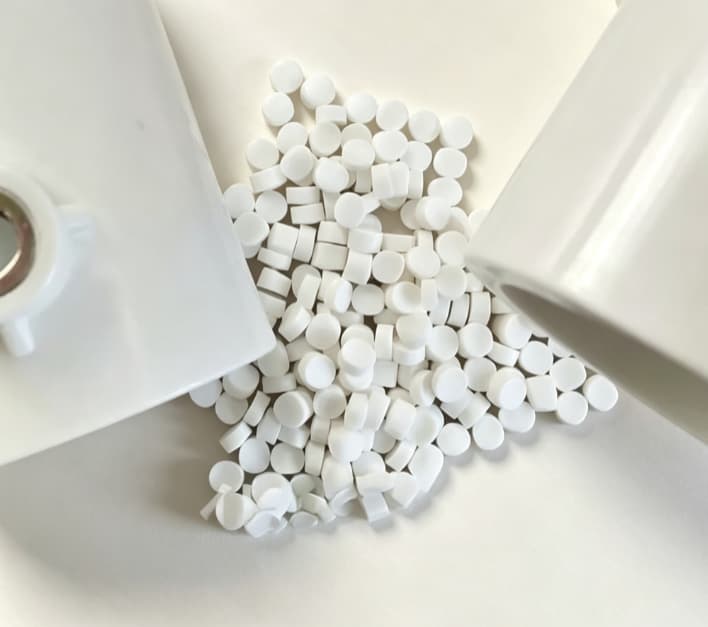
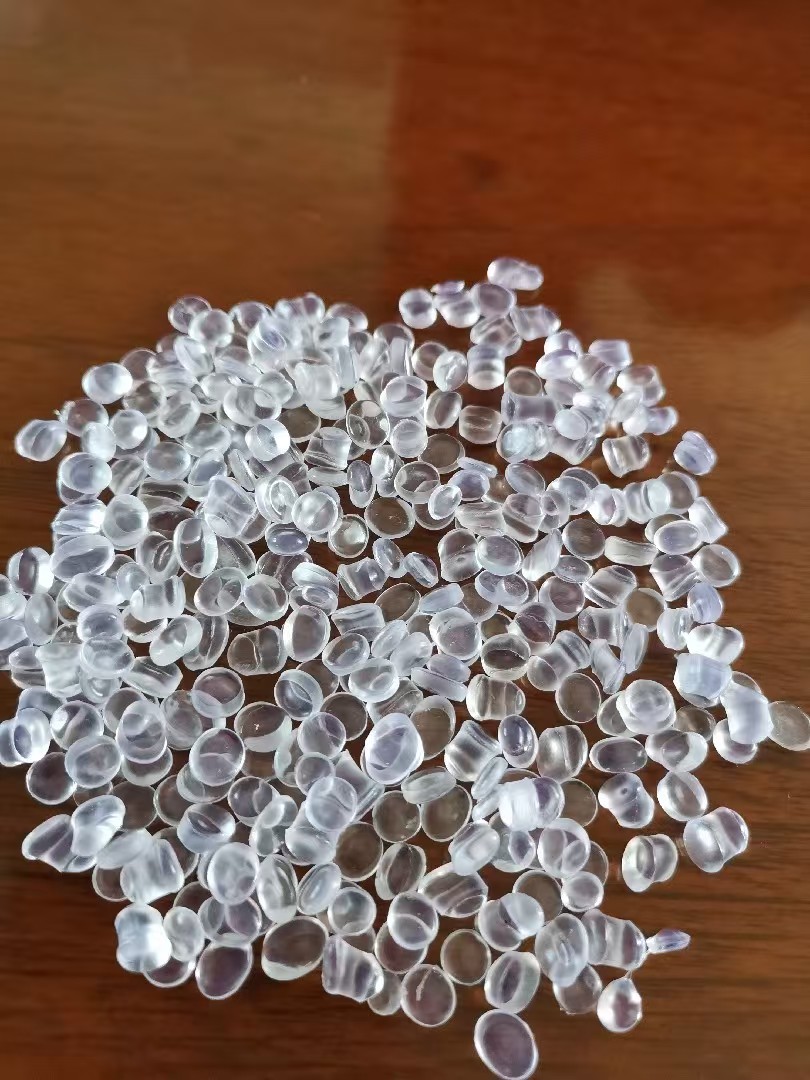
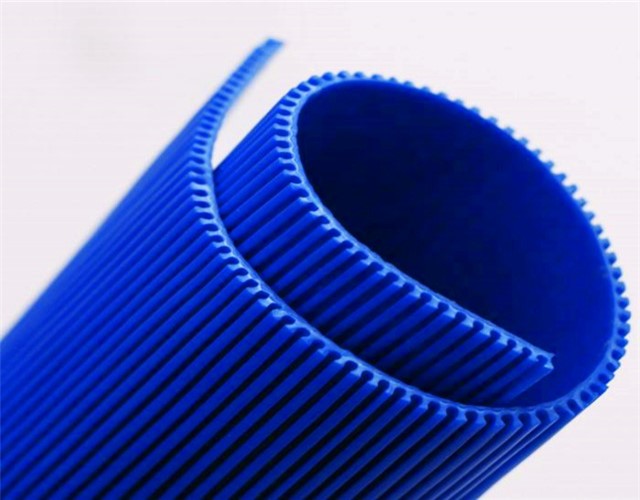
Yellowing often appears as a visible color change before it causes noticeable mechanical problems. For manufacturers using Transparent Soft PVC Granules, maintaining long-term clarity depends on three key factors: the stabilizer system, plasticizer selection, and verified material performance. Evaluating these factors before production helps reduce discoloration risks and maintain consistent product appearance throughout its intended service life.
Why do transparent soft PVC Granules turn yellow even when they start crystal clear?
Transparent PVC granules may appear clear when delivered but develop a yellow tint after prolonged storage, processing, or exposure to light. One major cause is thermal degradation. As PVC decomposes, it releases hydrogen chloride (HCl) and forms conjugated polyene sequences along the polymer chains. These structures absorb visible light and contribute to yellow or brown discoloration as degradation progresses.
In flexible PVC formulations, color changes can also result from plasticizer migration and additive instability. Therefore, a batch of Transparent Soft PVC Granules that appears water-clear after extrusion may still develop haze or discoloration if its formulation is not suited to the intended service conditions.
The chemistry behind yellowing in flexible PVC
Heat and UV exposure are two important causes of color instability in flexible PVC. During extrusion, excessive barrel temperatures and screw shear can create localized overheating. If the stabilizer system cannot adequately control thermal degradation, yellow streaks or haze may appear in the finished part.
UV exposure can also initiate photo-oxidation and generate color-forming compounds. Products exposed to sunlight through windows or used near outdoor environments may gradually discolor. Transparent Soft PVC Granules for color-critical applications should therefore be evaluated under both thermal and light-exposure conditions.

How plasticizer migration contributes to surface discoloration
Soft PVC contains a relatively high proportion of plasticizer, which may migrate toward the surface under certain temperature and service conditions. This migration can affect surface appearance, causing haze or discoloration. Such changes are particularly noticeable in transparent products.
Plasticizer quality also affects initial color and long-term stability. Water-white grades with good oxidative stability can help maintain a cleaner appearance, while darker or less stable materials may introduce unwanted color. Epoxidized soybean oil (ESBO) is used in some formulations as a secondary plasticizer and co-stabilizer because its epoxy groups can react with hydrogen chloride. Its effectiveness depends on the overall formulation and processing conditions.
What formulation choices separate a yellowing-resistant grade from a standard clear compound?
Initial transparency alone does not indicate long-term color stability. Two compounds with the same Shore A hardness and similar initial clarity may perform differently under UV exposure because of differences in their additive systems and raw-material quality.
A yellowing-resistant grade requires a balanced formulation rather than simply a higher stabilizer loading. The primary stabilizer, co-stabilizer, plasticizer, and UV protection must be compatible. Excessive additive levels may cause plate-out, odor, or processing difficulties.
Stabilizer systems: primary, secondary, and UV protection
Calcium-zinc (Ca/Zn) stabilizers are used in many flexible PVC formulations as alternatives to lead-based systems. Their performance depends on the stabilizer composition and supporting additives. Organotin stabilizers can provide effective thermal stabilization, but their suitability depends on application requirements and market-specific regulations.
Yellowing-resistant formulations may combine a primary heat stabilizer with secondary stabilizers and light-protection additives. Depending on the formulation, phosphites can help improve processing and oxidative stability, while epoxy-based co-stabilizers can contribute to HCl absorption. UV absorbers or other suitable light stabilizers may also be added when the product faces prolonged light exposure. The appropriate combination depends on the required performance and processing conditions.
Plasticizer selection and raw-material cleanliness
Plasticizer selection also affects color stability. A plasticizer with poor oxidative stability may contribute to discoloration, even when the stabilizer package is adequate. Water-white grades with suitable compatibility and low migration tendency can help maintain appearance, particularly in thin-wall products, films, and tubing.
Raw-material quality is another important factor. Residual impurities, metallic contamination, and variations between resin lots may affect the color consistency of the finished compound. Incoming-material inspections and batch controls help suppliers identify potential issues before production.
Table 1 summarizes the formulation levers that most directly influence yellowing performance in Transparent Soft PVC Granules.
| Formulation lever | Yellowing-resistant choice | Standard or higher-risk choice | Why it matters |
|---|---|---|---|
| Primary stabilizer | Ca/Zn with co-stabilizer synergy, or engineered non-tin system | Basic Ca/Zn without secondary protection | Scavenges HCl and delays conjugated polyene formation |
| Secondary stabilizer | Phosphite or epoxy co-stabilizer | None, or high-volatility additive | Protects primary stabilizer and absorbs HCl |
| Plasticizer | Water-white, oxidation-resistant, low-migration grade | Darker or highly migratory plasticizer | Reduces color-body migration and surface haze |
| UV protection | UV absorber or HALS in the package | No UV stabilizer for indoor-only claims | Slows photo-oxidation when incidental light exposure occurs |
| Resin quality | Consistent K-value, low color, controlled impurities | Unverified resin source | Reduces lot-to-lot yellowing variability |
How should you read yellowing test data before approving a Transparent Soft PVC Granules supplier?
A yellowness index (YI) or ΔE value is difficult to evaluate without a defined test method and exposure duration. Buyers should ask how the sample was tested, under what conditions, and how much its color changed after exposure. Without this information, a supplier’s performance claim cannot be independently assessed.
Accelerated weathering tests can evaluate how PVC samples respond to controlled UV exposure and moisture. One commonly used approach employs UVA-340 lamps in a QUV tester, with cycles such as 8 hours of UV exposure followed by 4 hours of condensation. The exact temperatures, irradiance, and cycle settings should be stated in the test report. Color change can be assessed using ΔE values calculated from changes in L*, a*, and b* coordinates. A ΔE value should be interpreted against the buyer’s application requirements and agreed acceptance criteria rather than treated as a universal PVC pass/fail threshold.
Yellowness index is another useful measurement for comparing the color of transparent PVC samples before and after exposure. ASTM E313 provides a method for calculating yellowness and whiteness indices, although the selected method and instrument settings should be consistent across comparisons. Buyers should establish application-specific limits rather than rely on universal YI thresholds to define acceptable clarity.
QUV, ΔE, and yellowness index: what the numbers actually mean
ΔE measures the overall difference between two colors, while YI focuses on yellowness. A sample may change in lightness or hue without showing the same degree of change in YI. Using both measurements can therefore provide a more complete picture of color stability in transparent PVC.
Request initial color data for the granules and aged color results for processed samples after defined heat and UV exposure. A single passing value is insufficient to assess performance margin. Compare the results with the required service life and color tolerance of the finished product.
Thermal stability data is just as important as UV data
Passing a QUV test does not guarantee thermal stability during processing. A compound may still discolor if its stabilizer system cannot withstand the converter’s actual temperature profile and residence time. Buyers should therefore request thermal-stability data alongside weathering results.
Relevant evidence may include Congo Red test results, static heat stability time, or dynamic rheology data collected under defined conditions. These results help assess how the compound responds to heat, but they should be interpreted alongside the intended processing temperature, residence time, and shear conditions. There is no single temperature that defines the onset of visible degradation for every soft PVC formulation.
Table 2 sets out the data package worth requesting before qualifying Transparent Soft PVC Granules for a yellowing-sensitive application.
| Data point | What it tells you | Minimum useful format | Red flag |
|---|---|---|---|
| QUV ΔE after defined hours | Photo-oxidation resistance | Method, lamp type, cycle, exposure hours, ΔE value | “Excellent UV resistance” with no test conditions |
| Yellowness index under ASTM D1925 | Initial and aged color position | YI before and after heat or UV exposure | Only an initial YI, no aged value |
| Congo Red or heat stability time | Thermal margin during processing | Minutes at a stated temperature | No thermal stability data at all |
| K-value and plasticizer absorption | Consistency of resin and compounding | K-value range plus lot COA | K-value given as a single number, no range |
| Plasticizer migration tendency | Long-term surface clarity | Migration test or formulation declaration | “Non-migrating” claim without supporting data |
Which exposure profile does your application actually face?
Yellowing resistance requirements vary by application. Indoor medical tubing and outdoor signage, for example, face different combinations of heat, light, and service conditions. Transparent Soft PVC Granules should therefore be selected according to the exposure profile and performance requirements of the finished product.
Before selecting a grade, identify the finished product’s service environment, expected service life, and exposure to heat and light. These factors help determine the required stabilizer system and color-stability targets.
Medical tubing, film, and indoor color-critical parts
For medical tubing, infusion sets, and blood bags, processing-related discoloration and raw-material color consistency may be more relevant than prolonged sunlight exposure. These applications also require appropriate regulatory compliance and material qualification. The suitability of a Ca/Zn-stabilized formulation, water-white plasticizer, and controlled initial YI should be evaluated against the specific medical application and its applicable requirements.
Even when mechanical properties remain acceptable, visible color changes may affect product appearance and quality acceptance. Lot-level color records are therefore important for evaluating consistency between production batches.
Flooring, synthetic leather, and packaging under indirect light
Flooring wear layers, synthetic leather, and packaging films may experience prolonged indoor lighting or indirect sunlight. Where these conditions create a meaningful UV exposure risk, suitable UV protection can help slow photo-induced discoloration.
Clear hoses and profiles displayed near windows may require similar evaluation. Buyers should compare color changes at multiple exposure intervals rather than rely on a single QUV result. Transparent Soft PVC Granules should be qualified against the expected service environment, with laboratory test conditions documented for comparison.
Outdoor-adjacent products and the limits of UV resistance
Outdoor-adjacent applications such as garden hoses, tarpaulin windows, and awning components may face prolonged sunlight and temperature fluctuations. No formulation should be assumed to provide permanent resistance to UV-induced color change. Buyers should instead define acceptable color variation over the expected service period and request supporting weathering data.
Claims of zero yellowing under outdoor exposure should be treated cautiously. Discuss the expected service life, acceptable color change, exposure conditions, and the type of light-stabilization system used. These details provide a more realistic basis for evaluating Transparent Soft PVC Granules for outdoor-adjacent applications.
Use the following checklist when defining material requirements:
-
Medical applications: verify application-specific regulatory compliance and batch color consistency.
-
Indoor flooring, films, and synthetic leather: evaluate indoor light exposure and aged color data.
-
Outdoor-adjacent products: define acceptable color change over the expected service period.
-
Thin-wall transparent parts: compare samples at consistent hardness and formulation conditions.
-
Long-service products: review both thermal-stability and weathering results.
Can processing conditions undo a good yellowing-resistant formulation?
Yes. Even a well-formulated transparent soft PVC compound can discolor if processing conditions exceed its thermal stability limits. Excessive melt temperature, localized shear heating, or uneven material flow may cause yellow streaks or haze in the finished product.
Material qualification should therefore include the recommended processing window, including barrel temperatures, screw conditions, and residence time. These parameters should be verified on the converter’s actual production line.
Temperature profile, shear heating, and residence time
Screw and die design can affect residence time and material flow. Dead spots or restricted flow paths may expose some material to heat for longer periods, increasing the risk of localized degradation and color variation. Equipment conditions should therefore be considered when qualifying a compound for transparent applications.
A compound that performs well in a supplier’s laboratory trial may produce different results on a production line with different screw geometry, back pressure, or material hold-up volume. Qualification should therefore be conducted under conditions representative of actual production.
A practical hold-time qualification run
A hold-time study can help evaluate thermal stability under actual processing conditions. Process the granules at the intended temperature profile, maintain the melt for defined intervals, and record color changes at each stage. Any visible drift should be assessed against the required product tolerance and the processing conditions used.
Conduct this study before mass production and retain the results as a reference for future troubleshooting. Recording the processing conditions and corresponding color measurements makes it easier to investigate later quality deviations.
Use this ordered checklist for a practical qualification run:
- Confirm the granule’s initial YI and lot-specific K-value before processing.
- Run a trial using the intended barrel temperature profile and record the actual melt temperature.
- Evaluate color changes after defined melt-hold intervals appropriate to the production process.
- Inspect for streaks, haze, or localized discoloration at the die and in the finished part.
- Compare the results with the supplier’s thermal-stability data and adjust processing conditions if necessary.
- Retain samples and processing records from each qualified lot for future comparison.
What should a reliable Transparent Soft PVC Granules supplier document for color-critical buyers?
For color-critical applications, supplier evaluation should cover formulation information, batch quality records, and processing recommendations. A supplier of Transparent Soft PVC Granules should be able to describe the stabilizer system’s function, provide lot-specific color and K-value data, and specify the recommended processing window. Although exact additive ratios may remain confidential, performance claims should be supported by test results.
Buyers should confirm the plasticizer type, relevant co-stabilizers, and UV protection used in the formulation. They should also request ΔE or YI results after defined exposure periods and check whether the test samples reflect the hardness and formulation conditions of the intended product.
Lot-level color data and incoming-material screening
A passing COA confirms the reported results for a specific batch, but it does not establish long-term consistency. Variations in resin impurities or plasticizer color may affect the finished compound. Incoming-material inspections and retained samples help suppliers investigate color deviations and identify their source.
For color-critical applications, request batch-specific initial YI, K-value data, and plasticizer identification where available. These records help buyers compare production lots and identify potential sources of color variation.
Processing support and traceability
A supplier should also provide practical guidance on processing temperatures, screw conditions, and residence-time limits. This support is particularly useful during initial production qualification and when material formulations or equipment conditions change.
Traceability is equally important. Retained samples and batch records allow both parties to investigate color deviations, compare affected lots, and identify potential causes. For Transparent Soft PVC Granules used in color-critical products, traceability should be part of the supplier’s quality-control system.
Before qualifying a new grade, request the following information:
- Initial YI of the granules and processed test samples.
- QUV test method, lamp type, exposure conditions, duration, and color-change results.
- Thermal-stability results, including the test method and temperature.
- K-value range and batch-specific COA.
- Plasticizer type and relevant migration test results or supporting information.
- Retained-sample policy and batch traceability procedure.
Заключение
Choosing the right Transparent Soft PVC Granules requires more than evaluating initial clarity. A suitable formulation should balance stabilizer and plasticizer selection with the thermal and light stability needed for its intended application. Reliable test data and batch-level quality records are essential for assessing long-term color consistency.
Before placing a bulk order, review the supplier’s QUV test results, initial and aged yellowness index (YI), thermal stability data, and batch-specific COA. Dingshengtong provides Transparent Soft PVC Granules for different processing and application requirements. Contact Dingshengtong to discuss your product specifications and application needs, and request a sample for testing under your actual production conditions before confirming a volume order.