Introduction
Not all PVC materials can withstand long-term internal water pressure. In many valve applications, failure is caused not by immediate breakage, but by slow pressure cracking that develops over time.
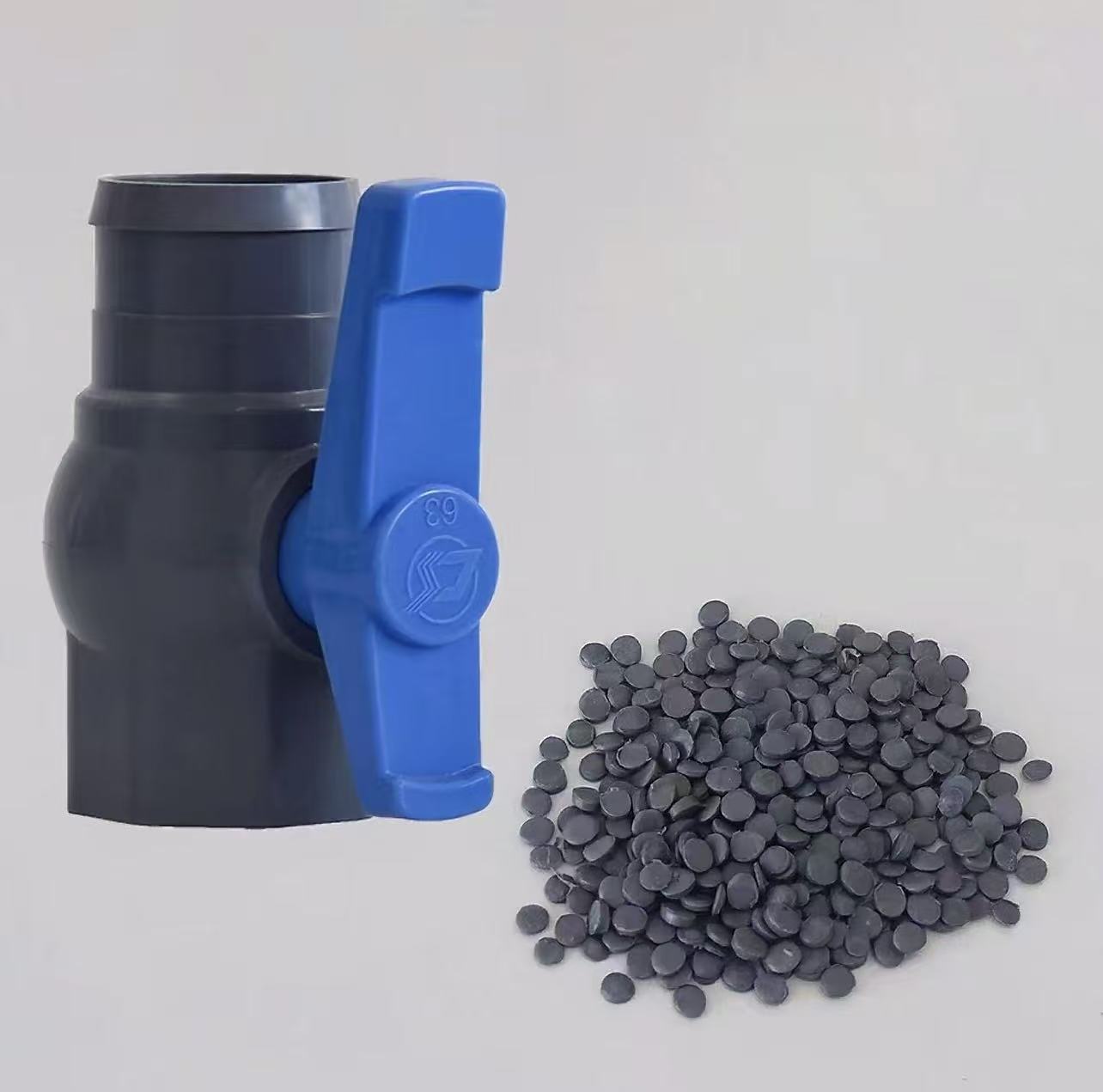
PVC granules for water valves are engineered to solve this issue. By combining rigid unplasticized PVC (PVC-U), impact modifiers, thermal stabilizers, and processing aids, the material is designed to resist brittle fracture, slow crack growth, and environmental stress cracking under continuous pressure.
Compared with standard PVC compounds, engineered formulations provide a more stable structure: high-molecular-weight resin improves long-term strength, impact modifiers enhance toughness, thermal stabilizers protect processing stability, and a plasticizer-free system prevents long-term embrittlement. The result is reliable valve performance over decades of service life.
What Causes Pressure Cracking in PVC Water Valves?
Understanding pressure cracking is essential to see why engineered PVC granules are necessary. Cracking in rigid PVC valves generally occurs through four mechanisms:
1. Slow Crack Growth (SCG)
Under sustained internal pressure (typically 150–250 psi), microscopic defects in the polymer slowly propagate over months or years. Unlike metals, PVC-U does not yield before fracture; once a craze reaches a critical length, the crack can suddenly propagate. SCG is particularly insidious because there are often no visible signs until leakage or rupture occurs.
2. Environmental Stress Cracking (ESC)
ESC occurs when PVC is exposed to tensile stress and a chemical agent simultaneously. Common culprits in water systems include pipe thread sealants, assembly lubricants, cleaning solvents, or leached plasticizers from nearby elastomer seals. Cracks can form at stress levels as low as 20–30% of the material’s tensile strength, making ESC a frequent cause of premature valve failure.
3. Thermal Degradation and Dehydrochlorination
PVC molecules can degrade at elevated temperatures. Above roughly 80°C, PVC loses hydrogen chloride (HCl), forming double bonds along the polymer chain—a process known as dehydrochlorination. This “zipper mechanism” progressively weakens the polymer, reducing impact strength and increasing susceptibility to cracking during service or processing.
4. Brittle Fracture from Impact or Water Hammer
Sudden pressure spikes, such as water hammer, can shatter embrittled valve bodies. PVC exhibits low creep deformation compared to other polymers, so cracks can grow rapidly once initiated, especially in valves exposed to high or fluctuating pressures.
Each failure mode requires a tailored formulation. That is why PVC granules for water valves are not just standard PVC—they are a carefully engineered compound optimized to resist all of these stresses.

Why Is PVC-U the Foundation of Pressure-Resistant Water Valves?
Rigid unplasticized PVC (PVC-U) is the core of any high-performance water valve formulation. Unlike flexible PVC compounds that contain plasticizers such as phthalates or adipates, PVC-U contains no plasticizers, a critical factor in preventing pressure cracking.
Plasticizers work by inserting themselves between polymer chains, reducing intermolecular forces and increasing chain mobility. While this adds flexibility, it reduces tensile strength, lowers modulus, and introduces long-term failure risks. Over time, plasticizers can migrate out of the polymer matrix, especially in water-contact environments. This migration causes brittleness, micro-cracks, and increased susceptibility to slow crack growth (SCG) and environmental stress cracking (ESC).
DST technical documentation emphasizes that PVC granules for water valves with zero plasticizers remove chemical leaching risks, maintain long-term water quality, and prevent material degradation linked to plasticizer migration.
PVC-U formulations also rely on high-molecular-weight resin grades. Longer polymer chains increase tensile strength and improve resistance to SCG. Materials certified to MRS 25 under ISO 9080 demonstrate decades of hydrostatic performance under continuous pressure, making them ideal for municipal water systems and other pressure-critical applications.
How Do MBS Impact Modifiers Prevent Brittle Fracture in PVC Valves?
PVC granules for water valves are often enhanced with MBS (methyl methacrylate-butadiene-styrene) impact modifiers to improve resistance to brittle fracture. MBS particles, with their core-shell structure, act as kinetic energy absorbers that change the fracture mechanism:
- The rubber core deforms under stress, absorbing impact energy
- Localized shear bands dissipate crack propagation energy
- Failure transitions from brittle fracture to controlled ductile yielding
This is crucial for PVC-U water valves facing sudden pressure spikes or mechanical impact.
MBS modifiers also enhance low-temperature toughness, maintaining impact strength at 0°C–10°C, preventing brittle failure in cold climates, outdoor pipelines, unheated utility rooms, and irrigation systems. Typical MBS loadings are 3.0–6.0 phr, balancing toughness and rigidity while maintaining compliance with lead-free stabilizer systems, including Ca-Zn and organic tin, supporting NSF/ANSI 61 potable water certification.
Why Are Thermal Stabilizers Critical in PVC Water Valve Manufacturing?
PVC water valves must survive high-temperature processing in addition to service conditions. During injection molding (180°C–210°C), unprotected PVC undergoes dehydrochlorination, releasing HCl and forming conjugated double bonds along polymer chains. This creates weak points that increase susceptibility to pressure cracking.
Thermal stabilizers prevent this degradation:
- Ca-Zn stabilizers neutralize HCl, preventing autocatalytic chain breakdown
- Organic tin stabilizers bind labile chlorine atoms and enhance thermal stability
- Synergistic stabilizer systems preserve molecular weight, a key factor in hydrostatic strength
Together, these stabilizers maintain polymer integrity through molding, reducing defects such as burn marks, discoloration, or weak structural zones, ensuring reliable PVC-U valves. DST emphasizes that their PVC granules for water valves are engineered for complex geometries, wide wall thickness ranges, and high-volume production.
How Can Environmental Stress Cracking in PVC Valves Be Prevented?
ESC remains one of the most challenging failure modes for PVC-U water valves because it depends on both material properties and installation environment.
ESC occurs when three conditions coexist:
- Tensile stress from internal water pressure
- Contact with incompatible chemicals (sealants, lubricants, solvents)
- Temperatures above ~5°C
Common triggers include oil-based sealants, assembly lubricants, cleaning solvents, and residues from elastomers.
High-quality PVC granules for water valves enhance ESC resistance through formulation:
- High-molecular-weight PVC-U resists chain scission
- MBS modifiers blunt crack tips and absorb stress
- Optimized formulations reduce chemical sensitivity without affecting processing performance or mechanical strength
Properly engineered PVC granules for water valves can significantly delay or prevent ESC initiation, maintaining long-term reliability under pressure and chemical exposure.
PVC granules for water valves vs. standard PVC
The differences between commodity PVC compounds and purpose-engineered PVC granules for water valves are measurable across multiple performance parameters.
| Performance Attribute | Standard PVC | Engineered PVC granules for water valves |
|---|---|---|
| Tensile strength | ≥ 40 MPa baseline | ≥ 45–50 MPa (high-molecular-weight resin) |
| Hydrostatic MRS | Typically ≤ 20 MPa | MRS 25 (≥ 25 MPa per ISO 9080) |
| Impact strength (notched Izod) | 20–40 J/m | 80–120 J/m (with MBS modifier) |
| Low-temperature impact at 0°C | Poor (brittle fracture) | Good (ductile yielding maintained) |
| ESC resistance | Low (cracks in the presence of incompatible chemicals) | Moderate–High (depends on modifier package) |
| Plasticizer content | 0% (PVC-U) typically, but lower grades may contain processing aids | 0% (no plasticizers), zero migration risk |
| Thermal stability (processing window) | Narrow (±5°C) | Wide (±15°C) |
| NSF/ANSI 61 potable water certification | Not guaranteed | Standard for premium grades |
A valve manufacturer making the switch from standard PVC to engineered PVC granules for water valves typically sees improvements across the board. Tensile strength increases by roughly 10 to 15 percent. Impact resistance can triple or quadruple, dramatically reducing failure rates from handling damage during shipping or installation. Most importantly, the certified MRS rating provides an engineering guarantee that the material will perform for decades rather than years.
Industry standards and certifications
For water valves, compliance with industry standards is not optional—it is the baseline for market access. A few key standards define what constitutes an acceptable material for potable water applications.
NSF/ANSI 61. This is the North American standard for drinking water system components—the health effects standard. It evaluates whether a material leaches any contaminants into drinking water at concentrations exceeding established limits. NSF/ANSI 61 certification involves extraction testing across multiple water matrices (pH, temperature, chlorine content). Premium PVC granules for water valves are formulated to pass this certification, as noted in the DST product literature: “Formulated to comply with the most stringent international potable water standards, including NSF/ANSI 61 and WRAS approval”.
NSF/ANSI 14. This standard covers the physical and performance requirements for plastic piping system components. It includes pressure rating verification, dimensional tolerances, material property testing, and long-term hydrostatic strength.
ISO 1452. This international standard specifically covers unplasticized poly(vinyl chloride) (PVC-U) piping systems for water supply and drainage under pressure. ISO 1452-4 specifies the characteristics of valves made from PVC-U. The standard includes pressure rating classification, dimensional requirements, mechanical performance, and test methods.
MRS (Minimum Required Strength) certification. Under ISO 9080, materials are tested for long-term hydrostatic strength and assigned an MRS value in megapascals. MRS 25 certification (greater than 25 MPa) is a recognized benchmark for high-quality water valve compounds.
What Are the Main Applications of PVC Granules for Water Valves?
The versatility of properly formulated PVC granules for water valves makes them suitable for a wide range of demanding fluid control environments. In modern piping systems, the performance of PVC granules for water valves directly determines service life, pressure stability, and chemical resistance across multiple industries.
-
Municipal water distribution
PVC valves are standard in municipal water systems, from main distribution lines down to residential service connections. These systems require long-term resistance to continuous pressure, temperature fluctuations, occasional water hammer, and disinfectant chemicals such as chlorine and chloramine.
Engineered PVC granules for water valves provide the hydrostatic strength and chemical stability required for decades of uninterrupted service. In real-world applications, formulations such as the Benvic IA608 compound demonstrate long-term reliability, having been used for over a quarter of a century while meeting strict technical and regulatory requirements for water infrastructure systems.
-
Residential and commercial plumbing
Ball valves, gate valves, and check valves manufactured using PVC granules for water valves are widely used in building water systems. One key advantage is corrosion resistance—unlike brass or steel, PVC does not rust, oxidize, or scale over time, making it highly suitable for water softeners, filtration units, and potable water distribution.
Certified systems such as NSF/ANSI 61 and WRAS ensure that PVC granules for water valves meet strict safety requirements for drinking water applications across global markets. This compliance makes them a preferred material choice for both residential and commercial plumbing infrastructure.
-
Industrial fluid handling
Chemical processing plants, wastewater treatment facilities, and industrial manufacturing lines rely on valves made from PVC granules for water valves to handle corrosive fluids, aggressive chemicals, and abrasive slurries.
The inherent chemical resistance of PVC, combined with the enhanced toughness provided by MBS modification systems, allows PVC granules for water valves to perform in environments where metal valves would rapidly corrode or degrade. This makes them a cost-effective alternative in chemically intensive operations.
-
Irrigation and agriculture
Agricultural irrigation systems often use large-diameter pipelines (4 inches and above), where the weight and cost of metal valves become impractical. In these systems, PVC granules for water valves enable lightweight, corrosion-resistant, and economically efficient valve production.
However, performance is only guaranteed when the material is properly engineered to resist impact damage during installation and withstand long-term pressure cycling. High-quality PVC granules for water valves ensure durability in outdoor environments, seasonal temperature changes, and continuous irrigation cycles.
How Do PVC Granules Improve Valve Manufacturing Efficiency?
For valve molders, switching to engineered PVC granules for water valves provides not only performance benefits but also significant production efficiency improvements. Premium compounds are designed with optimized processing behavior, improving melt flow stability and reducing defects.
MBS impact modifiers within PVC granules for water valves act as internal processing enhancers, promoting faster fusion and reducing “fisheyes” (unmelted particles) in molded components. At the same time, stabilizer systems ensure a wide processing window, minimizing issues such as burn marks, underfill, or surface inconsistency.
One industry description of advanced MBS systems highlights “fast fusion and dispersion” enabled by a core-shell structure that ensures rapid incorporation into the PVC melt, significantly improving surface quality and production stability. For manufacturers using PVC granules for water valves in high-volume injection molding, these advantages translate directly into lower scrap rates, higher throughput, and more consistent product quality.
FAQ
1. What makes PVC granules for water valves different from standard PVC granules?
Engineered PVC granules for water valves are formulated with high-molecular-weight PVC-U resin, zero plasticizers, MBS impact modifiers, and optimized thermal stabilizers designed specifically for long-term hydrostatic pressure resistance. In contrast, standard PVC compounds lack this balanced formulation, making them more vulnerable to pressure cracking, ESC, and long-term embrittlement.
2. Can PVC water valves fail from pressure cracking without visible warning?
Yes. Both slow crack growth (SCG) and environmental stress cracking (ESC) can develop internally over time without visible surface defects. Failure often appears suddenly as leakage or rupture. Properly engineered PVC granules for water valves reduce this risk by improving fracture resistance and shifting failure behavior from brittle cracking to controlled ductile deformation.
3. How long do PVC water valves typically last under continuous pressure?
When manufactured with PVC granules for water valves certified to MRS 25, PVC water valves can achieve service lifespans of 40–50 years or more under rated pressure and temperature conditions. Long-term hydrostatic strength is a key performance indicator for municipal and industrial systems.
4. Are these PVC granules safe for drinking water applications?
Yes. Premium PVC granules for water valves are designed to comply with NSF/ANSI 61 and WRAS potable water standards. They are formulated with zero plasticizers and lead-free stabilizer systems, ensuring no harmful leaching and safe long-term contact with drinking water.
5. What temperature range can PVC water valves handle?
PVC water valves typically operate under continuous pressure service up to 45°C. The Vicat softening temperature is generally above 80°C, but pressure performance decreases as temperature rises above 25°C. Proper material selection is essential for maintaining long-term safety margins.
Conclusion: formulation ensures crack-free performance
Pressure cracking in PVC water valves is a material issue, not inevitable. Proper PVC granules for water valves eliminate key failure mechanisms:
- No plasticizers → prevents embrittlement
- High-molecular-weight PVC-U → ensures hydrostatic strength
- MBS impact modifiers → convert brittle fracture into ductile yielding
- Thermal stabilizers → maintain polymer integrity during processing
For manufacturers and system designers, selecting the right PVC granules for water valves ensures decades of reliable service, cost efficiency, and system safety.
We provide engineered PVC granules for water valves with full technical support, certifications, and sample testing for high-performance valve production.