
Introduction: Stop Losing Money to Cracked Formwork
Cracked formwork can cost projects millions of dollars, from deficient concrete to wasteful material. And it’s not your crew that’s the problem, but the material.
Standard wood and low-grade plastics warp, absorb moisture, and crack rapidly. Premium PVC granules for construction formwork solve this problem: they do not crack, can stand hundreds of pours, and produce a smooth, flawless finish on the concrete.
Whether you’re a manufacturer or a contractor, switching to premium PVC granules will save time, money, and frustration.
Why Do Concrete Formwork Boards Crack?
Before we talk about the solution, we need to understand the problem. Cracking in formwork boards doesn’t happen for one single reason — it happens for a combination of reasons, all related to the material’s inability to handle the extreme conditions of a construction site.
Let’s break down the most common causes.
Cause #1: Moisture Absorption and Dimensional Instability
Wood‑based formwork — still widely used despite its limitations — is hygroscopic. It absorbs moisture from the air, from wet concrete, and from rain on site. As water seeps into the board, the wood fibers swell. When the board dries, they shrink. This cycle of expansion and contraction creates internal stresses that eventually manifest as surface cracks, edge splitting, and warping. After just a few pours, a wooden board that started flat becomes a twisted, cracked liability.
Cause #2: Chemical Attack from Concrete
Concrete is highly alkaline. Freshly mixed concrete has a pH of 12 to 13 — roughly the same as bleach. Wood and many inexpensive plastic formworks have poor resistance to alkaline environments. Over repeated exposures, the chemical attack degrades the surface of the board, making it brittle and prone to cracking. This is why you often see wooden formwork developing a “fuzzy” surface after several uses — that’s the lignin breaking down.
Cause #3: Mechanical Stress and Impact Damage
Formwork takes a beating. Workers drop panels. Rebar scrapes against boards. Vibrators shake the entire assembly during concrete placement. And through it all, the formwork must withstand the enormous hydrostatic pressure of wet concrete, which can exceed 1,000 kilograms per square meter at the base of a tall wall pour. A formwork board with low impact resistance will develop micro‑cracks that grow with each subsequent use until the board fails.
Cause #4: Poor Formulation in Low‑Quality Plastics
Not all plastic formwork is created equal. In an effort to cut costs, some manufacturers use cheap PVC granules for construction formwork with excessive filler content (calcium carbonate) and insufficient impact modifiers. These low‑grade granules produce boards that are rigid but brittle — they crack under impact, snap under flexural load, and often show signs of stress cracking around fastener holes after only a few installation cycles.
The bottom line: if your PVC granules for construction formwork aren’t engineered for the specific demands of concrete forming, your boards will crack. And every crack means lost time, lost material, and compromised concrete quality.
From Cracking to Confidence: How Premium PVC Granules for Construction Formwork Solve the Problem
Now let’s talk about the fix. Premium PVC granules for construction formwork are not generic plastic pellets. They are carefully formulated compounds that address every single failure mode listed above — and then some.
Engineered for High Rigidity and Impact Resistance
The first line of defense against cracking is mechanical strength. High‑quality PVC granules for construction formwork are formulated to achieve a flexural modulus of 2500 MPa or higher and a tensile strength of at least 45 MPa. These numbers aren’t just engineering jargon — they translate directly to real‑world performance:
-
High flexural modulus means the formwork resists bending under the hydrostatic pressure of wet concrete. It holds its shape. No deflection means no uneven concrete surfaces and no stress concentrations that lead to cracking.
-
High tensile strength means the board can withstand the pulling forces generated during demolding without tearing or cracking around embedded hardware.
Impact resistance is equally critical. Premium PVC granules for construction formwork are formulated to achieve a Notched Izod Impact Strength of 8 kJ/m² or higher. This means the finished formwork can survive drops, tool strikes, and rough handling on site without fracturing — day after day, pour after pour.
Moisture Resistance: The End of Swelling and Shrinkage
Unlike wood, a properly formulated PVC granules for construction formwork produces boards that are completely impervious to moisture. Water does not penetrate the surface. There is no swelling. No shrinking. No warping. No delamination. The board that you use on pour number one is dimensionally identical to the board you use on pour number fifty. This stability eliminates the single biggest cause of cracking in wooden formwork — the expansion‑contraction cycle.
Alkaline Resistance: A Shield Against Concrete Attack
Concrete’s high alkalinity is a silent killer of inferior formwork materials. But premium PVC granules for construction formwork are inherently resistant to alkaline environments. The PVC polymer matrix does not react with the calcium hydroxide present in wet concrete. The board surface remains smooth, intact, and crack‑free even after dozens of exposures. Some manufacturers even incorporate additional stabilizers into their PVC granules for construction formwork to further enhance long‑term chemical resistance.
Heat Deflection Temperature: Staying Stable Under Pressure
Concrete generates heat as it cures — a process called hydration heat. In large pours or hot weather conditions, formwork can be exposed to elevated temperatures for extended periods. Low‑grade plastics soften and deform under heat, leading to cracking and loss of dimensional accuracy. Premium PVC granules for construction formwork are formulated to achieve a Heat Deflection Temperature of 70°C or higher at 1.8 MPa load. This ensures the formwork maintains its rigidity and shape even under thermal stress.
Smooth Surface Finish: The Bonus Benefit
Here’s an unexpected advantage: premium PVC granules for construction formwork produce an exceptionally smooth, low‑adhesion surface. Because the surface is non‑porous and chemically resistant, concrete releases cleanly without the need for expensive release agents. The smooth finish also transfers directly to the concrete — meaning your poured walls and columns come out of the formwork with a clean, professional appearance that requires minimal patching or finishing. One Chinese supplier notes that after using PVC formwork, the surface smoothness and flatness have surpassed the existing technology of other concrete formworks.
The Economic Case: Stop Buying Cracked Boards, Start Reusing
Let’s do the math on why upgrading your PVC granules for construction formwork isn’t just a quality improvement — it’s a financial necessity.
Wooden formwork is cheap upfront but expensive over time. A typical plywood formwork panel can be reused only 5 to 10 times before it warps, cracks, or becomes water‑damaged. After that, it’s scrap.
In contrast, high‑quality formwork made from premium PVC granules for construction formwork can be reused 30, 50, or even 100 times with consistent performance. Some PVC formwork systems are rated for 50 uses in standard conditions and over 100 uses when protected within metal frame systems. In fact, one supplier claims that PVC shuttering board can be reused over 30 times, five times the lifespan of wood formwork.
Let’s put that in a simple comparison:
| Metric | Wooden Formwork | PVC Formwork (Premium Granules) |
|---|---|---|
| Upfront cost per board | Lower | Higher |
| Reuse cycles | 5–10 times | 30–100+ times |
| Cost per use | High | Very low |
| Moisture resistance | Poor — swells and cracks | Excellent — zero absorption |
| Alkaline resistance | Poor — surface degrades | Excellent — chemically inert |
| Impact resistance | Moderate — splinters easily | High — survives drops and strikes |
| Concrete finish quality | Variable — often needs patching | Smooth — ready for painting |
As one industry analysis puts it, although the upfront cost of PVC shuttering board is higher than wood, the cost per use is significantly lower. For projects requiring high turnover rates (over 20 uses), PVC formwork is highly recommended. The time, material, and labor cost savings it brings with long‑term use far outweigh the initial investment.
Application Scenarios: Where PVC Granules for Construction Formwork Excel
Premium PVC granules for construction formwork are not a niche product — they are transforming construction across a wide range of applications.
High‑Rise Residential and Commercial Buildings
In high‑rise construction, formwork is reused dozens of times as the building rises floor by floor. Wooden formwork wears out quickly at this pace, requiring constant replacement and driving up costs. PVC formwork made from quality PVC granules for construction formwork maintains its integrity pour after pour. The lightweight nature of PVC — approximately one‑third the weight of steel — reduces crane time and speeds up floor cycles. Some PVC formwork systems are used successfully in buildings up to 60 stories high.
Bridge, Tunnel, and Infrastructure Projects
Infrastructure projects demand formwork that can withstand harsh conditions: exposure to weather, repeated handling, and demanding concrete specifications. PVC formwork made from high‑grade PVC granules for construction formwork is used for bridge decks, viaducts, tunnels, and box culverts. The material’s resistance to moisture and chemicals makes it particularly well‑suited for water‑related infrastructure like retaining walls and irrigation tanks.
Reserved Holes, Suspension Molds, and Embedded Sleeves
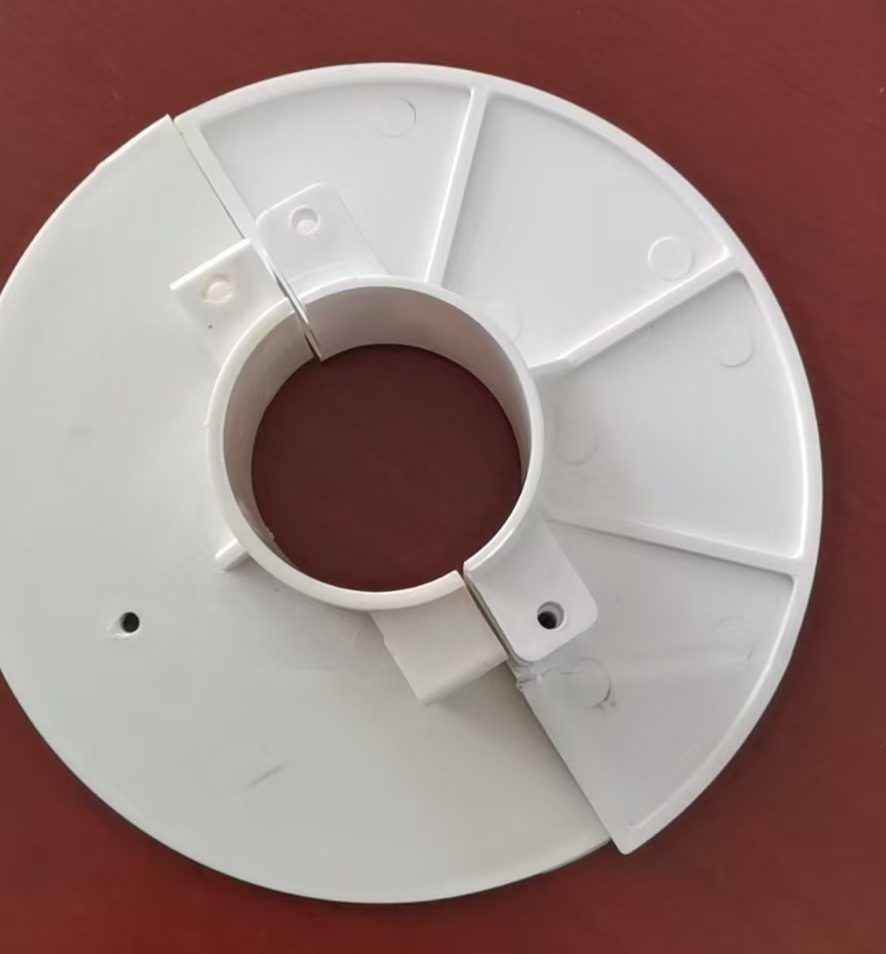
One of the most specialized applications for PVC granules for construction formwork is the production of precision components like pipeline reserved hole suspension molds and embedded sleeves. These small but critical accessories create clean, accurate openings for pipes and conduits in concrete walls and floors. When made from premium PVC granules for construction formwork, these components offer:
-
Consistent dimensions and sharp edges from precision injection molding
-
Smooth, low‑adhesion surfaces for easy demolding without damaging concrete edges
-
High rigidity to withstand concrete pressure without deforming
-
Multiple reuses — unlike single‑use cardboard or foam alternatives
Columns, Beams, Stairs, and Elevator Shafts
PVC formwork made from quality PVC granules for construction formwork can be used for parallel and vertical applications, including columns, beams, side walls, stairs, and elevator shafts. The material’s dimensional stability ensures that complex shapes maintain their geometry pour after pour.
Why the Raw Material Matters: What to Look for in PVC Granules for Construction Formwork
Not all PVC granules for construction formwork are the same. If you are a formwork manufacturer or a contractor sourcing materials, here is what you need to demand from your granule supplier.
Key Technical Specifications
Look for PVC granules for construction formwork that meet or exceed these minimum specifications:
| Property | Target Value | Why It Matters |
|---|---|---|
| Flexural Modulus | ≥ 2500 MPa | Prevents bending under concrete pressure; maintains flatness |
| Tensile Strength | ≥ 45 MPa | Provides structural integrity; prevents cracking during demolding |
| Notched Izod Impact Strength | ≥ 8 kJ/m² | Withstands drops, tool strikes, and rough handling |
| Heat Deflection Temperature | ≥ 70°C (at 1.8 MPa) | Maintains dimensional stability in hot weather or during hydration heat |
| Surface Finish | Smooth, low adhesion | Enables clean demolding; reduces the need for release agents |
Additive Package
High‑performance PVC granules for construction formwork contain a carefully balanced additive package that includes:
-
Impact modifiers — to enhance toughness and prevent brittle fracture
-
Heat stabilizers — to prevent degradation during processing and in service
-
UV stabilizers — to protect against sunlight exposure during storage and use
-
Processing aids — to ensure consistent melt flow and dimensional accuracy during injection molding or extrusion
Certifications
Reputable suppliers of PVC granules for construction formwork should be able to provide documentation of quality control testing and, where applicable, certifications for environmental compliance and material safety.
The Sustainability Angle: PVC Formwork Is Greener Than You Think
The construction industry is under increasing pressure to reduce waste and lower carbon emissions. Wooden formwork, despite being a “natural” material, is actually quite wasteful — it ends up in landfills after only a handful of uses. Steel formwork lasts longer but has a high embodied energy footprint.
PVC formwork made from high‑quality PVC granules for construction formwork offers a compelling sustainability story:
-
Long lifespan reduces material consumption — One PVC panel replaces dozens of wooden panels, dramatically reducing the raw material footprint of a project.
-
Recyclability — At the end of its service life, PVC formwork can be ground up and recycled into new panels. Some manufacturers now operate closed‑loop recycling programs where used boards are returned and reprocessed into new sheet cores. Waste materials can be 100% recycled and reused without affecting performance.
-
Lower carbon footprint — Life cycle assessments have shown that plastic formwork has the lowest carbon emissions among common formwork materials.
-
Reduced on‑site waste — Because PVC formwork does not absorb moisture, warp, or delaminate, there is no need to discard boards prematurely. This eliminates the pile of broken, wet wood that accumulates on traditional job sites.
A recent industry development highlights this trend: major formwork companies are now introducing products made from recycled plastics, designed for full circularity. Each sheet can be returned at the end of its life and reprocessed into new sheet cores, dramatically reducing waste and long‑term material costs.
Case Example: One Supplier’s Approach to Premium PVC Granules for Construction Formwork
To see what premium PVC granules for construction formwork look like in practice, consider the offering from Shandong Dingshengtong New Material (DST PVC). Their specialized PVC injection molding compounds are engineered specifically for construction accessories, including pipeline reserved hole suspension molds and embedded sleeves.
Their formulation achieves the key performance benchmarks discussed throughout this article: a flexural modulus of ≥ 2500 MPa, tensile strength of ≥ 45 MPa, impact strength of ≥ 8 kJ/m², and heat deflection temperature of ≥ 70°C. The practical benefits on-site are clear:
-
Perfectly formed, clean‑edged openings in cured concrete
-
Easy, clean demolding without concrete adhesion
-
Components that withstand drops and rough handling without cracking
-
Multiple reuses across numerous pours and projects
This is what happens when PVC granules for construction formwork are formulated for the job instead of being generic commodity plastics. The difference in field performance is night and day.
Five Common Mistakes When Choosing PVC Granules for Construction Formwork
If you’ve had bad experiences with PVC formwork cracking, it may be because of one of these common mistakes.
Mistake #1: Buying the Cheapest Granules Available
Low‑cost PVC granules for construction formwork are often heavily loaded with calcium carbonate filler. While filler reduces material cost, it also makes the finished product brittle. Boards made from overfilled granules crack easily under impact and show stress fractures around fastener holes.
Mistake #2: Ignoring Impact Strength Specifications
Many buyers focus only on flexural modulus (stiffness) and ignore impact resistance. A stiff board that cannot absorb impact is a board that cracks the first time a worker drops a tool on it. Always check the Notched Izod Impact Strength specification — 8 kJ/m² or higher is the benchmark for construction formwork.
Mistake #3: Overlooking Heat Deflection Temperature
If your PVC granules for construction formwork have a low heat deflection temperature, the boards will soften and deform on hot days or when concrete hydration heat builds up. This leads to dimensional inaccuracy and, eventually, cracking. Demand ≥ 70°C at 1.8 MPa.
Mistake #4: Not Testing the Formulation in Real Conditions
The best PVC granules for construction formwork are developed through iterative testing. A supplier who can’t provide third‑party test data or on‑site validation is taking a gamble with your money. Work with suppliers who have a track record and can demonstrate their materials’ performance.
Mistake #5: Using the Wrong Processing Parameters
Even the best PVC granules for construction formwork will produce poor results if the injection molding or extrusion parameters are incorrect. Ensure your processing team follows the supplier’s recommended temperature, pressure, and cooling profiles.
FAQ
1. Can PVC formwork made from PVC granules for construction formwork really outlast wood by 10 times?
Yes. High‑quality PVC formwork typically delivers 30–50 uses versus 5–10 uses for wood. Some systems achieve 100+ uses, delivering a cost per use far lower than wood.
2. Will PVC formwork made from these granules crack in cold weather?
Premium formulations maintain impact resistance down to approximately -25°C. Below that, brittleness increases, but for most climates, properly formulated PVC performs reliably year‑round.
3. Do I need release agents when using PVC formwork?
No. The smooth, low‑adhesion surface of premium PVC formwork allows clean demolding without release agents — saving material costs and reducing on‑site chemical exposure.
4. Can my existing production equipment process these PVC granules for construction formwork?
Yes, in most cases. Premium PVC granules are designed for standard injection molding and extrusion equipment. Your supplier should provide recommended processing parameters.
5. Is PVC formwork recyclable at the end of life?
Yes. PVC formwork can be ground, reprocessed, and remanufactured into new panels. Closed‑loop recycling programs are increasingly available, supporting circular economy principles.
Conclusion: Stop Cracking, Start Profiting
Cracked formwork boards are not inevitable. They are a symptom of using the wrong material. Wood is obsolete for high‑turnover formwork applications — it absorbs moisture, degrades chemically, and cracks under repeated stress. Low‑grade plastics are not much better; their poor formulations lead to brittleness and premature failure.
The solution is proven, cost‑effective, and available today: premium PVC granules for construction formwork engineered specifically for the demands of concrete forming. With the right formulation — high flexural modulus, high impact strength, heat deflection temperature above 70°C, and complete moisture and chemical resistance — your formwork will last for dozens of pours instead of just a handful. The concrete finish will be smooth. The demolding will be clean. And the cracked boards that used to litter your job site will be a thing of the past.
Ready to eliminate cracking from your formwork for good?
👉 Explore high‑performance PVC granules for construction formwork at DST PVC. Request technical specifications, test samples, and see for yourself why premium granules make all the difference.