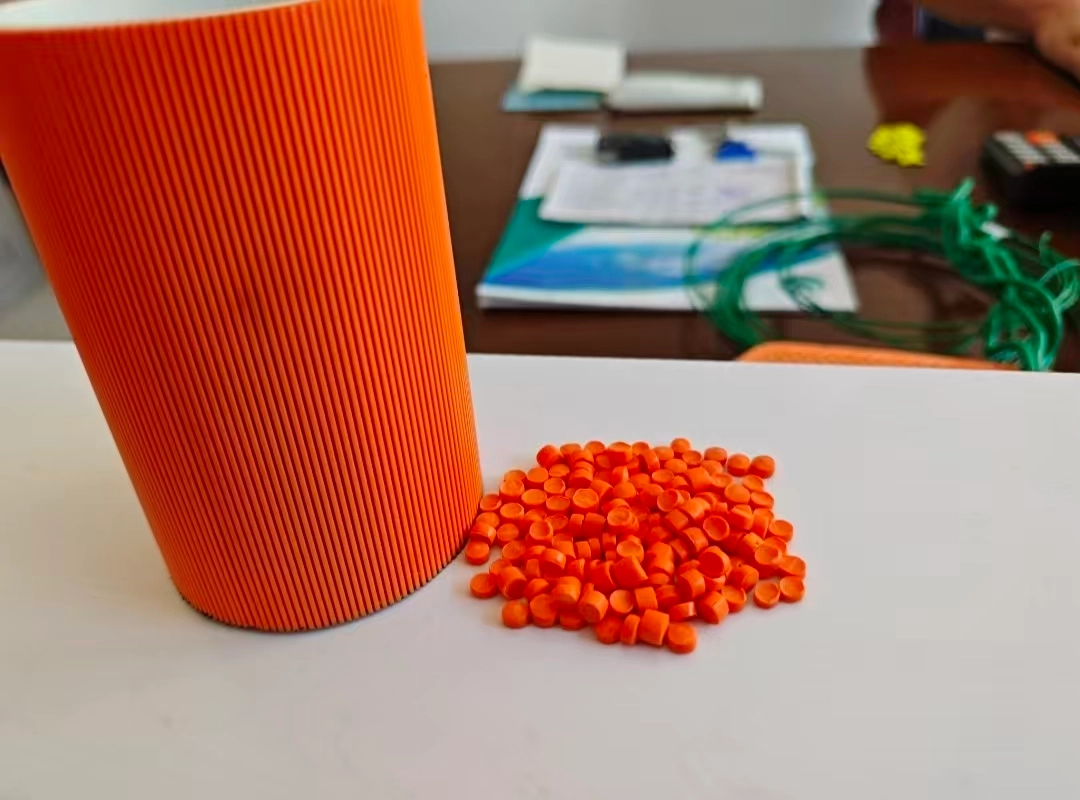
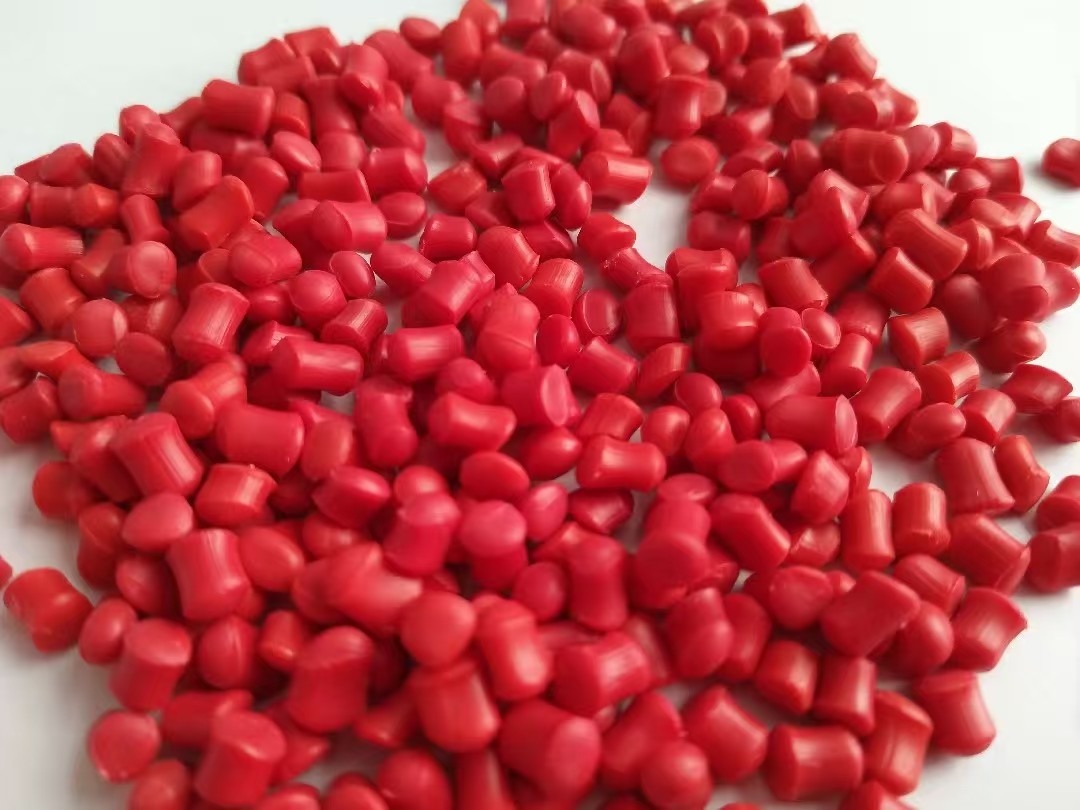
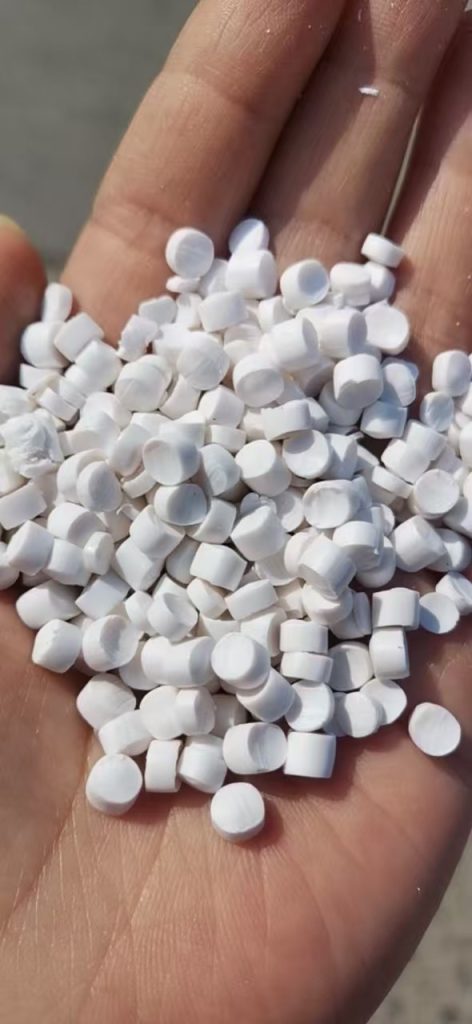
Electricity is unforgiving. It does not negotiate. It follows the path of least resistance, and if materials fail, the consequences are immediate. Every switch, socket, junction box, conduit, and distribution enclosure must stand between controlled electrical flow and potential hazard. That boundary is often formed by PVC granules—tiny engineered polymer pellets that become the structural and insulating backbone of modern electrical accessories.
PVC (polyvinyl chloride) remains one of the most widely used thermoplastics in the electrical industry. It is not used by accident. It is used because its molecular structure, formulation flexibility, cost efficiency, and fire-retardant characteristics align remarkably well with electrical safety demands.
But not all PVC granules are the same. Electrical-grade PVC compounds are engineered with precise additive packages, performance targets, and regulatory compliance in mind. Selecting the wrong grade can lead to deformation, discoloration, cracking, insulation failure, or regulatory rejection. Selecting the right grade creates durable, safe, and compliant products that survive years of thermal cycling and mechanical stress.
Why PVC Granules Dominate Electrical Accessories Manufacturing
Electrical accessories operate in environments that combine mechanical stress, heat generation, voltage exposure, and potential flame risk. Materials used in these applications must satisfy a rare combination of properties:
-
High dielectric strength
-
Strong insulation resistance
-
Flame-retardant performance
-
Dimensional stability under heat
-
Mechanical durability
-
Processability at an industrial scale
PVC meets these demands because of its intrinsic chlorine content, which naturally imparts flame resistance. When exposed to flame, PVC tends to self-extinguish rather than sustain combustion. That single characteristic has influenced decades of electrical housing design.
Additionally, PVC is highly adaptable. Through compounding—adding stabilizers, plasticizers, fillers, pigments, and impact modifiers—manufacturers can fine-tune rigidity, flexibility, heat resistance, and impact strength.
This formulation flexibility makes PVC suitable for:
Switch housings
Socket casings
Distribution board covers
Cable trunking
Conduit pipes
Plug tops
Electrical enclosures
Each of these applications demands slightly different mechanical and thermal characteristics. PVC granules allow engineers to adjust properties without redesigning production lines.
Material Science Foundations of Electrical-Grade PVC
PVC is a thermoplastic polymer formed by polymerizing vinyl chloride monomer (VCM). Its structure contains repeating vinyl chloride units with chlorine atoms attached to the carbon backbone. That chlorine content is the key to its fire-retardant behavior.
Pure PVC resin alone is not ready for electrical applications. It must be compounded into granules.
Compounding transforms raw resin into a functional material through controlled blending of additives.
Core Additive Categories in Electrical PVC Granules
-
Heat stabilizers to prevent thermal degradation during processing
-
Flame-retardant enhancers for improved fire classification
-
Impact modifiers to improve mechanical durability
-
Fillers for dimensional stability and cost control
-
UV stabilizers for outdoor accessories
-
Lubricants to improve processing flow
-
Pigments for color consistency
Heat stabilizers are particularly critical. PVC begins to degrade when heated excessively, releasing hydrogen chloride gas. Stabilizers prevent this degradation during injection molding or extrusion.
Rigid PVC (often referred to as uPVC) is commonly used for switch plates, socket casings, and conduit systems. Flexible PVC, containing plasticizers, may be used in cable insulation or certain flexible protective components.
Electrical accessories generally rely on rigid PVC because it provides better structural strength and dimensional stability.
Performance Requirements for PVC Granules in Electrical Accessories
Electrical accessories must satisfy measurable technical benchmarks. These are not abstract properties. They are quantifiable safety parameters.
Below is a reference table outlining key performance characteristics typically required in electrical-grade PVC granules.
Key Technical Parameters for Electrical-Grade PVC Granules
| Property | Typical Requirement Range | Relevance |
|---|---|---|
| Dielectric Strength | 30–50 kV/mm | Prevents electrical breakdown |
| Volume Resistivity | ≥10¹³ Ω·cm | Ensures insulation performance |
| Vicat Softening Temp | 70–85°C (rigid PVC) | Heat deformation resistance |
| UL94 Rating | V-0 or V-1 | Flame retardancy classification |
| Tensile Strength | 40–60 MPa | Mechanical durability |
| Impact Strength | ≥5 kJ/m² | Resistance to cracking |
| Density | 1.35–1.45 g/cm³ | Structural consistency |
Dielectric strength ensures that the material can withstand voltage without breakdown. Volume resistivity measures resistance to electrical conduction through the material body.
The Vicat softening temperature indicates the temperature at which the material begins to deform under load. In electrical accessories exposed to warm environments, insufficient thermal resistance can lead to warping.
UL94 classification evaluates flammability performance. V-0 rating indicates rapid self-extinguishing with minimal dripping, a preferred level for high-safety applications.
Mechanical properties matter because switch plates and casings are subjected to repeated handling, mounting stress, and potential impact.
Application-Specific PVC Granule Formulation
Electrical accessories are not uniform products. Each category requires formulation adjustments.
Switch housings demand high surface gloss and scratch resistance. Socket casings must resist the heat generated by plug contacts. Junction boxes require impact strength and structural rigidity. Conduit pipes must endure installation stress and long-term load.
Manufacturers often request custom PVC compounds tailored to specific mold designs and production speeds.
Formulation engineering balances filler content, stabilizer type, and processing lubricants to optimize both performance and cost.
For example, increasing filler content may reduce raw material cost but can negatively affect impact resistance and surface finish. Adjusting stabilizer chemistry can enhance heat aging performance but may increase compound price.
These trade-offs are not arbitrary. They are calculated decisions based on product positioning and regulatory targets.
Compliance and Certification Considerations
Electrical accessories are heavily regulated because failure can result in fire or shock hazards.
PVC granules used in these products must often comply with international standards such as:
IEC standards for electrical equipment
UL certification requirements
RoHS directives restricting hazardous substances
REACH chemical compliance regulations
Lead-based stabilizers were once common in PVC compounds. Modern electrical-grade PVC increasingly uses lead-free stabilizers to meet environmental regulations.
Flame retardancy must often meet UL94 V-0 classification for enclosure materials.
Compliance testing typically includes:
Heat aging tests
Glow wire tests
Flammability tests
Electrical insulation testing
Mechanical stress testing
Granule suppliers must provide technical data sheets and certification documentation to support downstream manufacturers during regulatory audits.
Failure at this stage does not just delay production—it can halt entire product lines.
Processing Considerations for Manufacturers
PVC granules for electrical accessories are typically processed through injection molding or extrusion.
Injection molding is used for switch plates, sockets, and small enclosures. Extrusion is used for conduit pipes and cable trunking.
Processing temperature must be carefully controlled. Excessive heat can degrade PVC, leading to discoloration or reduced mechanical performance.
Below is a general reference table for processing parameters.
Recommended Processing Parameters for Electrical-Grade PVC Granules
| Parameter | Injection Molding | Extrusion |
|---|---|---|
| Barrel Temperature | 160–190°C | 150–185°C |
| Mold Temperature | 20–50°C | Controlled cooling |
| Screw Speed | Moderate | Application dependent |
| Drying Requirement | Minimal (PVC low moisture absorption) | Minimal |
Uniform melt flow is critical for maintaining dimensional accuracy. Inconsistent granule quality can result in surface defects or internal stress points.
Quality control procedures should include melt flow index testing, color consistency evaluation, and mechanical sampling per batch.
Batch-to-batch consistency defines supplier reliability in B2B environments.
Procurement Strategy for B2B Buyers
Electrical accessory manufacturers sourcing PVC granules must evaluate more than price.
Procurement decisions should consider:
-
Long-term supply stability
-
Certification documentation support
-
Custom formulation capability
-
Technical assistance during mold trials
-
Batch consistency assurance
-
Lead-free and environmentally compliant options
Virgin PVC compounds provide predictable performance. Recycled PVC can reduce cost but may introduce variability in mechanical and electrical characteristics.
Strategic buyers often collaborate with compounders to develop tailored formulations rather than relying solely on off-the-shelf grades.
This collaboration reduces long-term defect rates and improves production efficiency.
Environmental and Sustainability Considerations
PVC has historically faced scrutiny due to chlorine content and additive chemistry. However, modern electrical-grade PVC formulations have evolved significantly.
Lead-free stabilizers have become standard in many regions. Low-smoke PVC formulations reduce toxic emissions during combustion. Recycling systems for rigid PVC are improving.
That said, PVC sustainability discussions must remain scientifically grounded. It is not inherently “green,” nor is it universally harmful. Its environmental profile depends on formulation, lifecycle management, and recycling infrastructure.
Electrical accessories often have long service lifespans. Longevity itself is a sustainability factor.
Replacing materials prematurely due to inferior performance generates a greater environmental impact than selecting durable compounds.
Emerging Innovations in Electrical PVC Granules
Material science continues to refine PVC compounds.
Nano-fillers are being explored to improve mechanical strength without increasing weight. Advanced stabilizer systems enhance thermal aging resistance. Anti-bacterial additives are introduced for switches and sockets in healthcare environments.
Some compounders are developing halogen-modified formulations with reduced smoke emission profiles while maintaining flame retardancy.
Smart buildings are increasing demand for aesthetic consistency, meaning high-gloss, scratch-resistant PVC compounds are gaining traction.
Innovation in this field is incremental but impactful. A slight improvement in heat stability can extend product life by years.
PVC granules for electrical accessories are not generic plastic pellets. They are engineered materials designed to meet strict electrical, thermal, mechanical, and regulatory requirements.
Their dominance in the industry stems from a rare combination of flame retardancy, insulation performance, cost efficiency, and formulation flexibility.
Selecting the correct PVC compound requires alignment between product function, compliance requirements, processing conditions, and long-term durability expectations.
For manufacturers, understanding the science behind the granules enables better quality control and product reliability.
For procurement teams, evaluating suppliers beyond price ensures compliance, consistency, and sustainable production.
Electricity demands boundaries. PVC granules provide them—quietly, consistently, and at massive industrial scale.
In the end, those tiny pellets carry immense responsibility. They stand between controlled power and uncontrolled risk. And in electrical systems, that boundary defines everything.