Rubber has long been the standard choice for industrial hoses, but it is not always the most cost-effective option. Modern Flexible PVC Compound formulations offer lower hose weight, easier handling, good resistance to many alkaline solutions and salt-based fluids, and competitive total cost of ownership in moderate-duty applications. Rubber remains preferable for extreme temperatures, continuous fuel contact, demanding pressure requirements, and heavy abrasive service. However, for many factory-floor operations, chemical-transfer lines, and low-to-medium-pressure pneumatic applications, flexible PVC hose can be a more practical and economical alternative.
The Real Cost of Cheap Hose Is Not on the Invoice
A lower purchase price can hide a higher service cost. The more useful metric is cost per month of service, not cost per meter at the receiving dock.
Consider a common procurement comparison. A general-purpose PVC air hose may cost less than a comparable rubber hose, but under heavy dragging conditions, it may wear out much sooner. Rubber often delivers a longer service life in the same environment. Based on purchase price alone, rubber looks more expensive. However, the cost per service month depends on the duty cycle, handling pattern, and operating environment.
That is why blanket sourcing rules such as “rubber is always better” can lead to unnecessary spending. For hoses used only a few hours per week in controlled environments, flexible PVC can offer a competitive total cost of ownership. The risk is that some operations underestimate the demands of their applications and continue using PVC hoses after they have stiffened, kinked, or lost pressure performance.
Why Cost per Service Month Beats Sticker Price
Procurement teams should compare hose options using the variables that actually affect replacement frequency:
-
Hours of use per week and number of shifts
-
Abrasion severity, especially dragging over concrete or sharp edges
-
Conveyed medium, concentration, and contact duration
-
Ambient and fluid temperatures
-
Working pressure and pressure-pulse frequency
-
Changeover frequency and handling labor per shift
A hose that costs less but requires more frequent replacement, additional handling labor, or more downtime is not necessarily the cheaper option. Likewise, a higher-priced hose that is over-specified for a moderate-duty line is not automatically the better investment.
A Plant-Floor Example: Two Lines, Two Answers
Consider an illustrative batch chemical plant operating two transfer lines. On the first line, operators move a caustic solution at ambient temperature through a temporary hose that is reconfigured twice a week. A properly formulated flexible PVC hose may suit this application, provided its chemical compatibility and pressure rating are verified. It can also be easier to coil and reposition for storage. On the second line, the plant transfers a mineral-oil-based fluid continuously at elevated temperatures. A suitable oil-resistant rubber grade, such as NBR, may be a better choice because prolonged oil and heat exposure can cause plasticizer extraction from some PVC formulations and shorten hose service life.
The same plant and procurement team may therefore need two different hose materials. The deciding factor is the duty profile, not a general preference for PVC or rubber.
How Compound Formulation Changes the Economics
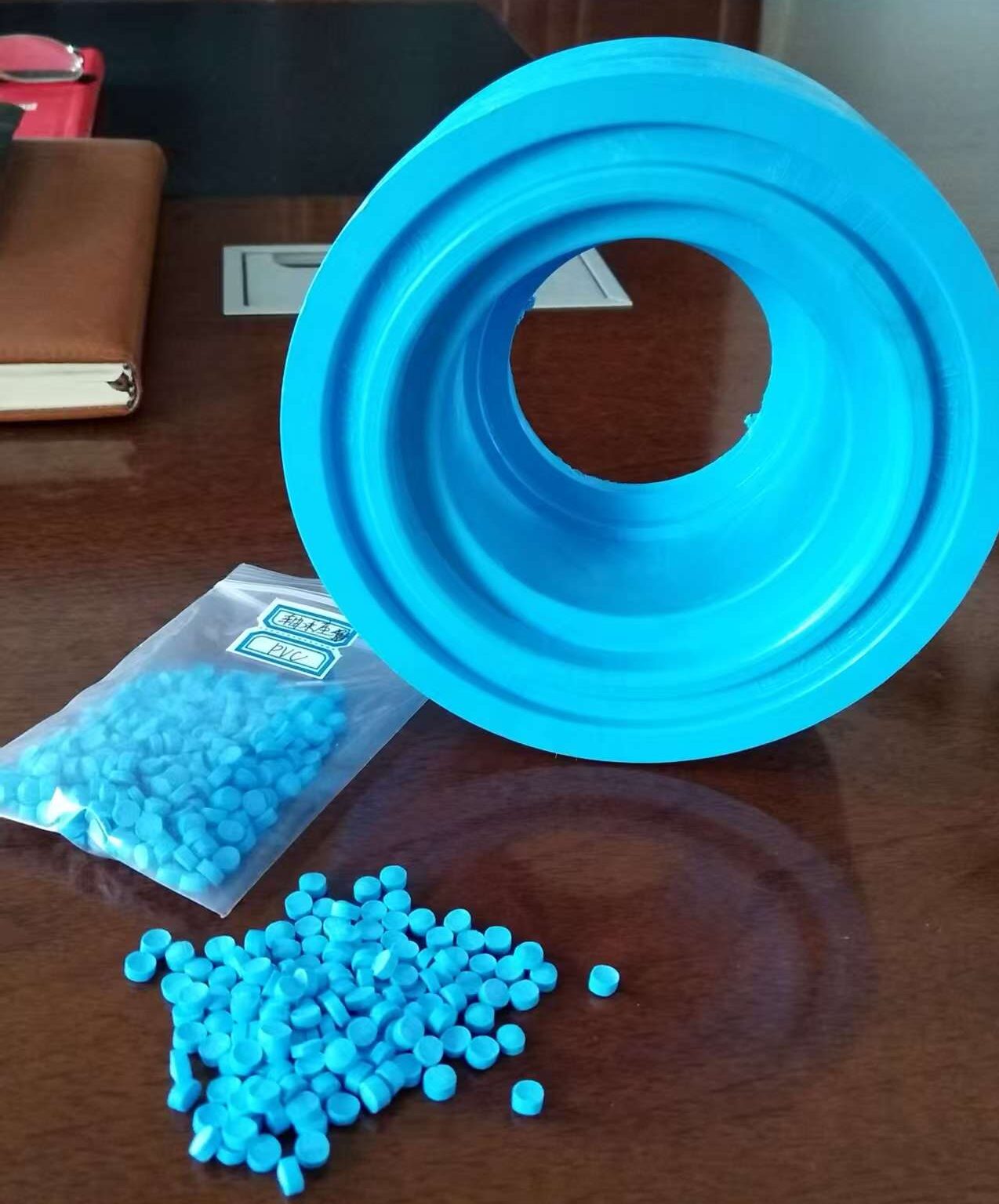
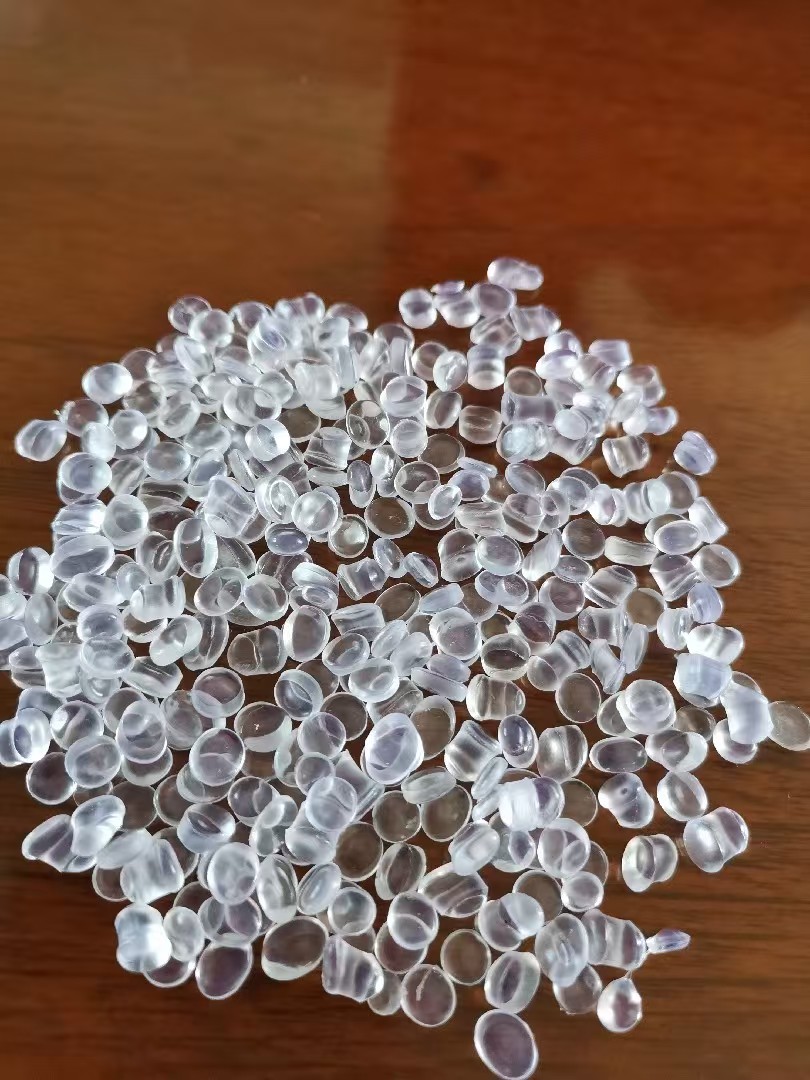
Flexible PVC Compound is not a single commodity formulation. Supplied in granule form, Flexible PVC Granules can be formulated with different plasticizer types and loading levels, stabilizer packages, and filler contents to balance flexibility, extraction resistance, and processing performance.
Rubber compounds also offer formulation flexibility, but their manufacturing processes generally involve additional steps. Mixing, calendering or extrusion, and vulcanization all contribute to production time and cost. Thermoplastic PVC processing does not require vulcanization, which can give Flexible PVC Compound a cost advantage in suitable applications. Actual costs still depend on formulation, processing conditions, and finished hose construction.
Flexible PVC Compound Offers Advantages in Weight, Handling, and Installation
The first advantage an operator notices is not necessarily a datasheet figure. It is how the hose feels when handling it.
A flexible PVC hose can be lighter than a comparable rubber hose, although the actual weight depends on its diameter, wall thickness, reinforcement, and pressure rating. Across a maintenance cart carrying several hose reels, even a modest weight difference can reduce daily lifting, dragging, and repositioning effort. For an operator working a long shift, easier handling can help reduce fatigue and improve productivity.
What Operators Notice First
Handling benefits tend to appear in everyday routines rather than in formal specifications:
-
Faster coiling and uncoiling at shift start and end
-
Less strain during overhead routing and ladder work
-
Easier repositioning by one technician
-
More compact storage on crowded maintenance carts
-
Potentially lower freight and handling costs per meter
A rubber hose that lasts longer but requires additional labor to move may not deliver the expected savings in every application. Handling labor is easy to overlook because it does not appear on the hose invoice.
Why Reinforcement Architecture Matters
Many industrial PVC hoses use braided or spiral reinforcement made from polyester or nylon yarn. This structure helps the hose withstand internal pressure while maintaining flexibility. The required wall thickness and overall weight depend on the reinforcement design, compound formulation, and target pressure rating.
Some flexible PVC hoses can offer a weight advantage over rubber hoses with comparable dimensions and pressure ratings. However, a specific weight reduction should only be claimed when supported by datasheets for products with equivalent specifications. Procurement teams should compare inner diameter, wall thickness, reinforcement, working pressure, and temperature rating rather than relying on material type alone.
Table 1. Typical Performance Comparison for General Industrial Hose Service
| Performance dimension | Flexible PVC Compound Hose | Rubber Hose (EPDM / SBR / NBR) |
|---|---|---|
| Typical weight, 10 m length | Depends on diameter, wall thickness, and reinforcement | Depends on elastomer and hose construction |
| Relative upfront cost | Often competitive for general-purpose applications | Varies by rubber grade and construction |
| Alkali and salt-solution resistance | Generally good with compatible formulations | Good for selected grades; compound-dependent |
| Oil and fuel resistance | Limited with many standard formulations; plasticizer extraction may occur | NBR and FKM offer good resistance to many oils and fuels; EPDM is generally unsuitable for mineral oils |
| Low-temperature flexibility | Standard grades may stiffen near freezing; specialty grades can extend the usable range | Depends on elastomer grade and formulation |
| Abrasion under heavy drag | Suitable for selected light-to-medium-duty applications | Often preferred for demanding abrasive service |
| Pressure performance | Depends on reinforcement, wall thickness, and hose design | Depends on elastomer, reinforcement, and hose design |
| Handling and coiling | Often lighter and easier to reposition | Generally heavier, depending on construction |
The table is not a scorecard with a single winner. It highlights the trade-offs between different hose materials and constructions. The right question is which trade-offs the application can tolerate. The final choice should reflect operating conditions, required performance, and expected service life.
Chemical Resistance Is a Matrix, Not a Single Pass-Fail Label
The chemical resistance of flexible PVC is often reduced to one warning: oils and solvents can extract plasticizers and harden the hose. That warning is valid, but it does not tell the whole story.
Flexible PVC Compound can perform well in many alkaline services and salt solutions. For caustic transfer, brine lines, and many detergent-based washdown circuits, a properly formulated PVC hose can be a practical material choice.
The limitations become more significant during prolonged contact with fuels, mineral oils, and certain aromatic solvents. Plasticizers can migrate from the PVC compound into the conveyed fluid, leaving the hose harder and less flexible over time. This is why standard flexible PVC grades are generally unsuitable for continuous fuel transfer or hot-oil circulation.
Where Flexible PVC Performs Well
-
Alkaline solutions and compatible caustic-transfer lines at ambient temperature
-
Salt solutions, brine, and many washdown circuits
-
Water and mild detergent transfer
-
Light pneumatic service in temperature-controlled facilities
-
Temporary transfer lines that are frequently moved or reconfigured
Where Rubber Remains the Safer Specification
-
Continuous fuel transfer and hot-oil circulation
-
High-pressure pneumatic tools and hydraulic circuits
-
Heavy abrasive dragging over concrete, gravel, or sharp edges
-
Outdoor winter service in hard-freeze climates
-
Applications requiring a high burst-pressure safety margin
Hose specifiers should treat chemical resistance as a combination of medium, concentration, temperature, and contact duration rather than a single material property. Flexible PVC Compound can use polymeric plasticizers or other low-migration formulation strategies to improve resistance to extraction. However, suitability must be verified for the specific compound and operating conditions.
The Plasticizer Problem Is Real—but Modern Compounds Can Manage It
One technical concern that can limit flexible PVC in demanding hose applications is plasticizer migration. The concern is legitimate. Certain plasticizers can be extracted by oils, solvents, or prolonged heat exposure, making a flexible hose stiffer and more likely to kink.
However, flexible PVC is a formulated material, and plasticizer selection is one of the key variables a compounder controls. Polymeric plasticizers generally have higher molecular weights and lower volatility than conventional monomeric plasticizers, which can reduce migration and extraction under suitable conditions. Low-migration formulations may therefore help maintain flexibility during prolonged service, although actual performance depends on the plasticizer, medium, temperature, and exposure time.
This makes material sourcing an important performance decision. A buyer who specifies only “flexible PVC” without defining the required plasticizer properties may leave a critical durability factor unaddressed.
Migration Is a Formulation Issue, Not a Polymer Verdict
A practical specification review should distinguish the base polymer from the complete formulation. Ask these questions before approving a flexible PVC hose for chemical service:
-
What plasticizer class is used, and is it compatible with the conveyed medium?
-
What are the expected contact temperature and exposure duration?
-
Does the application involve intermittent splashing or continuous immersion?
-
What hardness and elongation levels must be maintained after exposure?
-
Has the hose been tested with the actual medium rather than evaluated only against a generic resistance chart?
A Washdown Example: Where Low-Migration Compound May Help
Consider a food-processing facility using flexible PVC hose in a daily washdown circuit with a mild alkaline detergent at approximately 45°C. If a standard compound stiffens after repeated exposure, switching to a suitable low-migration formulation may help maintain coiling flexibility and extend replacement intervals. A polymeric plasticizer system may be one option, but the complete hose should be evaluated under actual service conditions. The solution is not necessarily to switch to rubber; it may be to specify a compound better suited to the application.
Cold Flexibility Depends on Grade
Standard flexible PVC grades tend to stiffen as temperatures approach freezing. A hose that remains flexible in a heated warehouse may become harder to uncoil on a cold loading dock. Specialty flexible PVC compounds can extend the usable temperature range through optimized plasticizer systems, although performance varies by formulation and may not match that of natural rubber or suitable EPDM grades.
For outdoor operations in hard-freeze climates, rubber is generally the safer specification. For indoor or temperature-controlled facilities, a suitable cold-flex PVC grade may provide sufficient flexibility at a lower handling weight.
Temperature and Pressure Are Where Rubber Still Earns Its Place
Responsible material selection also means recognizing the conditions in which flexible PVC Compound may not be the best choice.
Rubber hoses can cover a wider service temperature range, but the actual limits depend on the elastomer grade and hose construction. Standard flexible PVC grades also have defined temperature limits, which vary by formulation. Elevated temperatures can soften PVC and reduce its pressure-bearing performance. For hot-air ducting or applications near radiant process heat, a suitably rated rubber or thermoplastic rubber hose may be more appropriate.
Pressure performance requires the same attention to product specifications. A rubber air hose may offer a higher burst-pressure margin than a comparable PVC hose, but this cannot be assumed for every product. For high-pressure pneumatic tools, hydraulic circuits, and pressure-washer service, buyers should verify the working pressure, burst pressure, reinforcement structure, and applicable safety factor rather than relying on material type alone.
Table 2. Matching Material to Operating Scenario
| Operating scenario | Better material fit | Why |
|---|---|---|
| Intermittent air tool use in a heated workshop, under 10 hours per week | Flexible PVC Compound | Can offer lower upfront cost and easier handling when the pressure rating is suitable |
| Daily dragging over concrete in a two-shift production line | Rubber | Often better suited to demanding abrasion and repeated dragging |
| Caustic or brine transfer at ambient temperature | Flexible PVC Compound | Can provide good resistance with a chemically compatible formulation |
| Continuous fuel or hot-oil circulation | Rubber, especially suitable NBR or FKM grades | Better compatibility with many oil and fuel applications |
| Outdoor winter service in freezing climates | Suitable rubber grade, such as EPDM or natural rubber | Generally offers better low-temperature flexibility than standard PVC |
| Temporary transfer lines moved by one operator | Flexible PVC Compound | Lower weight and easier coiling can reduce handling effort |
| High-pressure pneumatic or hydraulic service | A suitably rated rubber hose | May provide the required burst-pressure margin and pressure-pulse resistance |
Choosing the Right Compound Grade Is the Real Competitive Edge
The difference between a flexible PVC hose that disappoints and one that performs reliably for years is rarely the base resin alone. It is the compound formulation and how closely it matches the service environment.
A hose extruder using general-purpose PVC granules may face limitations in flexibility, durability, and processing. Using flexible PVC compound granules specifically developed for hose extrusion can help achieve more consistent processing and finished-hose performance. Flexible PVC compounds for hose applications are available in different hardness and mechanical property ranges. Tensile strength, elongation at break, and Shore A hardness should be evaluated against the requirements for repeated flexing, coupling insertion, and pressure pulses rather than treated as universal performance values.
This is also where procurement discussions should shift from “PVC versus rubber” to “which PVC compound grade versus which rubber grade.” A Shore A 70 compound and a Shore A 80 compound, for example, may behave differently in tight-radius coiling applications and should not be treated as interchangeable.
What a Hose-Grade Compound Specification Should Include
-
Target Shore A hardness and acceptable tolerance
-
Tensile strength and elongation at break
-
Plasticizer class and migration resistance requirements
-
Service temperature range, including startup conditions
-
Chemical exposure medium, concentration, and contact duration
-
Working pressure, burst pressure, and pressure-pulse profile
-
Minimum coiling radius and coupling compatibility
-
Abrasion requirements and expected dragging conditions
A Maintenance-Department Example: Lighter Hose, Easier Handling
Consider a mid-sized assembly plant replacing general-purpose rubber air hoses with flexible PVC hoses on selected low-pressure tool lines. The lighter hoses may make coiling easier at shift end and reduce handling effort during overhead routing. However, rubber hoses may remain necessary for high-pressure impact-tool lines where pressure ratings and burst margins are critical. The advantage of Flexible PVC Compound is not universal replacement, but targeted use in applications where weight and handling matter more than the additional pressure margin. This is a more practical approach to material selection.
Câu hỏi thường gặp
Q: Is Flexible PVC Compound Suitable for Potable Water or Food-Contact Hoses?
Some grades meet food-contact or potable-water requirements, but general-purpose formulations may not. Check the applicable regulatory standards and request compliance documentation for the specific compound.
Q: Can Flexible PVC Hose Handle Low-Pressure Pneumatic Service?
Yes. Many flexible PVC air hoses suit low-pressure pneumatic applications. Always verify the hose’s working pressure and burst rating against the operating requirements.
Q: How Do I Know If Plasticizer Migration Will Be a Problem?
Assess the conveyed medium, temperature, and contact duration. Oils, fuels, and certain solvents can increase migration risk. Request relevant compatibility or migration test data from the compound supplier.
Q: Does a Lighter Hose Affect Total Cost of Ownership?
Yes. Lower weight can reduce handling effort, changeover time, and labor costs, particularly in facilities where hoses are frequently moved or repositioned.
Q: What Is the Typical Service Temperature Range for Flexible PVC Hose?
It varies by formulation and hose construction. Check the manufacturer’s rated temperature range against actual fluid and ambient temperatures rather than relying on a general PVC temperature range.
Kết luận
Flexible PVC Compound does not outperform rubber in every industrial hose application. Rubber remains a strong choice for heavy abrasive service, high-pressure requirements, continuous fuel contact, and extreme cold. However, for moderate-duty applications, flexible PVC can offer practical advantages in weight, handling efficiency, and total cost of ownership. Choosing the right compound grade for the operating conditions can help manufacturers achieve a better balance of performance, service life, and cost per service month.
Looking for flexible PVC granules for hose production? [Dingshengtong] offers PVC granules and can help you evaluate suitable Flexible PVC Compound options based on your application requirements. Contact our team to discuss your target hardness, flexibility, processing needs, and operating conditions, and identify a suitable grade for further testing.