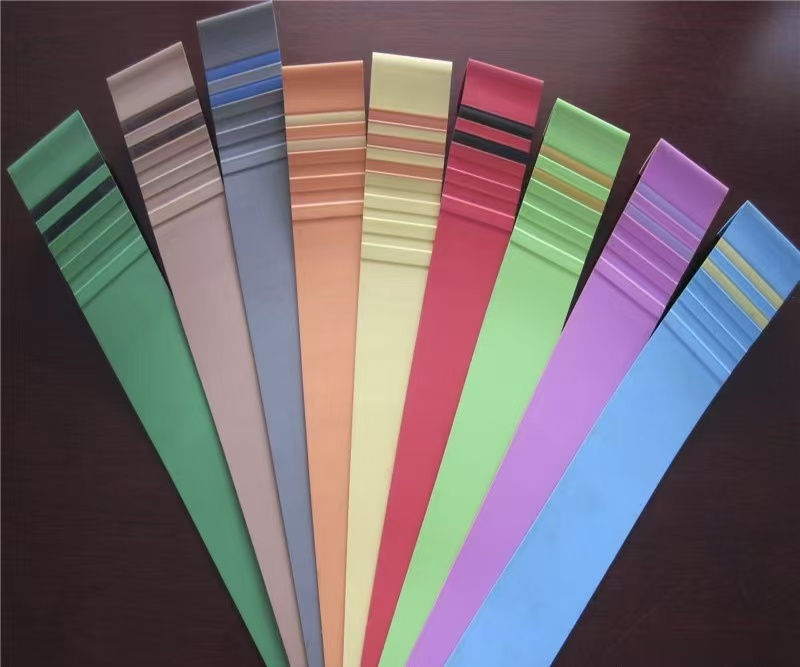
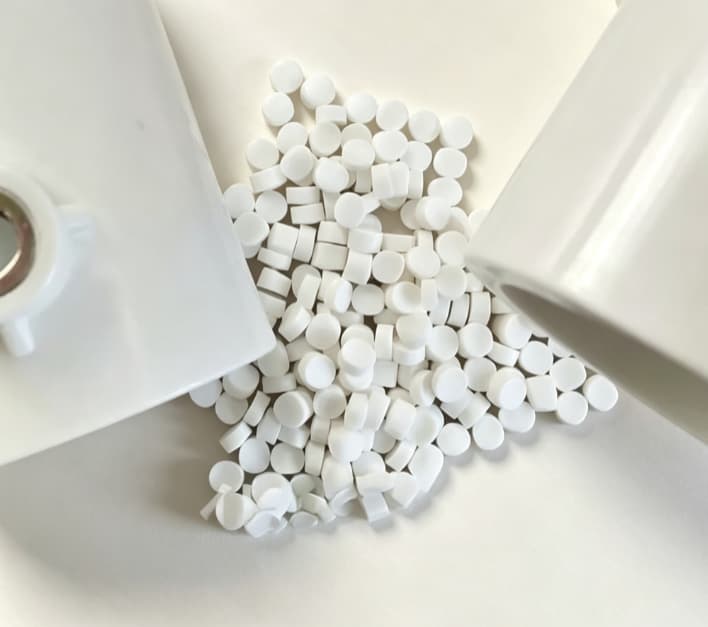
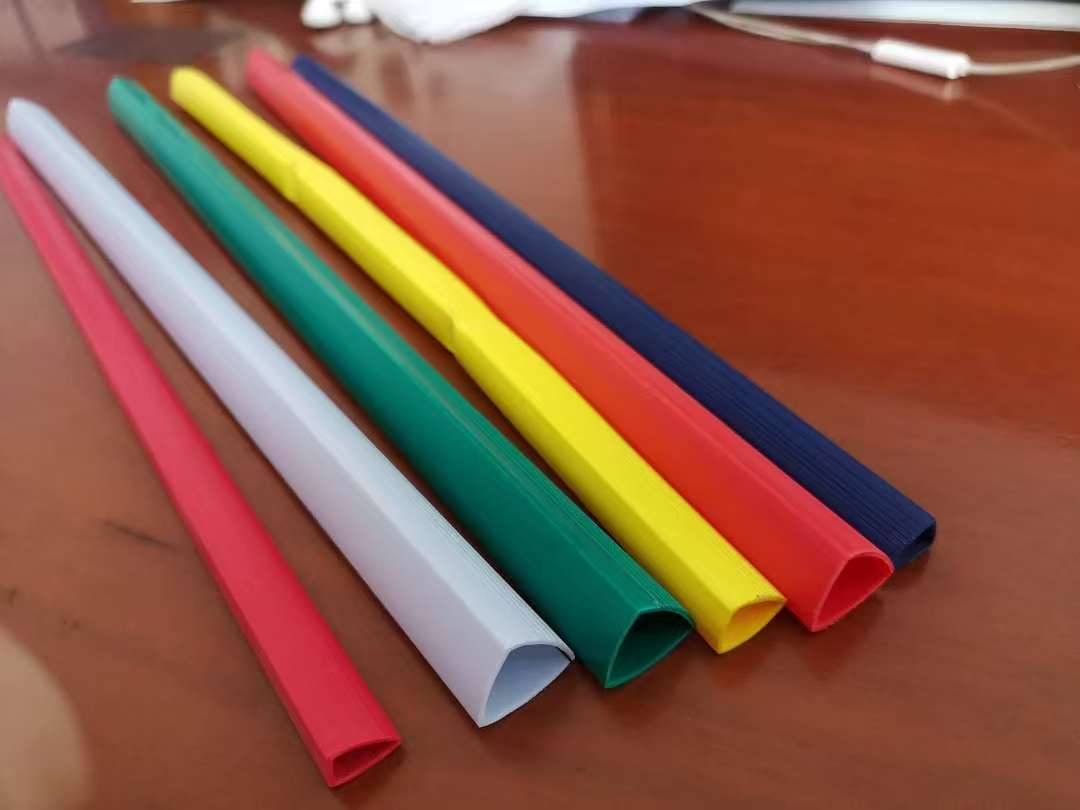
Flexible PVC Compound is a thermoplastic material formulated with PVC resin, plasticizers, stabilizers, and other additives to meet specific application requirements. Its adjustable properties make it suitable for cable insulation and jacketing, as well as footwear soles and midsoles. However, each application requires a different formulation to achieve the necessary electrical, thermal, and mechanical performance.
Key Takeaways
- Flexible PVC Compound is an application-specific material whose properties depend on resin selection and additive composition.
- Cable compounds prioritize electrical insulation, thermal stability, and flame performance, while footwear compounds focus on flexibility, abrasion resistance, and cushioning.
- Different plasticizer systems and additives are required for cable extrusion and footwear molding.
- Grade-specific testing and technical documentation are essential for selecting the right compound.
Flexible PVC Compound works across cables and footwear because its formulation can be engineered around the performance requirements of the finished product, rather than being restricted to one fixed set of material properties.
1. Why Does Flexible PVC Compound Serve Both Cable and Footwear Industries?
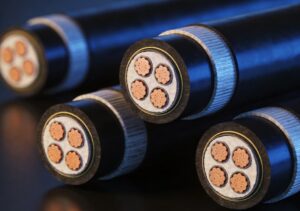
The versatility of Flexible PVC Compound comes from the ability to modify the properties of polyvinyl chloride (PVC) through compounding. Unplasticized PVC is relatively rigid, while the addition of compatible plasticizers increases chain mobility and produces a flexible material suitable for applications such as cable insulation, protective jackets, shoe soles, and midsoles.
The compounder controls the final properties by adjusting several formulation variables:
- Plasticizers – Adjust hardness and flexibility.
- Stabilizers – Improve thermal stability during processing and service.
- Fillers – Influence hardness, density, mechanical properties, and cost.
- Flame retardants – Improve combustion performance where required.
- Processing additives – Support extrusion, molding, and surface quality.
How Cable and Footwear Requirements Differ
Although both industries use flexible PVC, their performance priorities are substantially different.
| Performance parameter | Cable insulation and jacketing | Footwear soling and midsoling |
|---|---|---|
| Primary function | Electrical insulation and mechanical protection | Comfort, durability, and ground contact |
| Typical hardness range | Approximately 70–96 Shore A in the example grades discussed | Approximately 35–95 Shore A |
| Plasticizer selection | Balanced against electrical, thermal, and mechanical properties | Adjusted for softness, flexibility, and wear performance |
| Thermal requirements | Heat aging and continuous service temperature | Low-temperature flexibility and heat resistance |
| Flame performance | Important when required by cable standards | Generally secondary to mechanical and consumer-safety requirements |
| Mechanical requirements | Tensile strength, elongation, cold bend, and abrasion resistance | Abrasion resistance, flex fatigue, and slip resistance |
| Способ обработки | Primarily cable extrusion | Injection molding and other footwear molding processes |
| Surface requirements | Smooth, consistent insulation or protective jacket | Controlled texture, color, gloss, and surface finish |
Note: These ranges are illustrative examples from the product grades discussed, not universal industry specifications.
The differences become clearer when examining potential product failures.
-
A cable jacket that becomes brittle in cold environments may crack and expose underlying cable layers.
-
A cable insulation compound with inadequate electrical properties may compromise insulation reliability.
-
A shoe sole with insufficient abrasion resistance may wear through prematurely.
-
A sole with inadequate wet slip resistance may create a safety risk during use.
The same PVC base polymer can support very different end products, but the formulation must be redesigned around each application’s specific failure risks.
Cable and footwear compound manufacturers can share raw material sourcing, compounding equipment, laboratory facilities, and quality management systems. This shared infrastructure supports production efficiency and competitive costs while allowing application-specific formulations.
2. How Is Flexible PVC Compound Formulated for Cable Performance?
Cable manufacturing places demanding requirements on flexible PVC because electrical properties, mechanical durability, thermal stability, and flame performance must work together.
A cable compound must maintain its intended properties during extrusion and throughout its specified service environment.
2.1 Electrical Insulation and Cable Jacketing Have Different Requirements
Cable insulation and cable jacketing perform separate functions within cable construction.
Cable insulation is the dielectric layer surrounding the conductor. Its primary responsibilities include:
-
Providing sufficient dielectric strength.
-
Maintaining high insulation resistance.
-
Withstanding operating temperatures.
-
Preserving mechanical integrity during installation and service.
Cable jacketing is the outer protective layer. It is designed to protect the cable assembly against:
-
Abrasion and mechanical damage.
-
Moisture and environmental exposure.
-
Sunlight and weathering, where applicable.
-
Oil and chemical exposure, when specified.
-
Flame propagation, where required by the application standard.
Consequently, one Flexible PVC Compound grade should not automatically be considered suitable for both functions.
Published Cable Compound Performance Examples
Manufacturer product information demonstrates how different formulations target specific cable requirements.
| Manufacturer | Product or product family | Published performance information | Intended application |
|---|---|---|---|
| INEOS | EVICOM GD2/815 | 88 Shore A hardness, 17.0 MPa tensile strength, −30°C cold bend, 1.5 × 10¹⁴ Ω·cm volume resistivity | Cable jacketing |
| Westlake | PVC 18880 | Maximum service temperature of 105°C; published product information identifies outdoor cable and weatherability applications | Cable jacketing |
| GEON | Flex WJAC308L | 80 Shore A hardness; published temperature range of −20°C to 70°C and UL 94 V-0 classification | Wire and cable insulation |
| Teknor Apex | Flexalloy 89504-90 | 90 Shore A hardness, −46°C brittle point, and 105°C maximum continuous operating temperature | EV charger cable insulation |
These figures describe individual commercial formulations, not general performance guarantees for all flexible PVC materials. Buyers should obtain the latest technical data sheets and verify the applicable test methods before using them for material qualification.
Teknor Apex’s Flexalloy 89504-90 and 9610-78 also illustrate how different PVC formulations can be developed for specific insulation and jacketing requirements in EV charging cable applications.
An important distinction is that UL 94 V-0 is a plastics flammability classification, not a substitute for cable-specific flame testing or cable certification. Similarly, oxygen index measurements provide information about combustion behavior but do not independently establish compliance with a particular cable standard.
2.2 Which Formulation Factors Matter Most in Cable Compounds?
Cable compound manufacturers must balance electrical, thermal, and mechanical properties when developing application-specific formulations.
Plasticizer selection is particularly important because it affects hardness, flexibility, low-temperature behavior, and migration resistance. Its chemical structure, compatibility, purity, and concentration can also influence the electrical properties of the finished compound.
Flame-retardant systems require similar attention. Antimony trioxide, for example, can function as a synergist in compatible halogen-containing PVC formulations. Its effectiveness depends on the complete formulation, including mechanical performance and processing stability.
2.3 Flame Resistance and Low-Temperature Flexibility
Flame performance and low-temperature flexibility can create competing formulation requirements.
A cable compound must maintain flexibility while meeting the relevant flame-performance criteria. The selection of plasticizers, fillers, stabilizers, and flame-retardant additives therefore requires careful balancing.
Specialized Flexalloy wire and cable formulations also demonstrate that some grades can achieve brittle points below −60°C, although actual performance depends on the individual formulation and test method.
Cable buyers should evaluate the following properties together:
-
Dielectric strength and volume resistivity.
-
Tensile strength and elongation at break.
-
Cold bend, cold impact, or brittleness temperature, as applicable.
-
Continuous operating temperature and heat-aging performance.
-
Flame performance under the specified cable test method.
-
Resistance to sunlight, oil, moisture, and chemicals where required.
A cable compound is not qualified by hardness or flame resistance alone. Its electrical, thermal, mechanical, and processing properties must collectively satisfy the intended cable specification.
Processing consistency is equally important. High-speed cable extrusion requires stable melt behavior, adequate fusion, and a uniform surface. Poor dispersion, unstable extrusion, or unsuitable lubrication can cause surface defects and inconsistent insulation thickness.
A suitable Flexible PVC Compound should therefore be evaluated through both laboratory testing and actual extrusion trials.
3. How Is Flexible PVC Compound Formulated for Footwear Performance?
Footwear applications require a different combination of properties from cable manufacturing.
A shoe sole must withstand repeated bending, contact with abrasive surfaces, and exposure to water, oils, dirt, and temperature changes. At the same time, it must provide suitable comfort, appearance, and dimensional stability.
Flexible PVC Compound can meet these requirements through adjustments to hardness, plasticizer systems, fillers, impact modifiers, and foaming additives.
3.1 Balancing Comfort, Abrasion Resistance, and Grip
Footwear formulation involves balancing several properties that do not always improve together.
-
Softness: Supports flexibility and wearing comfort but may increase deformation or wear if the formulation is poorly balanced.
-
Abrasion resistance: Helps extend sole service life under repeated contact with the ground.
-
Flex fatigue resistance: Reduces cracking during repeated bending.
-
Slip resistance: Helps maintain traction under specified surface and testing conditions.
-
Density: Influences component weight and material consumption.
Different footwear categories therefore require different formulations.
| Footwear application | Main formulation priorities |
|---|---|
| Casual sandals | Softness, flexibility, color, and surface finish |
| Fashion footwear | Appearance, dimensional stability, and flexibility |
| Athletic footwear components | Flex fatigue, weight, and mechanical durability |
| Industrial footwear | Abrasion resistance, chemical resistance, and traction |
| Footwear midsoles | Low density, cushioning, and compression behavior |
| Boot soles | Flexibility, durability, and environmental resistance |
Published manufacturer data illustrate the range of available formulations.
Aurora Material Solutions lists Flexible PVC Compound grades from 35 to 95 Shore A, with specific gravities ranging from 1.15 to 1.65, for applications including soling, midsoling, boots, and athletic footwear.
Westlake’s footwear compound data show grades with hardness values from approximately 52 to 65 Shore A, tensile strength values from 6 to 12 MPa or higher, and elongation at break from 250% to 400% or higher, depending on the grade.
Plastay also offers a broad compound portfolio covering approximately 45–98 Shore A, with reported tensile strength values ranging from 1.5 to 23 N/mm².
These examples demonstrate that footwear compounds can be adjusted to serve applications with substantially different mechanical requirements.
3.2 What Performance Standards Should Footwear Buyers Check?
Footwear buyers should distinguish between material-level testing and finished-footwear requirements.
For example, China’s HG/T 3084-2023, Injection Molded Shoes, is an industry standard covering injection-molded footwear. It was implemented on February 1, 2024, replacing HG/T 3084-2010. Its scope includes footwear with outsoles made from materials such as SBS, PVC, and PU.
For PVC footwear, relevant qualification criteria may include:
-
Abrasion resistance.
-
Flexing resistance.
-
Hardness.
-
Tensile strength and elongation.
-
Slip resistance where applicable.
-
Dimensional stability and appearance.
The test method, specimen preparation, footwear category, and acceptance criteria must be checked against the actual standard and customer specification.
Importantly, the abrasion and wet-slip values sometimes quoted for footwear should not automatically be treated as universal PVC compound limits. A finished shoe standard and a raw material specification may apply different test procedures and acceptance requirements.
3.3 How Do Plasticizers, Fillers, and Foaming Agents Affect Shoe Sole Performance?
In footwear formulations, plasticizers and fillers are adjusted to achieve the required balance of softness, density, stiffness, and mechanical strength. Their type and loading can influence flexibility, elongation, and overall material performance.
Impact modifiers can improve toughness and help the compound withstand repeated mechanical stress. Foaming agents create a cellular structure that reduces material density and can provide cushioning in footwear components.
However, foaming requires careful process control:
-
Cell size and distribution must remain consistent.
-
The compound must maintain sufficient melt strength during molding.
-
Surface defects and dimensional shrinkage must be controlled.
-
Abrasion resistance and flex performance must remain suitable for the intended application.
Teknor Apex identifies different footwear formulation requirements for industrial and casual applications. Industrial footwear uses compounds designed for chemical and abrasion resistance, while foamed PVC formulations can provide cushioning characteristics in casual footwear and sandals.
3.4 Why Do Color and Surface Quality Matter?
Unlike many industrial cable components, footwear is also a consumer-facing product. Appearance and design consistency can directly influence product acceptance.
A footwear-grade Flexible PVC Compound may need to provide:
-
Consistent color and resistance to yellowing.
-
Controlled surface finish and texture.
-
Stable molding and foaming behavior.
-
Consistent shrinkage and dimensional accuracy.
For footwear manufacturers producing multiple components, suppliers should provide color-matching support, processing recommendations, and batch-to-batch quality controls to maintain a consistent appearance.
4. How Does Flexible PVC Compound Compare With TPU, EVA, and TPR?
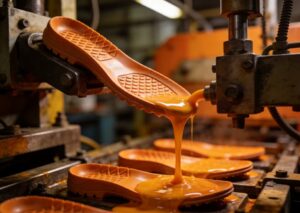
Flexible PVC Compound competes with several alternative polymers in cable and footwear manufacturing. The most common alternatives depend on the application and the required performance level.
In cable manufacturing, TPU, cross-linked polyethylene (XLPE), and halogen-free cable compounds may be considered. In footwear, TPU, EVA, TPR, and rubber are widely used alternatives.
Material Comparison for Footwear Applications
| Performance consideration | Flexible PVC Compound | TPU | EVA | TPR |
|---|---|---|---|---|
| Abrasion resistance | Good to very good, formulation-dependent | Generally excellent | Often lower | Good, grade-dependent |
| Flex fatigue | Good with suitable formulation | Generally excellent | Application-dependent | Good |
| Плотность | Moderate; can be adjusted through foaming | Grade-dependent | Generally low | Grade-dependent |
| Cost at volume | Generally competitive | Often higher | Generally low | Moderate |
| Обработка | Established extrusion and molding processes | Requires TPU-specific processing controls | Established molding processes | Established molding processes |
| Colorability | Broad color options | Good | Good | Good |
| Typical footwear applications | Soles, sandals, midsoles, boots | Performance footwear and protective components | Lightweight cushioning midsoles | Casual footwear and soling |
This comparison is qualitative. Actual performance depends on polymer grade, formulation, processing conditions, and testing method.
The materials are not interchangeable in every application.
For example:
-
TPU is often selected when high abrasion resistance, elastic recovery, and mechanical durability are priorities.
-
EVA is widely used when lightweight cushioning and low density are important.
-
TPR offers a flexible material option for different footwear constructions.
-
Flexible PVC Compound offers formulation versatility, established processing infrastructure, and competitive manufacturing economics across a wide range of applications.
What About Plasticizer Regulations and Environmental Requirements?
Plasticizer selection is another important consideration for flexible PVC manufacturers.
Certain phthalate plasticizers are subject to restrictions in specific products and markets. Buyers must therefore identify the applicable chemical regulations, product category, and customer requirements before selecting a formulation.
A qualified Flexible PVC Compound supplier may offer:
-
Non-phthalate plasticizer formulations.
-
RoHS-compliant grades where applicable.
-
Low-emission or low-VOC formulations where specified.
-
Supporting chemical compliance documentation.
-
Grade-specific declarations for regulated substances.
However, RoHS compliance does not automatically establish compliance with every chemical restriction applicable to footwear, toys, consumer products, or indoor cable installations.
Recyclability should also be assessed carefully. Flexible PVC can be mechanically recycled when suitable collection, sorting, and processing systems are available. However, mixed formulations, different plasticizers, pigments, and contamination can complicate recycling and limit the applications of recycled material.
The same principle applies to alternative polymers: recyclability depends on the material system and available recycling infrastructure rather than polymer identity alone.
5. What Should Buyers Check in a Flexible PVC Compound Data Sheet?
A technical data sheet (TDS) provides the information needed to determine whether a compound is suitable for a particular manufacturing process and end-use application.
However, some data sheets provide only basic information, such as hardness and density. Buyers should request a more complete specification before approving a material.
Flexible PVC Compound Purchasing Checklist
| Параметр | What buyers should verify | Why it matters |
|---|---|---|
| Hardness | Shore A or Shore D, including test method and conditions | Determines flexibility and stiffness |
| Tensile strength | MPa, with test method | Indicates resistance to tensile stress |
| Elongation at break | Percentage | Helps evaluate deformation capacity |
| Specific gravity | Density or relative density | Influences material consumption and component weight |
| Low-temperature performance | Cold bend, cold impact, or brittle point | Indicates suitability for cold environments |
| Thermal performance | Continuous operating temperature and heat-aging results | Supports service-life evaluation |
| Electrical properties | Volume resistivity and dielectric strength | Essential for cable insulation |
| Flame performance | Applicable flame test and classification | Supports cable application compliance |
| Abrasion resistance | Relevant test method and volume loss | Important for footwear durability |
| Plasticizer information | Plasticizer type and applicable compliance documents | Helps assess migration and regulatory risks |
| Processing conditions | Recommended extrusion or molding parameters | Supports production stability |
| Внешний вид | Color, surface finish, and batch consistency | Important for finished footwear and cable products |
Five Questions to Ask a Flexible PVC Compound Supplier
Supplier support is particularly valuable when buyers need application-specific formulation adjustments, processing trials, and consistent batch quality.
The real value of an engineered Flexible PVC Compound lies in its ability to meet documented product requirements consistently, not simply in offering a low purchase price.
6. Can One Flexible PVC Compound Grade Be Used for Both Cables and Footwear?
A single universal grade is generally not recommended for both applications because cable and footwear products have different performance priorities and processing requirements.
Consider a manufacturer producing industrial cable assemblies and safety footwear components.
Example A: Flexible PVC Compound for Cable Jacketing
The engineering team may specify:
| Requirement | Illustrative target |
|---|---|
| Hardness | 90 Shore A |
| Cold bend temperature | −30°C |
| Continuous operating temperature | According to cable design specification |
| Flame performance | Applicable UL, IEC, or other required cable test |
| Обработка | Cable extrusion |
| Additional requirements | Weatherability and mechanical protection |
The compound must maintain its mechanical and environmental properties while protecting the underlying cable construction.
The final cable assembly must also pass the relevant electrical, mechanical, and flame qualification tests.
Example B: Flexible PVC Compound for Footwear Soling
The footwear engineering team may specify:
| Requirement | Illustrative target |
|---|---|
| Hardness | 60 Shore A |
| Structure | Solid or foamed, depending on design |
| Abrasion resistance | According to the footwear specification |
| Flex performance | Required repeated-flex test |
| Slip resistance | According to the intended footwear category |
| Обработка | Injection molding |
| Additional requirements | Color consistency and surface quality |
The compound must provide the required combination of flexibility, wear resistance, traction, and appearance.
Why These Two Formulations Should Remain Separate
Although cable and footwear compounds may share PVC resin and some stabilizer technologies, their complete additive packages must be designed around different performance requirements. A cable formulation may not provide the flexibility and comfort required for footwear, while a soft footwear grade may fail electrical, thermal, or cable flame-performance requirements.
Selecting application-specific grades helps manufacturers reduce production risks and maintain consistent finished-product quality.
Conclusion: Why Is Flexible PVC Compound Still Used in Cables and Footwear?
Flexible PVC Compound remains a practical choice for cable and footwear manufacturing because its formulation can be tailored to different performance requirements. Cable grades prioritize electrical insulation, flame performance, and thermal stability, while footwear grades focus on flexibility, abrasion resistance, cushioning, and appearance.
Its formulation versatility, established processing methods, and competitive production costs make it suitable for a wide range of applications. However, selecting the right grade requires evaluating hardness, mechanical properties, operating conditions, regulatory requirements, and processing compatibility.
Manufacturers should request a grade-specific technical data sheet (TDS) and samples for production testing to confirm material suitability before bulk purchasing.
Часто задаваемые вопросы
1. What is Flexible PVC Compound?
Flexible PVC Compound is a thermoplastic material made from PVC resin, plasticizers, stabilizers, fillers, and other additives. Its formulation can be adjusted to achieve different levels of hardness, flexibility, thermal stability, and mechanical performance for applications such as cable insulation, cable jacketing, and footwear.
2. Why is Flexible PVC Compound used for cables and footwear?
Flexible PVC Compound offers formulation flexibility for different application requirements. Cable grades prioritize electrical insulation, flame performance, and thermal stability, while footwear grades focus on flexibility, abrasion resistance, cushioning, and surface quality. Different additive packages allow manufacturers to develop suitable compounds for both industries.
3. What is the typical hardness of Flexible PVC Compound?
Hardness depends on the intended application and formulation. Typical product examples cover approximately 70–96 Shore A for cable compounds and 35–95 Shore A for footwear compounds. These ranges are illustrative rather than universal specifications, so buyers should confirm hardness requirements and test methods with their suppliers.
4. What is the difference between Flexible PVC Compound and TPU?
TPU generally provides excellent abrasion resistance, elasticity, and flex fatigue performance, while Flexible PVC Compound offers broader formulation flexibility, established processing methods, and competitive production costs. The choice depends on the required mechanical properties, processing equipment, application environment, and overall manufacturing cost.
5. Can Flexible PVC Compound be customized?
Yes. Manufacturers can adjust PVC resin, plasticizer type, stabilizers, fillers, pigments, and functional additives to meet specific requirements. Customization may include hardness, color, density, flame resistance, low-temperature flexibility, and abrasion resistance. Buyers should provide application details and target specifications to help suppliers recommend suitable grades.
6. What should buyers consider when selecting Flexible PVC Compound?
Buyers should evaluate hardness, tensile strength, elongation, density, operating temperature, and processing compatibility. Cable applications also require electrical and flame-performance testing, while footwear applications prioritize abrasion resistance, flex fatigue, and slip resistance. A grade-specific technical data sheet and sample testing help verify suitability before bulk purchasing.