
Introduction
You’ve invested in a high-speed extrusion line, trained your operators, and secured a steady supply of PVC compound. Yet issues like bubbles, rough surfaces, uneven thickness, or failed quality tests still appear on finished cable jackets.
In many cases, the first response is to adjust machine settings, but the real cause often lies in the material itself. Variations in moisture content, formulation stability, or mismatches between the PVC cable jacketing material and screw design can easily disrupt extrusion stability.
This article breaks down the most common defects linked to PVC jacketing compounds and explains how to diagnose and fix them for more consistent production performance.
Why Does Your PVC material for cable jacket Keep Producing Bubbles and Pores?
The Moisture Menace
If you have ever sliced open a freshly extruded cable jacket and found tiny voids or pinholes scattered through the cross-section, you have encountered one of the most persistent enemies of PVC extrusion: moisture. Even a fraction of 0.1% water in your PVC material for cable jacket can vaporize under extrusion heat, creating bubbles that mar the surface and compromise the jacket’s integrity. The science is straightforward: when moisture-laden PVC enters the heated barrel, the water turns to steam. That steam expands, gets trapped in the molten polymer, and emerges as bubbles or pores as the material cools.
Where does this moisture come from? PVC resin is inherently hygroscopic—it attracts and absorbs moisture from the air. Poor storage conditions, extended exposure to humid environments, or simply leaving bags open overnight can introduce enough water to ruin an entire production run. One industry source notes that PVC produced more than 24 hours earlier and not preheated before use is highly likely to absorb moisture, leading to surface defects. The solution? Proper drying of your PVC material for cable jacket. Industry practice recommends drying PVC at 80–90°C for 2–3 hours using a dehumidifying hopper dryer. Some specifications call for drying to a -40°C dew point to ensure complete moisture removal.
Thermal Degradation: When Heat Becomes the Enemy
Not all bubbles come from water. Excessive heat can cause the PVC material for cable jacket to degrade thermally, releasing hydrogen chloride (HCl) gas and other volatiles that manifest as bubbles and discolouration. PVC is notoriously sensitive to overheating—extrusion temperatures around 170°C are typical, but the material becomes susceptible to thermal decomposition above 200°C. Prolonged residence time in the barrel, poor screw design that creates stagnant zones, or simply running the extruder too hot can all trigger degradation.
The telltale signs? A sharp, irritating odour at the die, smoke emanating from the extruder head, and—most obviously—bubbles and discolouration in the finished jacket. If you notice these symptoms, check your temperature profile immediately. Reduce barrel temperatures, shorten the heating time, and ensure your cooling systems are functioning properly. Remember, overheating your PVC material for cable jacket is one of the quickest ways to introduce gas-related defects.
Formulation Instability
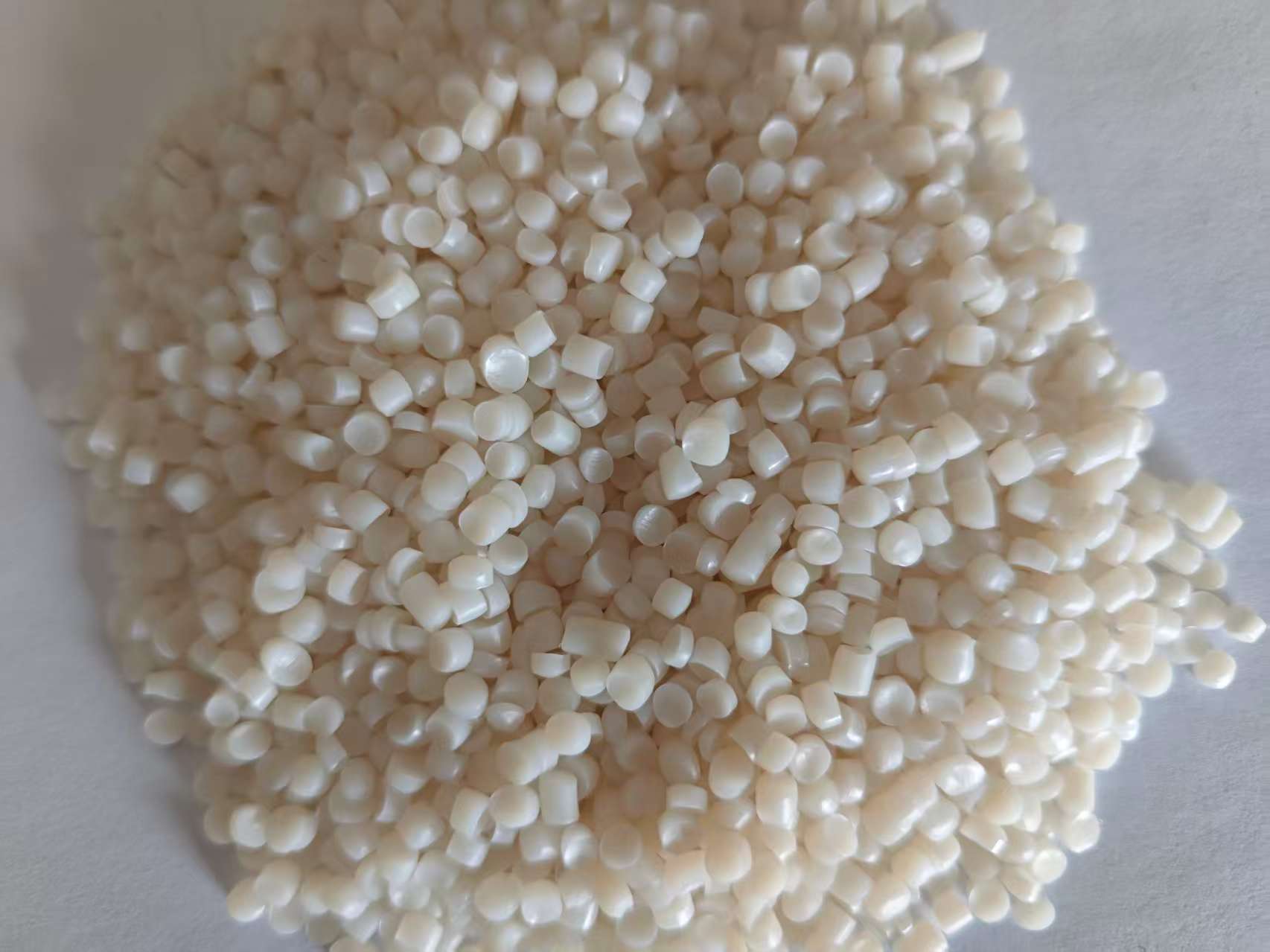
Sometimes the problem is baked into the compound itself. Poor formulation stability—whether from an inadequate stabilizer package or an imbalance between internal and external lubricants—can cause gas evolution during extrusion. This is where the quality of your PVC material for cable jacket truly matters. Premium compounds like the DST series from Shandong Dingshengtong are engineered with carefully balanced additive systems to minimise degradation and ensure consistent processability. Off-the-shelf compounds with insufficient stabilisation may save money upfront, but cost far more in rejected batches and production downtime.
Solutions to eliminate bubbles and pores:
-
Install and maintain dehumidifying dryers; dry your PVC material for cable jacket at 80–90°C for 2–3 hours before processing
-
Set extruder vacuum pressure at -0.08 to -0.1 MPa to discharge volatile gases
-
Reduce high-temperature residence time; avoid overheating above 200°C
-
Choose a PVC compound with a robust stabilizer package designed for your specific extrusion conditions
-
Preheat wire cores if they show signs of dampness

Why Does the Surface of Your Cable Jacket Look Rough or Uneven?
The “Fish Eye” Problem
Nothing undermines customer confidence like a rough, pitted cable jacket surface. The causes are numerous, but one of the most common is poor dispersion of the PVC material for cable jacket. When the compound contains unmelted resin particles, agglomerated fillers, or poorly dispersed additives, these defects manifest as “fish eyes”—small, hard, translucent spots that disrupt the smoothness of the extruded surface.
Fish eyes typically arise from one of three sources:
-
Unplasticized particles in the PVC resin that fail to melt during extrusion
-
Poorly dispersed fillers or stabilizers that create localized areas of different melt viscosity
-
Contamination from foreign materials introduced during handling or feeding
The Roughness from Low Temperatures
Counterintuitively, running your extruder too cool can be just as damaging as running it too hot. When your PVC material for cable jacket is extruded at lower temperatures, its high viscosity prevents proper flow through the die. The result? A matte, rough surface appearance caused by changes in the surface microstructure. The material simply does not have enough thermal energy to flow smoothly and fill the die geometry completely.
Pitting and Surface Imperfections
Surface pitting—small depressions or craters scattered across the jacket—often points to a different issue: small molecules precipitating out of the melt after vacuum venting, or insufficient external lubrication causing the PVC to stick to hot metal surfaces. When the PVC material for cable jacket lacks adequate external lubrication, it adheres to the die lips and barrel walls, creating drag that tears the surface as the extrudate exits.
Solutions for surface quality issues:
-
Increase kneading temperature and time to ensure full plasticizer absorption
-
Balance external and internal lubricant ratios to prevent both poor plasticization and die build-up
-
Adjust the temperature upwards if the surface appears matte or rough
-
Use high-mesh filters to remove agglomerates and impurities from the melt
-
After shutdown, discharge 50–100 metres of material to remove cold residue that can cause surface defects
Is Your Extrusion Temperature Profile Working Against You?
The Temperature Tightrope
PVC extrusion is a delicate balancing act. The temperature must be high enough to melt and plasticize the PVC material for the cable jacket completely, but low enough to prevent thermal degradation. Typical temperature profiles for PVC cable jacketing start around 140°C in Zone 1, rising to 160°C in Zone 2 and 165–175°C at the die. But these are starting points, not absolutes. Every batch of PVC material for cable jacket has its own optimal processing window, and deviating from it invites defects.
The Consequences of Getting It Wrong
Too cold: The PVC does not plasticize fully. The extrudate emerges rough, with unmelted particles scattered across the surface. The melt pressure fluctuates, leading to inconsistent thickness and poor dimensional stability. If you run your PVC material for cable jacket too cold, you are essentially wasting the compound’s potential.
Too hot: The PVC begins to degrade. The material scorches, releasing HCl gas that creates bubbles and pores. The jacket may become brittle, discoloured, or both. In severe cases, the compound burns inside the barrel, requiring a full screw pull and cleaning. Overheating your PVC material for cable jacket is a sure path to reject piles.
Zone-by-Zone Control Matters
Modern extruders feature multiple heating zones, each with independent temperature control. A typical profile might look like this:
| Zone | Temperature Range (°C) | Purpose |
|---|---|---|
| Zone 1 (Feed) | 140–150 | Gradual heating avoids premature melting that can cause feeding issues |
| Zone 2 (Compression) | 155–165 | Primary melting and plasticization |
| Zone 3 (Metering) | 160–170 | Homogenisation ensures a consistent melt temperature |
| Zone 4 (Head) | 165–175 | Final temperature adjustment before die entry |
| Die | 165–175 | Maintains flow consistency through the die opening |
Data compiled from industry extrusion guides
The key insight? Every zone matters. If Zone 1 is too hot, the PVC material for cable jacket melts too early, creating a “screw slippage” condition that reduces output and causes surging. If the die is too cold, the melt cools prematurely, creating a rough, “shark skin” surface.
Why Does Your PVC material for cable jacket fail to Plasticize Properly?
Incomplete Plasticization: The Hidden Defect
Plasticization is the process by which the PVC resin absorbs plasticizer molecules, transforming from a rigid, granular powder into a flexible, homogeneous melt. When this process is incomplete, the extruded jacket contains unplasticized particles that appear as hard spots, rough patches, or—in the worst cases—stress concentrators that weaken the jacket.
Why does incomplete plasticization happen? There are several common culprits:
-
Insufficient temperature: The melt never reaches the temperature needed for full plasticizer absorption
-
Inadequate mixing: The screw design does not provide enough shear or distributive mixing to break down the resin and distribute the plasticizer uniformly
-
Wrong screw design: A general-purpose screw may not generate enough pressure or shear for your specific PVC material for cable jacket
-
Short residence time: The material does not spend enough time in the heated barrel to complete the plasticization process
The Role of Screw Design
Your extruder screw is not just a conveyor—it is a precision mixing and melting device. For PVC cable jacketing, single-screw extruders with an L/D (length-to-diameter) ratio of at least 20:1 are recommended. The screw should feature a compression ratio appropriate for your PVC material for cable jacket—typically 2.5:1 to 3.5:1—and a barrier or BM-type design that enhances melting and mixing.
If your PVC material for cable jacket consistently fails to plasticize, consider these adjustments:
-
Increase barrel temperatures in 5°C increments until full plasticization is achieved
-
Install a screw with a higher compression ratio or a barrier flight design
-
Reduce the line speed to increase residence time
-
Check that your screw and barrel are clean and free from degraded material buildup
When Does Your PVC Compound Cause Scorching and Burning?
The Scorch Cycle
Scorching—also known as “burning” or “coking”—occurs when the PVC material for cable jacket degrades inside the extruder barrel or die. The symptoms are unmistakable: black or brown specks scattered through the extrudate, a pungent, acrid odour, and smoke emerging from the die. In severe cases, the degraded material forms hard deposits that clog the die or create surface defects that render the cable unusable.
Why Scorching Happens
The root cause is almost always excessive heat history. Your PVC material for cable jacket has been exposed to high temperatures for too long, either because:
-
The extruder is running too hot (above 200°C)
-
The material is stagnant in the screw channels or crosshead, creating “dead spots” where residence time is extended
-
The screw is dirty, with degraded material from previous runs acting as a nucleation site for further degradation
-
The stabilizer package in the compound is inadequate for the processing conditions
Preventing Scorch
The best solution is prevention. Start with a high-quality PVC material for cable jacket that includes a robust stabilizer system. The DST series, for example, is formulated with a carefully balanced additive package that resists thermal degradation during extrusion.
Beyond material selection:
-
Maintain strict temperature control; do not exceed the compound’s recommended processing window
-
Clean the screw and barrel thoroughly between runs, especially when switching between different PVC compounds
-
Avoid prolonged shutdowns with material left in the barrel; purge with a cleaning compound if necessary
-
Ensure the screw design does not create stagnant zones where material can overheat
-
Add stabilizers and lubricants appropriately if scorching persists
Why Is the Thickness of Your Cable Jacket Inconsistent?
The Fluctuation Problem
Inconsistent jacket thickness—sometimes called “slub” or “bamboo” effect—is a maddening defect that wastes material and fails quality control. The cable emerges with alternating thick and thin sections, making it impossible to meet dimensional specifications.
The Root Causes
Thickness fluctuations typically trace back to one of three areas:
1. Extruder instability. If the screw speed fluctuates or the melt pressure varies, the output rate changes, creating thick and thin sections. Causes include worn screw flights, improper feed zone temperature, or variations in the PVC material for cable jacket feed rate.
2. Traction issues. The puller or capstan that draws the cable through the cooling trough must operate at a consistent speed. If the traction speed varies—due to worn belts, improper tension, or electronic control issues—the jacket thickness will vary in direct proportion.
3. Die design problems. If the die is too small for the cable core, or if the core diameter changes along its length, the clearance between core and die varies, creating thickness fluctuations. This is particularly common with out-of-round or poorly spliced cable cores.
Stabilising Your Process
-
Install a melt pressure transducer and use it to monitor and control extruder output
-
Check and calibrate the traction unit regularly; ensure that the take-up tension is consistent
-
Verify that the die and tip are correctly sized for the cable core diameter
-
Monitor outside diameter continuously with an online gauge and use feedback control to adjust line speed automatically
-
Ensure the PVC material for cable jacket is fed consistently; avoid bridging in the hopper
Extrusion Defects and Their PVC Material Causes
| Defect | Primary PVC Material Cause | Secondary Cause | Solution |
|---|---|---|---|
| Bubbles/Pores | Moisture in resin/fillers | Thermal degradation | Dry at 80–90°C for 2–3 hours; use vacuum venting |
| Rough Surface | Poor dispersion, “fish eyes” | Low extrusion temperature | Increase kneading; raise temperature; use high-mesh filters |
| Scorching/Burning | Inadequate stabilizer package | Excessive residence time | Improve stabilizer; clean screw; reduce temperature |
| Inconsistent Thickness | Inconsistent feed rate | Traction/screw speed variation | Stabilise feed; calibrate traction; monitor diameter |
| Matte/Dull Surface | Extrusion temperature too low | High melt viscosity | Raise barrel and die temperatures |
| Surface Pitting | Insufficient external lubrication | Small molecule precipitation | Balance lubricant system; adjust formulation |
| Brittle Jacket | Wrong resin grade (too high K value) | Excessive filler content | Use lower-grade PVC; limit fillers to ≤20% |
How Can You Systematically Troubleshoot Your PVC Extrusion Process?
Start with the Material
Before adjusting your extruder, verify that your PVC material for cable jacket is fit for purpose. Check the certificate of analysis for:
-
Moisture content: Should be below 0.1% before processing
-
Stabilizer effectiveness: Confirm the compound has adequate thermal stability for your processing temperatures
-
Lubricant balance: Both internal and external lubricants should be present in the correct ratios
A high-quality compound like the DST series from Shandong Dingshengtong is engineered with these factors in mind, featuring a proprietary formulation that begins with high-purity PVC resin and integrates a carefully balanced system of advanced additives. This approach ensures not only robust and safe performance but also superior processability—the kind of consistency that reduces troubleshooting time and scrap rates. When you select a premium PVC material for cable jacket, you are already eliminating many potential defect sources at the source.
Then Check Your Process
-
Temperature: Verify each zone with a contact pyrometer; thermocouples can drift
-
Screw speed: Ensure it matches the recommended range for your compound
-
Melt pressure: Monitor for fluctuations that indicate feed or screw issues
-
Cooling: Check that the cooling trough is at the correct temperature (15–25°C) and that the cable is fully cooled before the puller
Finally, Inspect Your Equipment
-
Screw condition: Worn flights reduce output and cause surging
-
Die and tip alignment: Misalignment creates uneven wall thickness
-
Screen pack: A clogged screen increases back pressure and can cause degradation
-
Barrel condition: Scoring or wear in the barrel reduces melt quality
Conclusion: Your PVC Material Choice Makes All the Difference
Extrusion defects rarely come from a single cause. In most cases, they result from the combined effects of material, machine, and process—where the PVC cable jacket material plays a central role. Moisture leads to bubbles, thermal degradation causes scorching, poor dispersion results in rough surfaces, and insufficient lubrication triggers pitting. Each issue ultimately traces back to how the compound behaves during processing.
The good news is that most of these problems are preventable with proper control. Effective drying, stable temperature management, and a screw design matched to the compound can significantly improve results. Just as important is selecting a PVC material engineered for consistent processability, with balanced stabilizers and lubricants that ensure stable melt behavior.
In practice, prevention is always more efficient than troubleshooting—and that starts with choosing the right material for your production conditions. If you’re currently dealing with recurring extrusion issues, our technical team can help evaluate your process and recommend a suitable PVC cable jacket compound for your application.