Introduction
Here’s what matters: the performance of a drainage pipe—its strength, stiffness, chemical resistance, service life—is largely determined before the pipe is even formed. It all starts with Gránulos de PVC.
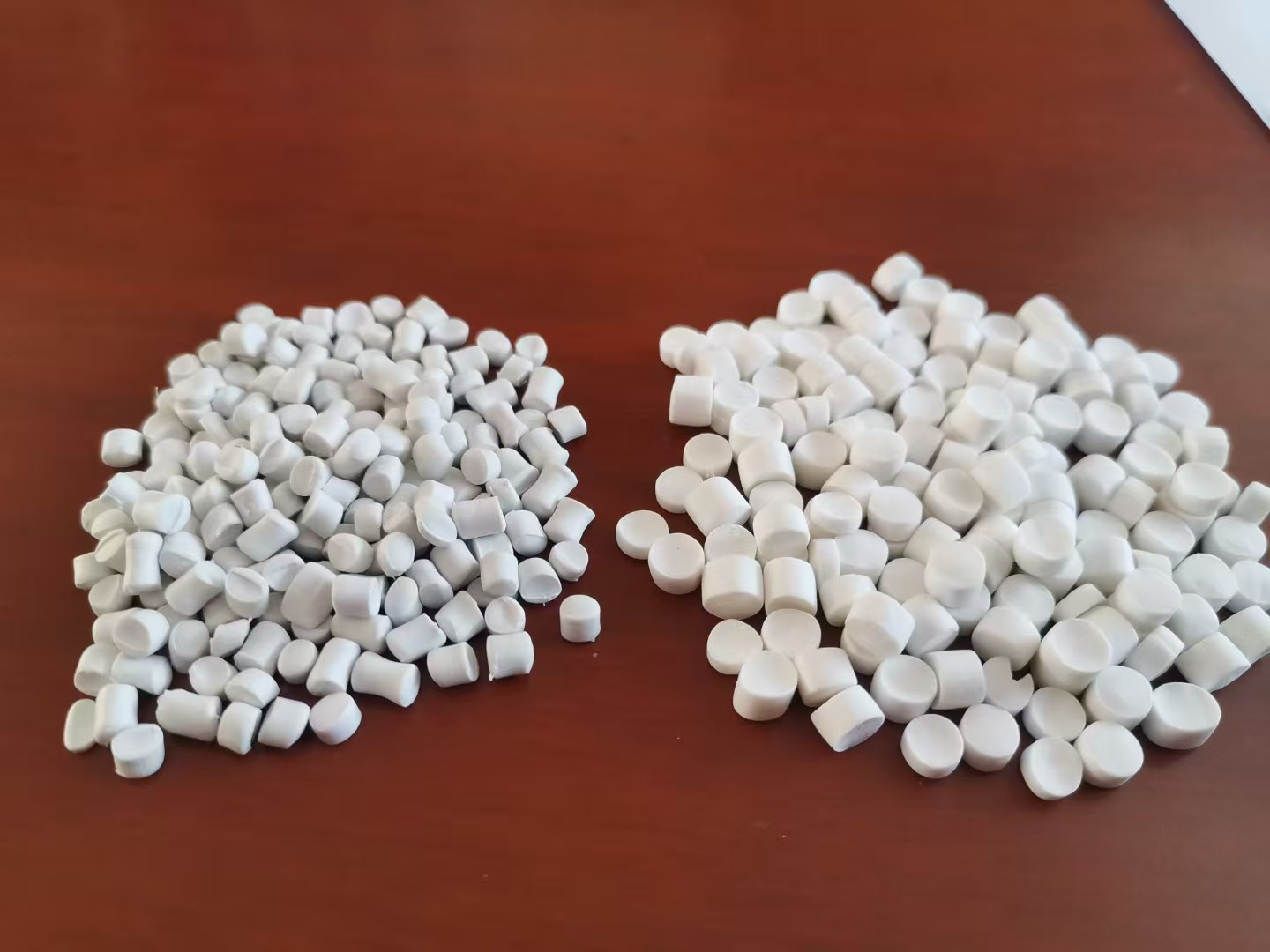
Gránulos de PVC are small, pellet-shaped compounds made from polyvinyl chloride resin mixed with specific additives. Depending on the formulation, they produce either rigid pipes for underground drainage or flexible pipes for specific applications. Get the formulation right, and the pipe survives decades underground. Get it wrong, and you’re looking at cracks, deformation, chemical attack, and premature failure.
This article explains what Gránulos de PVC are, how different types compare, what key technical specs determine pipe quality, and exactly how the right granular compound translates into real-world drainage performance. If you manufacture, specify, or buy drainage pipes, this is worth your time.
What Are PVC Granules, Exactly?
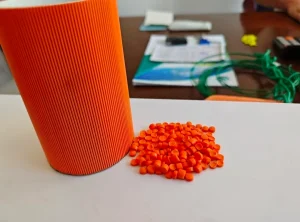
At its core, PVC is produced by polymerizing vinyl chloride monomers (VCM) into a white powder known as PVC resin. Manufacturers then blend this resin with additives to produce Gránulos de PVC—free-flowing pellets designed for extrusion into pipes, profiles, fittings, and other products.
There are two broad categories of Gránulos de PVC:
-
Rigid (unplasticized) PVC granules: No plasticizers are added, so the final material is hard, strong, and dimensionally stable. These are the standards for drainage pipes, water supply pipes, electrical conduits, and window profiles.
-
Flexible PVC granules: Plasticizers are added to make the material soft and bendable. These are used for hoses, cables, and tubing, not for structural drainage pipes.
For drainage applications, the relevant type is unplasticized PVC, often labeled PVC-U or uPVC. The “U” stands for “unplasticized”—meaning the plastic is not softened during manufacture, so it retains strength and rigidity. That rigidity is non-negotiable for a pipe that has to resist soil pressure after burial.
Here’s a simplified breakdown of the two types:
| Característica | Rigid PVC Granules (PVC-U) | Gránulos de PVC flexibles |
|---|---|---|
| Plasticizer content | None | Added (10–50% by weight) |
| Final product feel | Hard, rigid, strong | Soft, flexible, rubbery |
| Typical applications | Drainage pipes, water supply pipes, conduits, and window profiles | Hoses, cables, inflatable products |
| Performance focus | Stiffness, strength, creep resistance | Flexibility, elongation |
The Additives That Make or Break a Drainage Pipe
Raw PVC resin by itself is difficult to process and performs poorly in real-world conditions. It degrades under heat, flows unevenly, and lacks impact resistance. That’s why Gránulos de PVC always contain a carefully balanced additive package. Each additive serves a specific purpose:
| Additive Type | Function |
|---|---|
| Estabilizadores térmicos | Prevent thermal degradation during extrusion |
| Lubricants | Control melt flow and prevent sticking |
| Impact modifiers (e.g., CPE, acrylics) | Improve toughness and crack resistance |
| Fillers (e.g., calcium carbonate) | Increase stiffness and reduce cost |
| Processing aids | Improve melt uniformity and surface finish |
| Pigments | Provide color(e.g., white for water pipes, orange for electrical conduits) |
The selection and dosage of these additives directly affect extrusion behavior and final pipe performance. For example, the particle size and dispersion of calcium carbonate filler must be precisely controlled—if the filler particles are too large or unevenly distributed, they disrupt the surface pattern and reduce the pipe’s smoothness and structural uniformity.
Heat stabilizers are particularly critical. PVC resin degrades when exposed to the elevated temperatures required for extrusion, releasing hydrochloric acid and causing discoloration. Heat stabilizers prevent this breakdown and enhance processing stability. Without adequate stabilization, the melt becomes erratic, burn marks appear on the pipe surface, and mechanical properties drop sharply.
Impact modifiers are another essential component. Unmodified PVC is inherently brittle. Adding CPE (chlorinated polyethylene) or acrylic impact modifiers significantly improves toughness, allowing the pipe to withstand installation stresses, soil pressure, and accidental impacts without cracking.
Rigid vs. Flexible PVC Granules: Which One Does Drainage Require?
Not all Gránulos de PVC produce rigid pipes. The key difference lies in whether plasticizers are added.
-
PVC (with plasticizers): Contains added plasticizers, making the final material softer and more flexible. Good for hoses, but not for buried drainage pipes that need to resist crushing loads.
-
uPVC / PVC-U (unplasticized): No plasticizers added, so the pipe remains hard and rigid. This is the correct material for drainage, sewer, and water supply systems.
There is no functional difference between “uPVC” and “PVC-U”—they are the same material, just written differently. Both refer to unplasticized PVC. Some sources also use the term “rigid PVC” to describe the same thing.
For drainage pipe applications, rigid PVC granules are the industry standard because they provide the necessary ring stiffness to resist soil load, the strength to handle internal pressure, and the durability to last 50 years or more underground.
PVC-U vs. PVC-M vs. PVC-O: What Do These Terms Mean?
If you spend any time in the pipe industry, you’ll encounter PVC-U, PVC-M, and PVC-O. They’re all made from Gránulos de PVC, but the differences matter.
-
PVC-U (unplasticized PVC): The baseline rigid PVC. Standard choice for most drainage and sewer applications. One study found that PVC pipes in Dutch gas distribution networks, originally designed for a 50-year lifespan, are still in service after decades, prompting questions about how much further their lifetime can be safely extended.
-
PVC-M (modified PVC): Formulated with additional impact modifiers for higher toughness. This is useful for pipes that face rough handling during installation or operate in colder climates. ISO is currently developing new standards for PVC-M drainage systems under pressure.
-
PVC-O (oriented PVC): Produced by stretching PVC-U pipe during manufacturing to align the polymer molecules. This orientation dramatically improves strength, impact resistance, and crack propagation resistance while using less material. A key advantage: PVC-O pipes have at least twice the impact resistance of standard PVC-U, making them ideal for harsh conditions.
For most standard drainage applications, PVC-U granules are sufficient. For demanding conditions—rocky soil, high traffic loads, cold climates—PVC-M or PVC-O may be specified.
Key Performance Specs: What to Look for in PVC Granule Quality
When evaluating Gránulos de PVC for drainage pipe production, several technical specifications matter. These specs directly translate into pipe performance.
para formar con precisión la textura de la superficie capilar.
Melt flow rate measures how easily the molten PVC flows during extrusion. For standard drainage pipes, a consistent and stable melt flow is required to ensure uniform wall thickness, smooth surface finish, and accurate dimensional control. If the MFR is too low, the material is difficult to extrude, and surface defects appear. If it’s too high, the melt may sag or deform before cooling.
The optimal MFR depends on pipe diameter, wall thickness, and extrusion equipment. What matters most is consistency: batch-to-batch variation in melt flow causes extrusion instability and rejects.
Mecánico
Rigid PVC-U pipe compounds typically have a density of approximately 1.40–1.45 g/cm³. This is a useful quality check: if density falls outside this range, it may indicate excessive filler content, air entrapment, or resin quality issues.
Tensile Strength
Tensile strength measures how much pulling force the material can withstand before breaking. For rigid PVC pipe compounds, tensile strength should be at least 40 MPa to provide structural integrity under load. Typical values range from 34 to 62 MPa depending on formulation. Lower tensile strength increases the risk of rupture under internal pressure or during handling.
Resistencia a la tracción
Impact strength measures resistance to sudden blows. For PVC-U drainage pipe compounds, notched impact strength should be at least 15 kJ/m², ensuring toughness and resistance to cracking during handling and service. This spec matters most during installation: pipes get dropped, struck by tools, and subjected to backfill impact. Poor impact strength means cracked pipes before they even enter service.
Ring Stiffness (SN Rating)
Ring stiffness is not a material property alone—it’s a pipe property determined by both material modulus and wall thickness. But the compound’s stiffness contributes directly. Pipes are classified into stiffness classes: SN2 (minimum ring stiffness 2 kN/m²), SN4 (4 kN/m²), SN8 (8 kN/m²), and higher classes for deeper burial or heavier surface loads.
Here’s a quick ring stiffness reference guide:
| SN Class | Minimum Ring Stiffness | Typical Application |
|---|---|---|
| SN2 | 2 kN/m² | Very shallow burial, light pedestrian traffic |
| SN4 | 4 kN/m² | Standard residential drainage, garden areas |
| SN8 | 8 kN/m² | Driveways, roads, and commercial developments |
| SN12+ | 12 kN/m² or higher | Heavy traffic, deep burial, industrial sites |
Testing follows standards such as ISO 9969 or ASTM D2412, where pipes undergo vertical loading until a 3% deflection occurs. Higher SN ratings require either thicker walls or a higher-modulus compound—often achieved through filler selection and molecular weight control.
Chemical Resistance
For drainage pipes that carry wastewater or sit in contaminated soil, chemical resistance is non-negotiable. PVC provides excellent resistance to acids, alkalis, salts, and most corrosive fluids found in wastewater and soil environments. However, PVC is not resistant to aromatic hydrocarbons, ketones, or chlorinated solvents.
The compound formulation can influence chemical resistance. High-quality Gránulos de PVC use stabilizer systems that protect against long-term exposure to sulfuric acid and sodium sulfate found in sewer environments.
How PVC Granules Affect Drainage Pipe Performance in the Real World
Let’s connect the specs back to real-world performance. Here’s how Gránulos de PVC affect each critical drainage pipe requirement.
Impact Strength + Toughness
A pipe made from high-quality Gránulos de PVC with appropriate impact modifiers withstands the bumps and knocks of transport, handling, and installation. A pipe made from poor-quality granules—or granules with insufficient impact modifier—cracks when dropped or when backfill is compacted around it.
The fix is straightforward: specify Gránulos de PVC with notched impact strength ≥15 kJ/m² and impact modifiers like CPE or acrylics in the formulation.
Ring Stiffness + Deformation Resistance
Once buried, the pipe has to resist the weight of soil and any surface traffic. This is ring stiffness in action. The compound’s filler system contributes to stiffness, but the base resin’s molecular weight and the overall modulus also play roles.
Pipes extruded from rigid Gránulos de PVC can achieve SN4, SN8, or higher ratings depending on wall thickness and compound design. A standard PVC drainage pipe can hold its shape under meters of soil cover without collapsing.
Chemical Resistance + Service Life
Wastewater contains all sorts of aggressive chemicals—acids from industrial discharge, sulfates from groundwater, salts from deicing runoff. Poorly formulated Gránulos de PVC may degrade over time when exposed to these substances.
Properly formulated rigid PVC compounds provide excellent resistance to acids, alkalis, and salts, ensuring the pipe’s structural integrity remains intact for decades. Studies on very early PVC pipes from the 1930s to 1950s concluded that PVC has a service life of 50 years. Modern pipes are expected to last significantly longer—probably up to or beyond 100 years.
Surface Smoothness + Flow Capacity
The smoother the pipe’s inner wall, the better the flow and the lower the risk of blockages. Surface smoothness is determined by melt flow behavior during extrusion and the fineness of filler dispersion.
A stable melt flow ensures a consistent, smooth inner and outer surface. Uneven flow produces surface defects called “melt fracture” or “sharkskin,” which create drag points where debris can accumulate. Using high-quality Gránulos de PVC with balanced lubrication and processing aids prevents surface defects and maintains high flow capacity over the life of the pipeline.
Capillary Drainage Pipes: A Specialized Case
Typical drainage relies on gravity and perforations to collect water. Capillary drainage pipes work differently—the pipe itself has a micro-textured surface that actively draws water in through capillary action.
For this specialized application, Gránulos de PVC must meet additional requirements. The granules must have a consistent and stable melt flow to ensure the fine capillary channels are reproduced accurately and uniformly across the entire pipe length. The filler particle size also matters: the fillers must be fine and evenly dispersed to avoid disrupting the delicate surface pattern.
In capillary drainage applications, the most critical parameter is melt flow behavior, which must be fine-tuned through specific lubricants and stabilizers to achieve the perfect surface finish.
What to Ask Your PVC Granules Supplier
If you’re sourcing Gránulos de PVC for drainage pipe production, ask these questions:
-
What type of PVC resin do you use (K-value grade)? K67 is common for pipe extrusion. K-value correlates with molecular weight and affects mechanical properties. Higher K-value generally means higher strength but more difficult processing.
-
What is your stabilizer system? Lead-based stabilizers are being phased out in many markets; calcium-zinc systems are preferred for environmental and regulatory compliance.
-
What impact modifiers do you include, and at what dosage? CPE and acrylics are standard. Ask for notched impact strength test data to verify performance claims.
-
What is your filler content and particle size distribution? Filler content affects stiffness and cost, but excessive filler reduces impact strength and surface quality. Filler particle size should be consistently fine and evenly dispersed.
-
Can you provide melt flow rate (MFR) data for each batch? Batch-to-batch consistency in MFR is essential for stable extrusion. Ask for their quality control procedures and acceptance limits.
-
Do you have chemical resistance test data for the specific wastewater composition in my target markets? Standard claims of “good chemical resistance” are not enough. Ask for third-party test reports against relevant standards.
-
What certifications do you hold? ISO 9001 for quality management is a baseline. Additional certifications may be required depending on your export markets.
Market Context: Why PVC Granule Quality Matters More Than Ever
The global PVC pipes market continues to expand steadily. It was valued at approximately $78.98 billion in 2025 and is projected to reach $123.79 billion by 2034, growing at a compound annual growth rate (CAGR) of 5.10% during the forecast period.
In 2025, the Asia-Pacific region led the global market, accounting for 58.90% of the total market share.
As infrastructure spending increases worldwide—particularly in developing regions where drainage and sanitation systems are expanding rapidly—demand for high-quality drainage pipes will only increase. Poor-quality Gránulos de PVC may appear cheaper upfront, but the costs of pipe failures, replacements, and reputational damage far outweigh any initial savings.
Manufacturers who invest in consistent, well-formulated Gránulos de PVC are positioning themselves for the long term.
A Side-by-Side Comparison: High-Quality vs. Low-Quality PVC Granules
To make the differences tangible, here’s a comparison of drainage pipes made from high-quality versus low-quality Gránulos de PVC:
| Attribute | High-Quality PVC Granules | Low-Quality PVC Granules |
|---|---|---|
| Melt flow consistency | Consistent batch to batch | Variable ±20% or more |
| Impact strength | ≥15 kJ/m² | <10 kJ/m² |
| Tensile strength | ≥40 MPa | 25–35 MPa |
| Surface finish | Smooth, uniform | Rough, melt fracture visible |
| Chemical resistance | Excellent across the standard range | Moderate, early degradation possible |
| Ring stiffness achieved | SN8 or higher as designed | Can’t consistently meet the target SN class |
| Installation breakage rate | Low (<1%) | High (5–10% or more) |
| Service life | 50–100+ years | 10–20 years |
| Overall cost of ownership | Bajo | High due to replacements |
Preguntas frecuentes
1. What’s the difference between PVC granules and PVC resin?
PVC resin is the base polymer powder. Gránulos de PVC are resin mixed with additives (stabilizers, lubricants, impact modifiers) and processed into pellets ready for extrusion.
2. Can I use the same PVC granules for drainage and pressure pipes?
Not always. Pressure pipes require higher tensile strength and hydrostatic pressure resistance. Drainage pipes prioritize ring stiffness and impact resistance. Always match the granule to the application.
3. How long do PVC drainage pipes actually last?
Studies on early PVC pipes from the 1930s–1950s confirmed 50-year service lives. Modern pipes are expected to last 100 years or more.
4. Are PVC granules environmentally safe?
Modern calcium-zinc stabilized Gránulos de PVC are safe for potable water applications and meet international standards. Lead-based stabilizers are being phased out globally. PVC pipes are also 100% recyclable.
5. How can I test if my PVC granules are good?
Run a small extrusion batch. Check melt flow consistency, surface smoothness, and cut samples for tensile, impact, and ring stiffness testing. Good suppliers will provide third-party test reports.
Conclusion: The Granule Determines the Pipe
Gránulos de PVC are the starting point for every drainage pipe. The formulation determines the pipe’s strength, stiffness, chemical resistance, surface quality, and service life. Choosing low-quality granules to save money upfront inevitably leads to higher costs downstream—failed pipes, angry customers, and damaged reputations.
If you manufacture pipes, test your Gránulos de PVC thoroughly before committing to large orders. If you specify or buy drainage pipes for projects, ask your supplier about the granules they use. The answers will tell you everything about how those pipes will perform five, ten, or fifty years from now.
Ready to produce drainage pipes that perform for decades? Start with Gránulos de PVC you can trust.